Tel Aviv-nummeret
Tel Aviv Port from the wave deck to the lighthouse
A walk through Namal Tel Aviv, starting at the 2008 wave-form deck, out along the breakwater to the British lighthouse, then back into the hangars where you eat and stay the night.

Av Inês MarquesWalking the White City, Jaffa and everything in between
The deck at Tel Aviv Port covers 14,000 sq m and was poured over the old cargo quay in waves, like sand dunes set in timber. Mayslits Kassif Architects finished it in 2008, and it took the Rosa Barba European Landscape Prize in 2010. The low hangar sheds behind it still go by their cargo numbers.
Walking the wooden deck
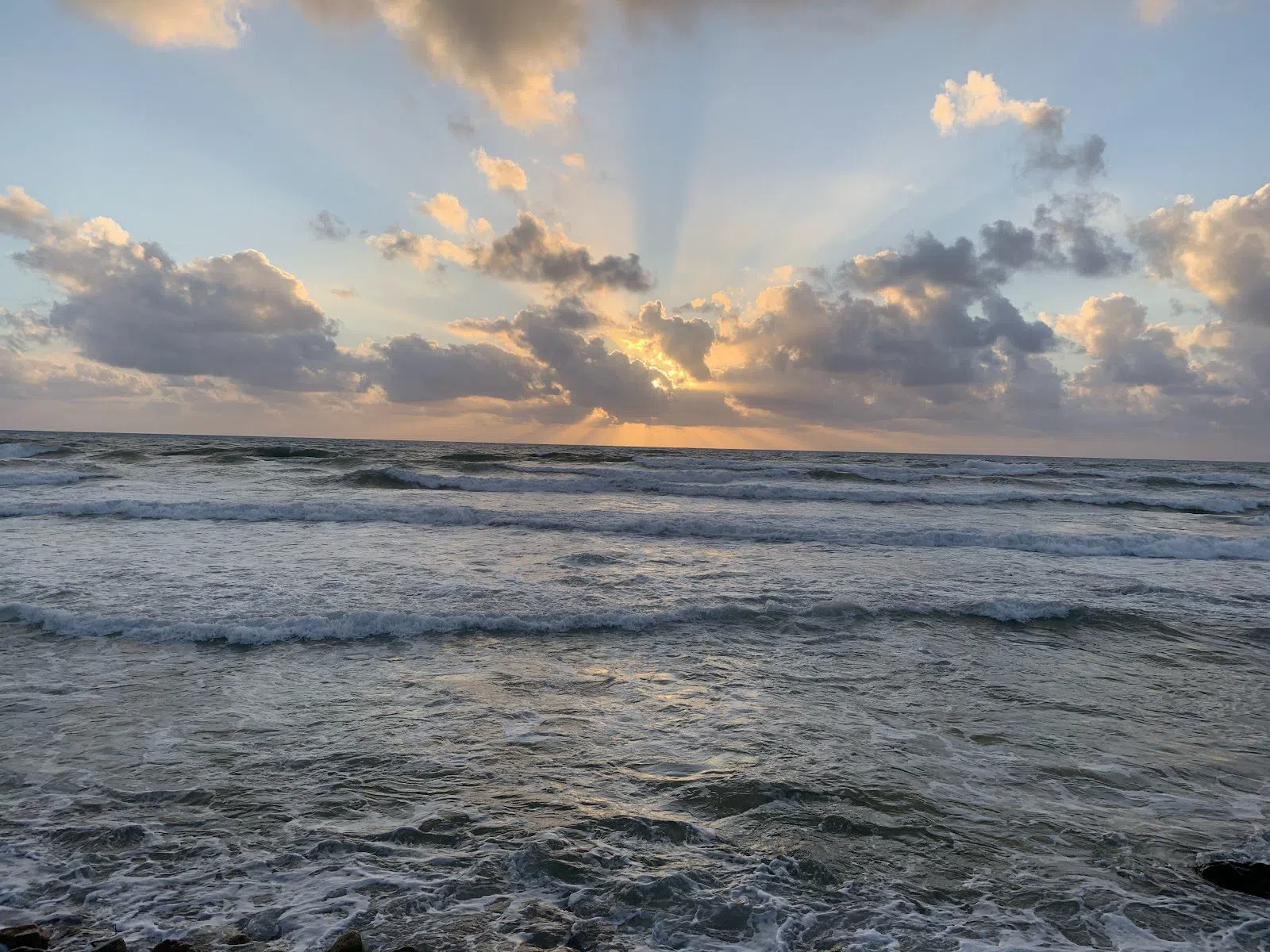
Start on the Tel Aviv Port Wooden Deck (the Namal boardwalk) and walk it westbound an hour before sunset. The pale timber lifts and falls underfoot in dune-shaped waves, and rusted bollards and railings mark the edge of the old quay. Mediterranean breakers hit the concrete sea wall below.

The deck is public open space, free, with no limit on numbers. Most walking tours of the port set off from it. Nothing here is ticketed or timed, so the only decision is which end you start from.
Planlegg reisen til Tel Aviv
Oppdaterte priser fra våre bookingpartnere.
Gratis avbestilling på mange rom. Vi kan motta provisjon når du bestiller.
The lighthouse at the Yarkon mouth
Walk north and the deck gives out at Reading Light (the breakwater at the port's north tip), a squat 17 m square white concrete tower with a black lantern housing. The British built it between 1934 and 1935 and kept it lit until 1965. It is a listed heritage site now, with rock armour and surf below the path.

There is no interior access. You look at it from the breakwater path, at any hour, for free. Cross the Yarkon footbridge and a minute further on is the 1938 Reading power station, whose brick chimneys you have been watching across the water.
Yarid HaMizrach and the 1934 fair grounds
Yarid HaMizrach (the Levant Fair grounds) is the surviving north-east corner of the 1934 Levant Fair, the trade expo whose Flying Camel emblem turned into a Tel Aviv shorthand. The emblem is still there. White-render pavilions from the Bauhaus era stand around a sunken stone amphitheatre, the Tribuna, which puts on free concerts.
The lawns run out to a timber-and-rope playground, the biggest free playground in the city. Entry is free and unticketed, and the lawns take crowds without feeling full. This is the family end of the port, and children who have had enough of the deck will stay here for an hour.
Metzitzim Beach
Metzitzim Beach sits immediately south of the deck, a small crescent of sand in a cove the breakwater shelters. The water is calm and shallow. Blue-and-white striped umbrellas stand in rows, a wooden lifeguard tower looks over the sand, and the deck rises at the north end of the cove.

The beach is free and public. Disabled-access matting runs onto the sand, and there is a playground and a lending library. Lifeguards work the season: in 2026 the bathing season ran from 25 March to 10 October. Outside those dates nobody is watching the water and you swim at your own risk.
The Yarkon and Ganei Yehoshua
The port's eastern edge is the Yarkon estuary, where Ganei Yehoshua (HaYarkon Park) begins. Pedalos and rowing boats work the brown-green water between green banks, eucalyptus gives the shade, and cyclists come past on a ribbon of tarmac. The park takes 16 million visits a year and is free to enter.

The riverside path runs 20 km inland from here. Take it on foot or on a hire bike for the walk out of the Namal. Boat hire, bike hire and the Sportek sports complex all take bookings, including for parties.
The market hangars
Shuk HaNamal (the Tel Aviv Port Market) fills a two-storey hangar under steel roof trusses, with crates of citrus and herbs stacked on the floor and cheese and fish counters lit by hanging bulbs. Walk in; there is no booking. On Fridays the farmers' market spills out onto the concrete apron, free to browse and crowded by mid-morning.

Hangar 12 has changed hands, and a refit of around 12m NIS started after the autumn 2026 holidays, with the new-look market due around New Year. Check it is trading before you build a visit around it.
Sherry Herring (inside Hangar 12) is Sherry Ansky's counter, where an Ashkenazi staple became Tel Aviv street food. Baguettes are split and loaded with pink herring fillets, sour cream, chopped tomato and chilli, with jars of pickled fish on the shelf behind. Counter service and a handful of stools: fine for two or three, hopeless for a coach party. Confirm it is open during the refit.

Treysar above the market
You reach Treysar (upstairs above the port market) by a narrow stair. Chef Aner Ben Rafael Furman cooks micro-seasonally and changes the menu every month, and the vegetable-forward plates come off an open pass in a room of warm wood. The sea shows over the hangar roofs.

Reservations are essential. The kitchen runs set menus for small and medium parties, and it is confirmed to keep trading through the Hangar 12 refit. The price band is ₪₪₪₪.
Fish and meat on the deck
Yulia (Hangar 2, at the deck's southern tip) has been open since 2006 and is the port's special-occasion fish house. The dining room is glass-fronted, with white tablecloths, timber and whole fish on ice. Waves break directly below the terrace rail, and no table in the Namal has a more direct sea view, so book the terrace specifically rather than a table indoors. ₪₪₪₪.
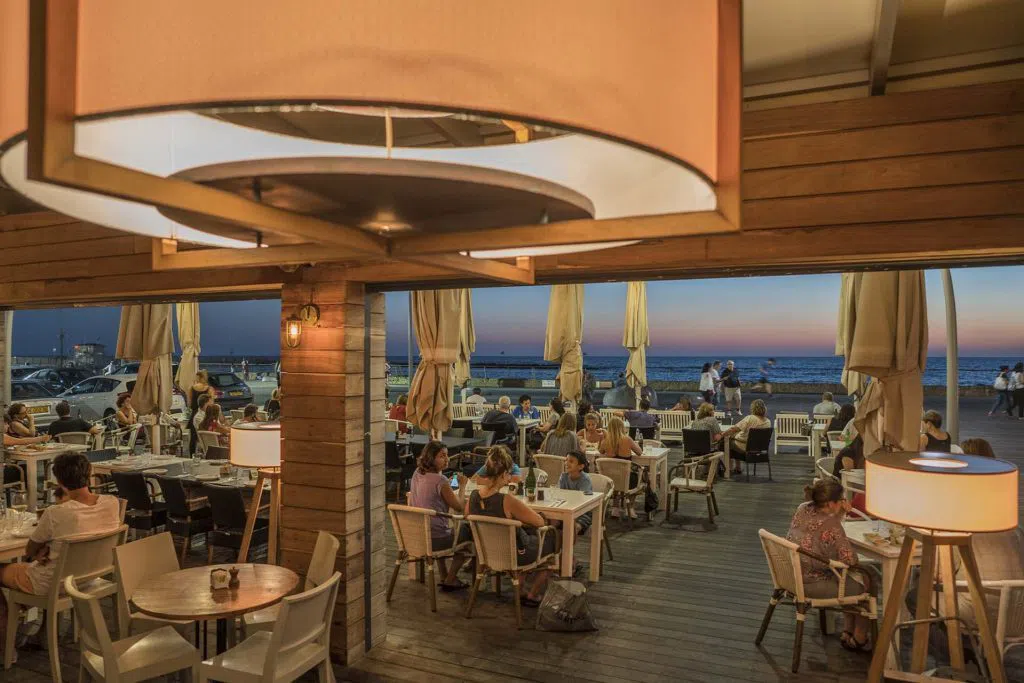

Lechem Basar (Hangar 14, at the port's southern end) is a bread-and-meat grill: a charcoal grill, racks of loaves baked on site, terrace tables on the deck above the water and marina masts behind them. It is the port's best kosher kitchen, Mehadrin, and it is set up for long tables and celebrations. It closes on Friday evening and reopens after Shabbat. Its operator won the tender to rebuild the market. ₪₪₪.

Rashel (Hangar 27) does Moroccan-Mediterranean cooking, tagines and grilled entrecôte, in a room dressed in tilework and lanterns with low lounge seating and a DJ booth at the back for weekend nights. The crowd is young and the bar works. Booking is recommended. It is Mehadrin kosher and closed on Friday and on Saturday daytime. ₪₪₪.
Shtsupak (256 Ben Yehuda) is a five-minute walk from the deck, just inland of the port gate. The day's catch comes from local fishermen and sits on an ice counter by the door; the paper-topped tables fill up and stay full, and platters of mezze salads land first. Nearly three decades of this have made it better value than most of the seafront. Long tables suit it, and the Sunday fixed-price seafood festival comes with draught beer. ₪₪₪.

Nights in the hangars
Hangar 11 is a working cargo hangar turned into the city's main mid-size concert room. The warehouse is painted black, girders and roller shutters are left exposed, truss rigs hang over a standing crowd and sea air comes in through the open loading doors. The 2026 calendar is full, with Israeli headliners and touring acts.

Shows are ticketed, standing or seated depending on the night. The venue sells blocks of tickets and is hired whole for private events and festivals. ₪₪₪.
Shalvata is an open-air deck on the water, with sand, scrubby palms, strings of festoon bulbs and low cushioned seating that clears into a dancefloor after dark. It has run for 17 years as a beach restaurant by day and a party by night, and after a wave of closures around it, it is the last of the port's great nightspots still standing. The appeal is warm weather; in winter it is a different proposition.
It takes groups and books tables. From around 21:00 it turns into a dance bar with a door and a guest list, so reserve ahead in summer rather than turning up with eight people and hoping.
Where to stay
The Port Hotel Tel Aviv (corner of Yirmiyahu and HaYarkon streets) is a small independent property with a pale stone and glass frontage, Bauhaus apartment blocks on either side and the deck a few hundred metres west. Rooms run ₪425 to ₪700 a night, and it takes group bookings. The nearby Spot Hostel is the budget alternative.

You are paying for the position rather than the room. The hotel is minutes from both the deck and Metzitzim Beach, which counts for a lot in a late-night district where taxis out are a scrum.
Practical notes
Lechem Basar closes on Friday evening and Rashel on Friday and on Saturday daytime, the market hangar needs a check while the refit runs, and Metzitzim has no lifeguard outside the bathing season. Book Treysar, Yulia's terrace and any summer table at Shalvata before you arrive.
See the Tel Aviv guide and the Tel Aviv hotel search.
Før du drar
Is Shuk HaNamal, the Tel Aviv Port Market, open right now?
Hangar 12 changed hands, and a refit of around 12m NIS started after the autumn 2026 holidays. The market is due to reopen around New Year, so check it is trading before you plan a visit around it. Treysar, upstairs above the market, stays open through the work. Sherry Herring is inside Hangar 12, so check that counter separately.
When can you swim at Metzitzim Beach?
Lifeguards were on duty for the 2026 bathing season at Metzitzim, 25 March to 10 October. Outside those dates there is no lifeguard and you swim at your own risk. A breakwater shelters the cove, so the water is calm and shallow. The beach is free, and it has disabled-access matting, a playground and a lending library.
Can you go inside the Reading Light lighthouse?
No. The British built the 17 m tower between 1934 and 1935 and it stayed lit until 1965; it is a listed heritage site and you cannot go inside. You see it from the breakwater path at the port's north tip, at any hour, for free. Cross the Yarkon footbridge and the 1938 Reading power station is a minute further on.
Which restaurants at Tel Aviv Port are kosher?
Lechem Basar in Hangar 14 is Mehadrin kosher, a bread-and-meat grill with terrace tables above the water; it closes on Friday evening and reopens after Shabbat. Rashel in Hangar 27 is also Mehadrin kosher, closed on Friday and on Saturday daytime. Both take large tables, and you should book at Rashel.
Do you need to book Shalvata?
In summer, yes. Shalvata takes groups and books tables. Through the day it runs as a beach restaurant on an open-air deck on the water, and from around 21:00 it turns into a dance bar with a door and a guest list. It is a warm-weather place.