The Tel Aviv issue
The White City Walk: Tel Aviv's Bauhaus Blocks, One Street at a Time
A street-by-street guide to walking Tel Aviv's UNESCO-listed White City in 2026 — where to start, which building teaches what, and which tour actually fits your group.

By Inês MarquesWalking the White City, Jaffa and everything in between
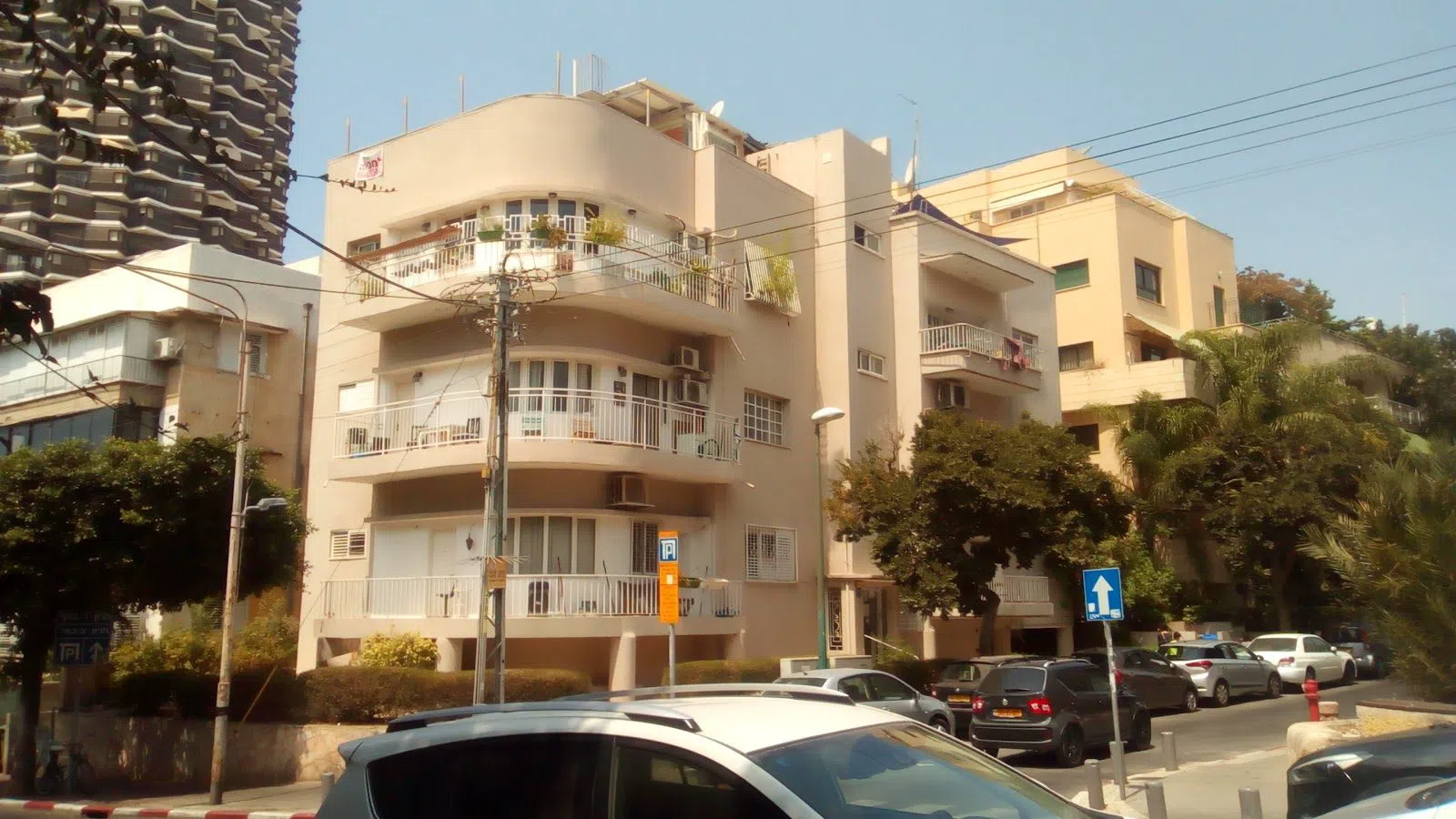
Stand on Rothschild Boulevard early, before the cafés fill, and the White City reveals itself slowly: curved balconies stacked like drawers, ribbon windows turning the corner, thermometer strips of glass climbing a stairwell. There are more than four thousand Bauhaus and International Style buildings here, the densest concentration anywhere, and they were not built to be admired one at a time. They were built as a fabric. This walk treats them that way — one street, one block, one shaded bench at a time.
The White City earned its UNESCO World Heritage listing in 2003, but the buildings arrived in the 1930s, when architects trained in Germany brought the new modernism to a young, hot, sandy city and adapted it to the light. What you are walking through is that adaptation: flat roofs for gathering, deep balconies for shade, small windows on the sun side. Below is how to read it on foot, grouped the way a trip actually unfolds — where to begin, the spine you'll follow, the buildings that teach you something, and how to choose the right guide for the size of your party.
Start where the map is drawn
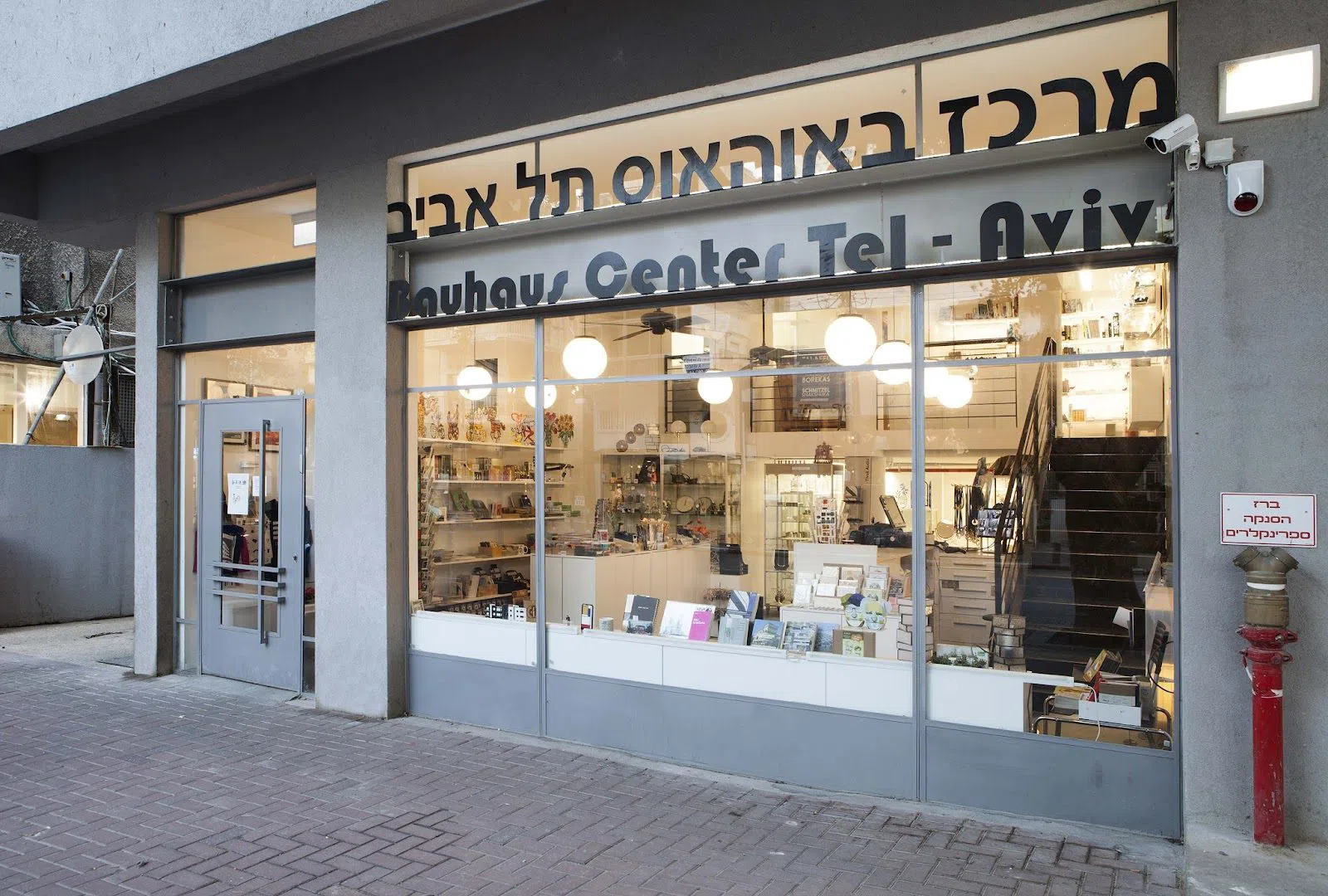
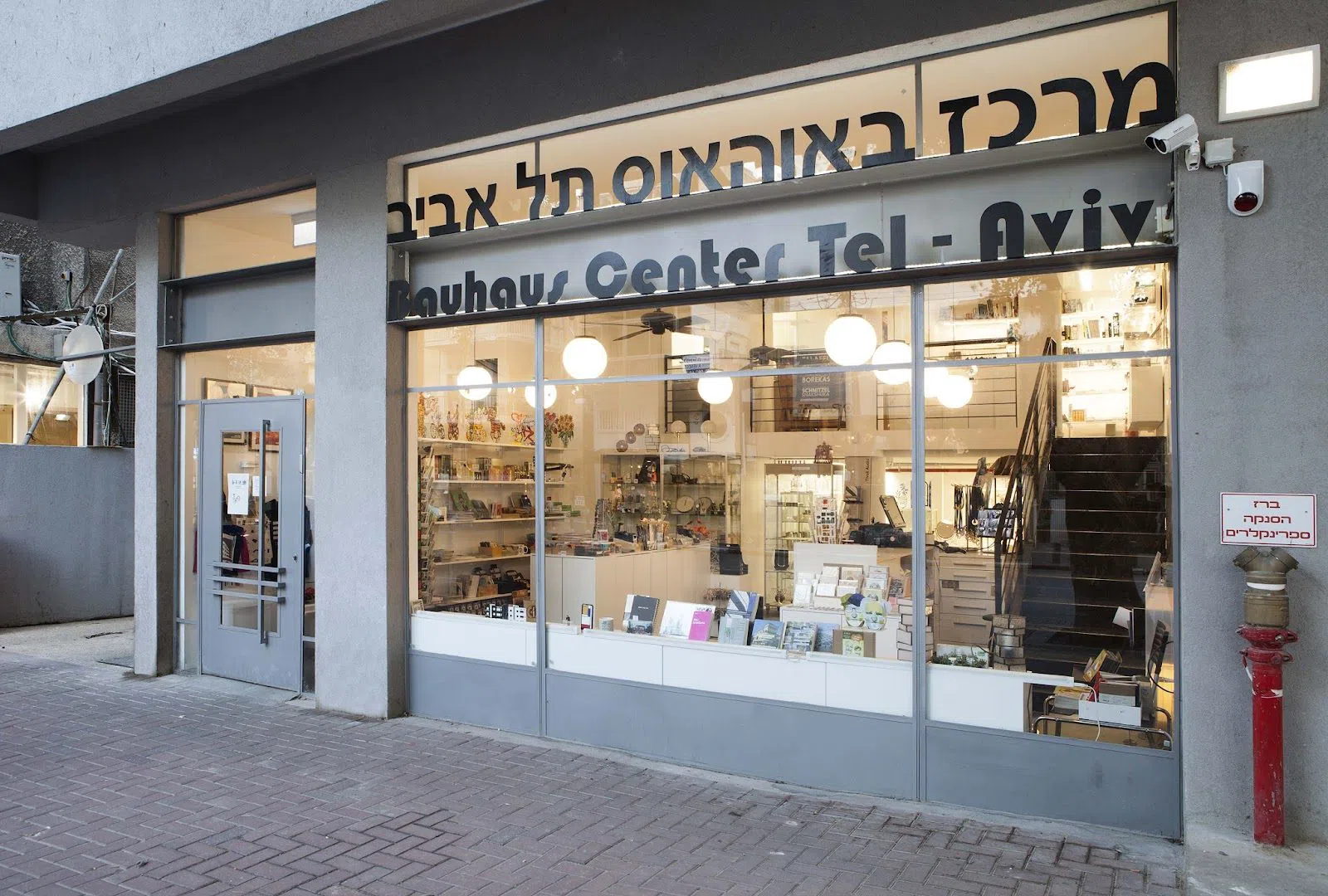
Begin at the Bauhaus Center Tel Aviv (Dizengoff Street), the self-described original and only authorised Bauhaus tour operator, and the natural anchor for the day. The gallery and shop are free to browse, so you can walk in cold, pick up a map, and orient yourself before committing to anything. If you want a guided walk, they run scheduled English-language group walks on Fridays and Sundays at 10:00 for around ₪120 per person, and they'll arrange private multilingual groups in advance. This is the one operator genuinely comfortable with tour-sized parties, so if you're travelling with more than a handful of people, book here first and build the rest of the day around it.
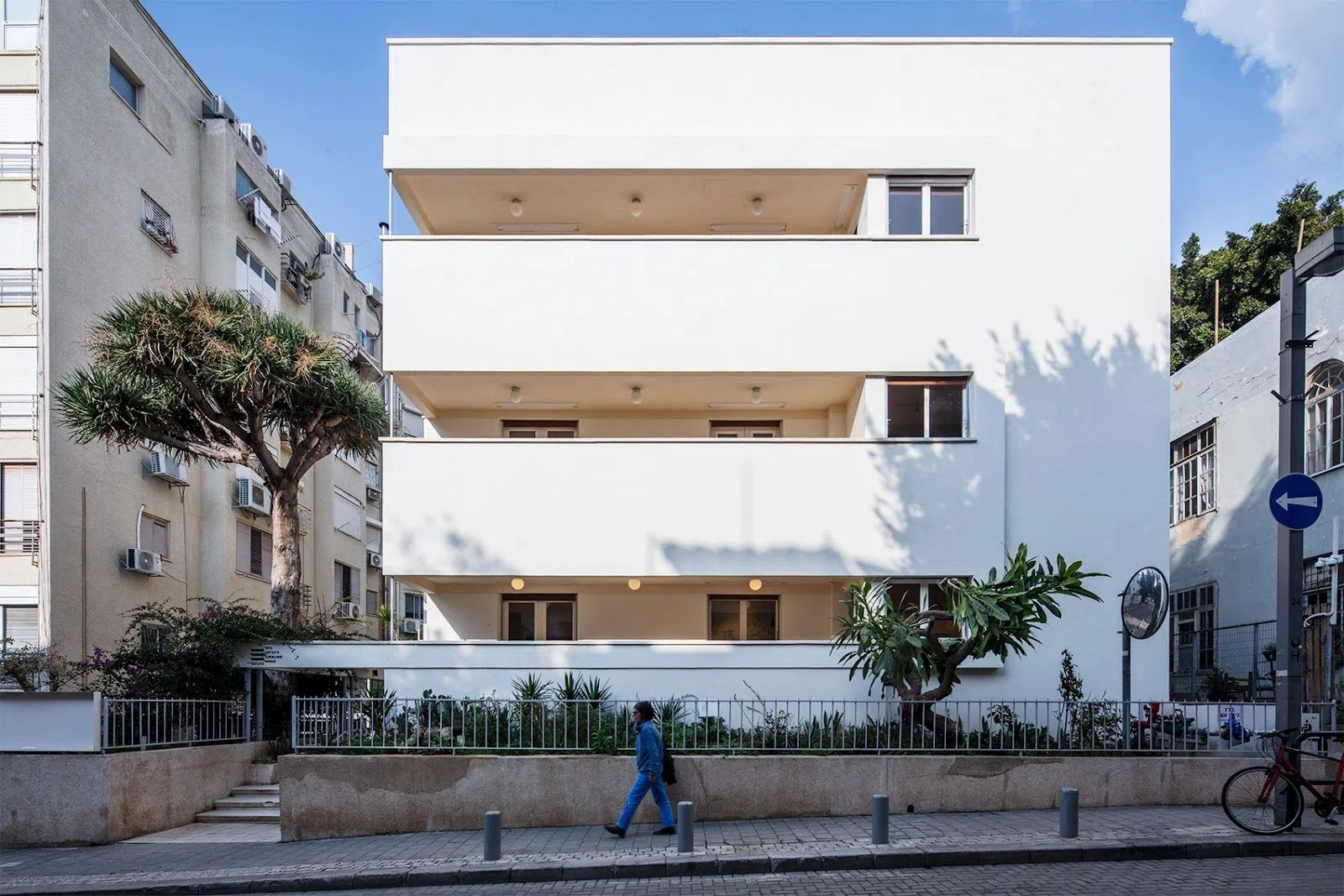
From there, walk to the Liebling Haus – White City Center (Idelson Street, in the Bialik quarter), also known as the Max Liebling House. Of every indoor stop on this walk, this is the one that explains how the White City is actually kept standing. It's a public conservation lab in a restored 1936 building — a working institution built for visitors rather than a gift-shop museum. Entry is free, groups are welcome, and you can book a guided tour, seminar or workshop ahead of time. Spend twenty minutes here on the how of restoration — the salvaged windows, the plaster samples, the reasoning behind each repair — and every façade you see afterward reads differently. It is the best single indoor stop to grasp what conservation means before you go looking at the results.
Plan your Tel Aviv trip
Live prices from our booking partners.
Free cancellation on many rooms. We may earn a commission when you book.
The spine: Rothschild and Dizengoff
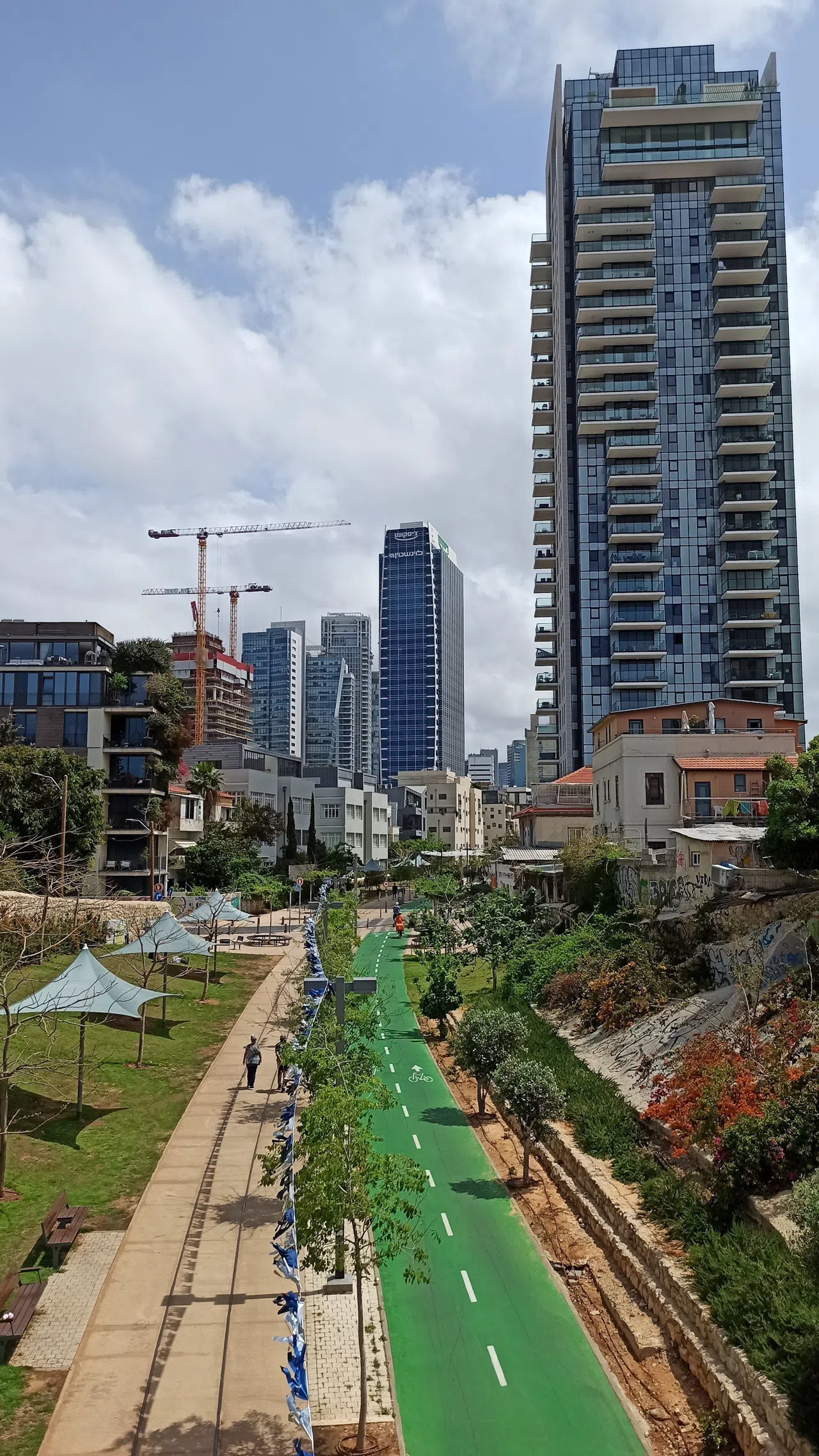
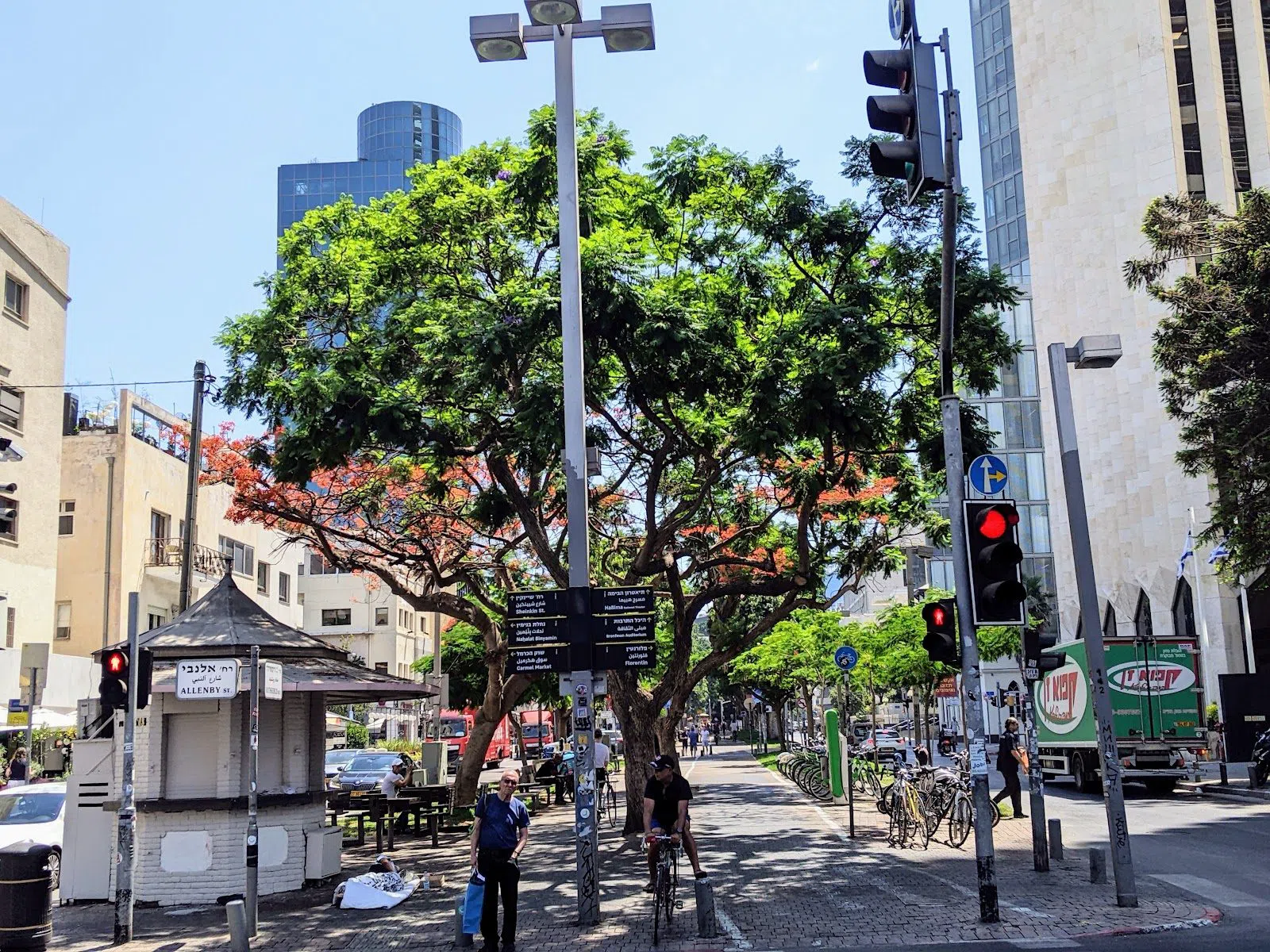
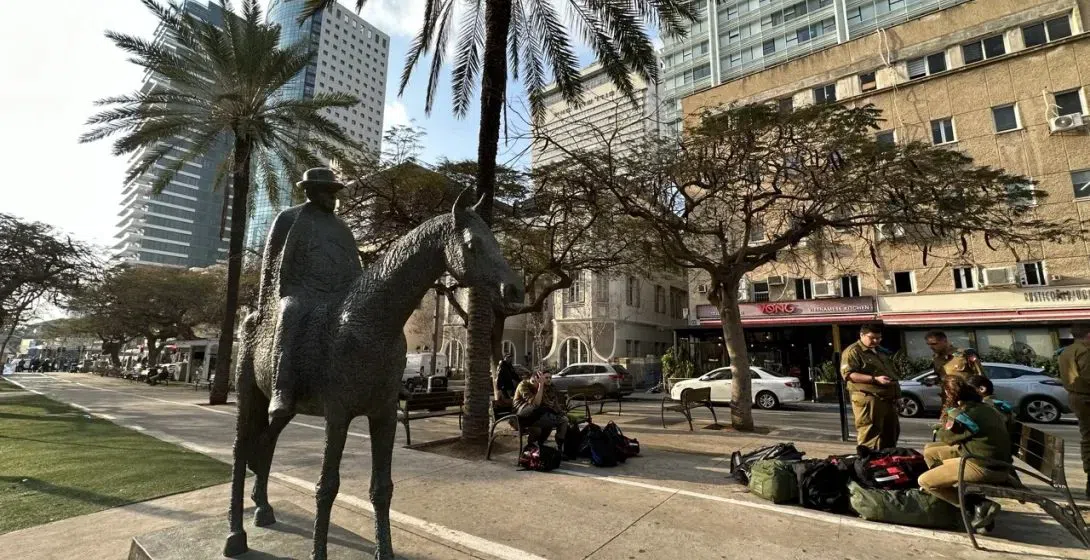
Everything on this walk hangs off one street. Rothschild Boulevard (city centre) is not a single venue but the backbone of the White City — a wide, tree-shaded boulevard with the highest concentration of restored façades and a central pedestrian strip lined with benches and kiosks. It's public, free, and absorbs any group size, which makes it the through-line every operator uses. Walk it slowly on the median, not the traffic edge, and let your eye climb: the corner buildings are where architects showed off, wrapping their balconies around the junction so the whole block seems to turn. Stop at a kiosk, sit, and look up for a while. That is the walk, really.
From Rothschild, follow the route north to Dizengoff Square (also called Zina Dizengoff Square), the symbolic heart of the ensemble. The square was restored to its original raised-then-lowered ground level, bringing the surrounding buildings and the Agam fountain back into one composition, and it is fully public and open-air — it handles any number of people and works as a natural gathering and photo point. If you're herding a group, this is where you regroup; if you're two, it's where you sit and watch the buildings hold the circle. Either way it costs nothing.
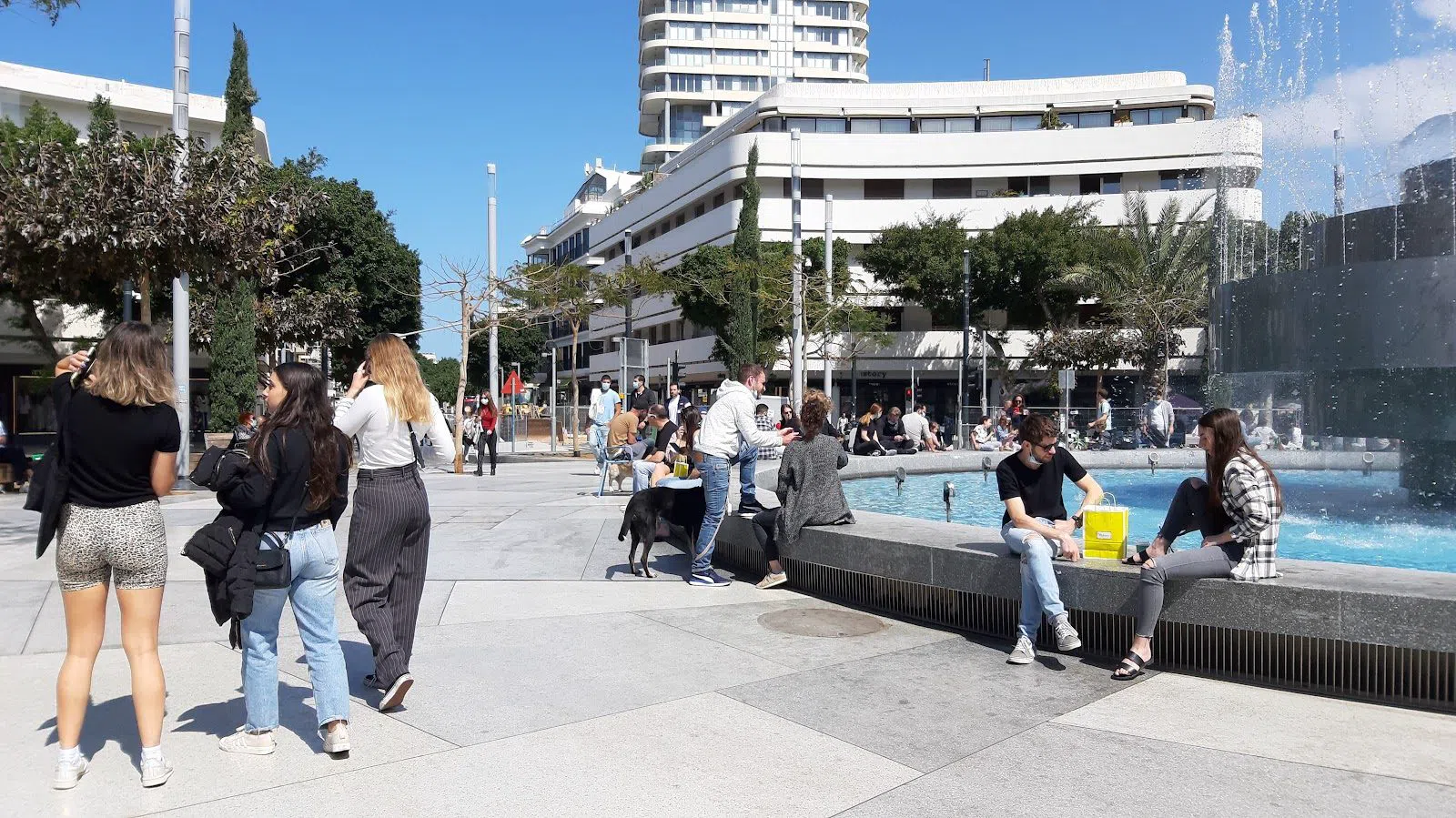
On the square itself stands Cinema Hotel – an Atlas Boutique Hotel (Dizengoff Square), a 1939 Magidowitz building that began as a cinema and is now the most photogenic living Bauhaus structure on the plaza. The exterior is free to view and rewards a slow circle. The public lobby and café are readable from the street and make an easy mid-walk break; the rooftop and rooms, reasonably, are for guests only, though group room bookings are possible and rooms start around ₪500 a night. Treat it as a coffee stop and a study in how one of these buildings actually lives when it's occupied rather than preserved behind glass. If you'd rather sleep inside the architecture than only look at it, a wider Tel Aviv hotel search will show what else sits within the White City footprint.
The buildings that teach
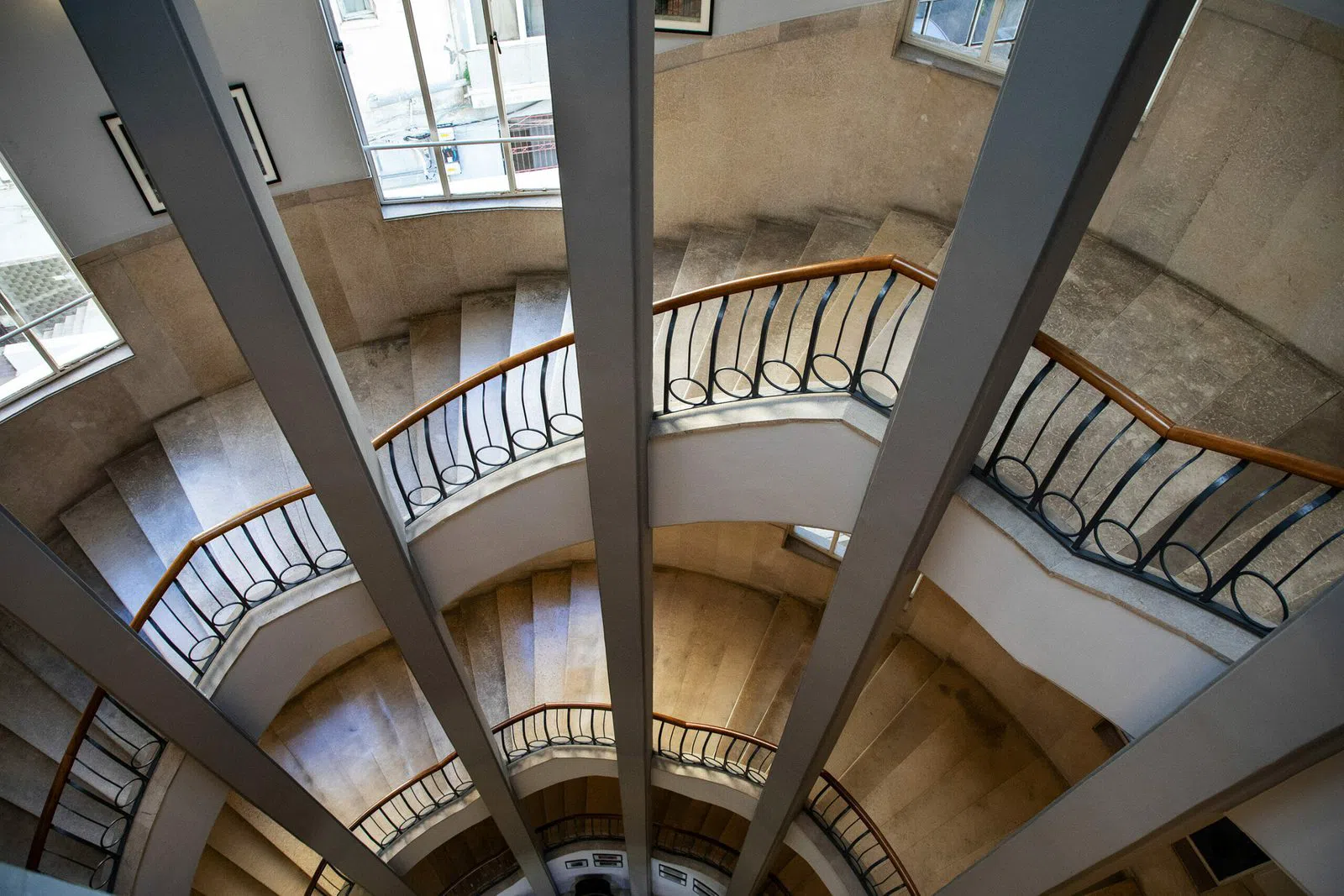
A short detour from the square takes you to the Thermometer House (near Dizengoff Square), Yehuda Lulka's 1936 building named for the vertical strip of stepped windows lighting its stairwell like a gauge. This is the walk's aha moment: a clear, memorable case of Bauhaus ideas bent to the local climate, pulling daylight up the stair while keeping the sun-facing rooms shaded. It's a residential building, so this is an exterior stop only — you view the façade from the street, which any group size can do freely. Give it five minutes. It teaches more about adaptation than a paragraph can.
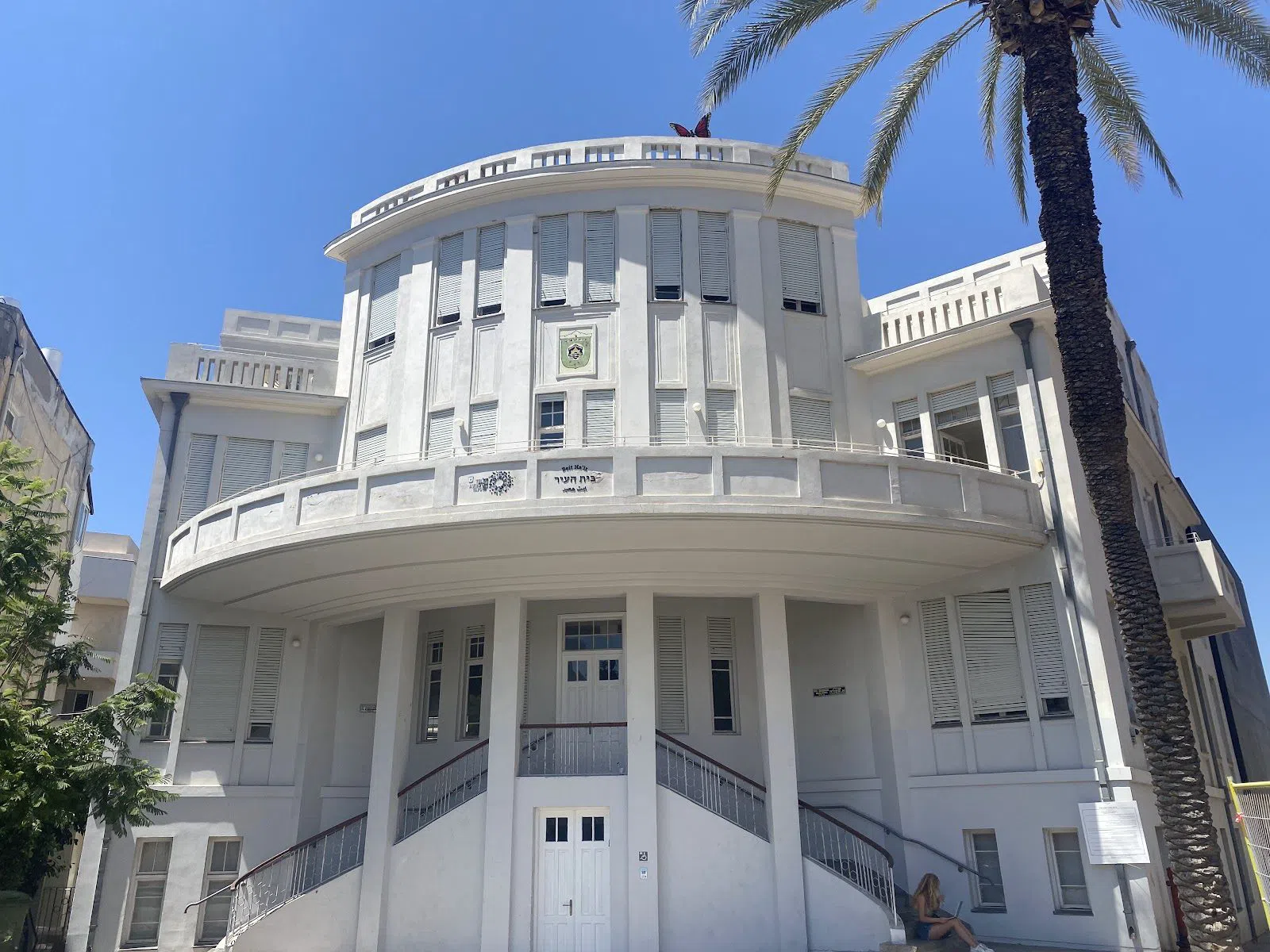
Close the loop at Beit Ha'ir History Museum (top of Bialik Street), a ticketed municipal museum that rounds out the architecture with the city's own history in the building that once served as its town hall. Admission is roughly ₪40 for adults and ₪20 concession, with group tickets available, and it opens Monday to Saturday — note that it is closed on Sundays. One firm warning: it has been reported as closing for renovation across July and August, so verify the hours before you build your day around it. If it's shut, the Bialik Street cluster around it is still worth the climb on its own.
Choosing the right guide
The White City is walkable without a guide, but a good one turns façades into stories. The catch is that the tours are built for very different kinds of traveller, and the door policies matter more than the price. Here is how they sort out.
For a small, serious deep-dive, book the Tel Aviv Bauhaus Walk with Yigal Gawze (private, city centre). Gawze is an architect and author who wrote a book on Tel Aviv Bauhaus, and his roughly three-hour private walk is the connoisseur's choice. The essential caveat: it's capped at about four people, so it is the opposite of a coach group. Pricing is premium and per-tour rather than per-head, roughly ₪600–800 for the tour. If you're a couple or a trio who care about the detail, this is the one to reserve. If you're eight friends, it simply won't take you.
For solo travellers and couples on a budget, the Walkative! White City Bauhaus Tour (meets city centre) runs on a pay-what-you-wish basis and is reliable for individuals who want to walk up without booking. Be clear on the group rule before you plan around it: parties of eight or more can't join the free walk and are pushed to the paid option at about €12 per person, or a private booking. For one or two people, it's an easy, low-commitment start.
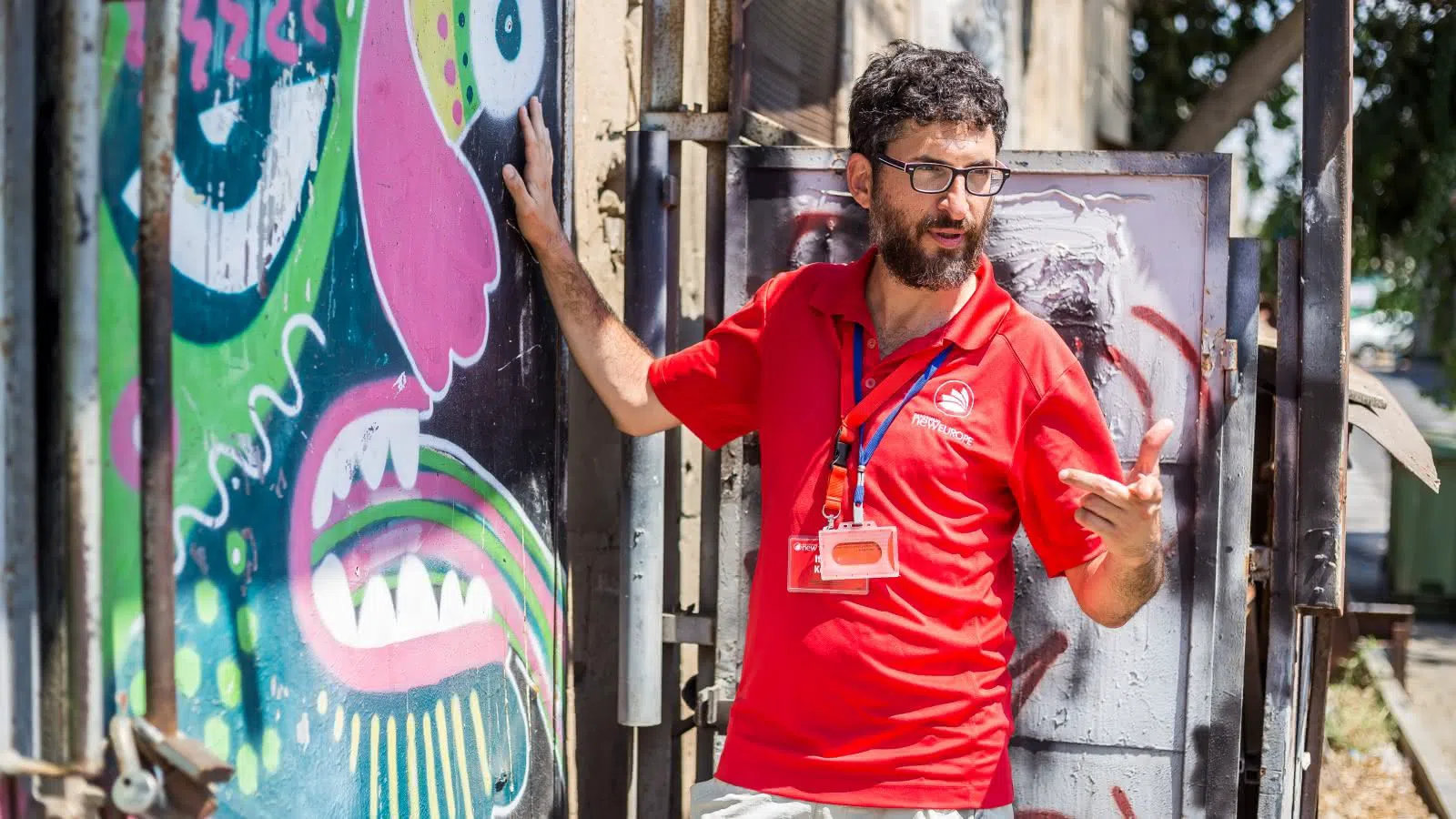
For a first-time international visitor who wants context rather than only architecture, SANDEMANs Modern Tel Aviv (Neve Tzedek) pairs Bauhaus with street art and the low-rise lanes of Neve Tzedek. It runs on the international tip-based format that comfortably absorbs walk-up groups, and it's bookable privately if you'd rather lock in a time. It's the broadest introduction on this list — good if you want the White City set inside the wider city rather than studied in isolation.
For booked groups, older travellers, or anyone who wants logistics handled, Bein Harim – White City Bauhaus Tour (organised departures) is the structured choice. It's a major established Israeli operator geared to organised and coach groups, with professional licensed guides and mid-range pricing in the ₪150–250 per person band. You trade spontaneity for a guide who has done this a thousand times and a schedule that runs on rails — the safe pick when the group is large and mixed.
So the honest sorting is this: two of you who love architecture, take Gawze; two of you on a budget, take Walkative!; first-timers wanting the wider picture, take SANDEMANs; a large or older group, take Bein Harim or the Bauhaus Center. Match the door policy to your party before you fall in love with a name.
A sensible order for the day
Walked in one loop, the pieces connect cleanly. Start at the Bauhaus Center to orient and, if you like, pick up a scheduled walk. Cross to Liebling Haus for the conservation grounding. Drop onto Rothschild Boulevard and follow its spine north, letting the corner buildings do the talking, to Dizengoff Square and the Cinema Hotel for coffee. Detour to the Thermometer House for the climate lesson, then climb Bialik Street to Beit Ha'ir to close on the city's history. It's a half-day at a walking pace, longer if you sit as much as the boulevard invites you to. For the fuller picture of the neighbourhood — where to eat, where to stay, what sits beyond the architecture — the Tel Aviv guide carries the rest.
Practical notes
Getting around. This is a walking route by design — the whole loop covers a compact stretch of the city centre, and the boulevards are flat and shaded. Wear real shoes and start early: the light is kinder and the pavements cooler before mid-morning. From further out, the city's buses and the light rail reach the centre, but once you're on Rothschild you won't need transport again.
Cash and cards. Prices here are in Israeli new shekels (₪). Cards are accepted almost everywhere, including museum admissions and hotel cafés, but carry a little cash for a pay-what-you-wish or tip-based tour, where handing the guide something in hand is the norm. Museum entries run from free (Liebling Haus) to around ₪40 (Beit Ha'ir); guided walks range from about ₪120 per person up to ₪600–800 for a private tour.
Timing. Two stops need checking before you go. Beit Ha'ir is closed Sundays and has been reported closing for renovation in July and August 2026 — confirm its hours first. The Bauhaus Center's scheduled English group walks run Fridays and Sundays at 10:00; if those don't fit, book a private or tip-based tour instead. Note that Friday afternoons wind down early across the city, so a Friday-morning walk is well timed.
Budget, roughly. A couple can do the whole day for very little: free façades and squares, a free or pay-what-you-wish walk, and one ₪40 museum ticket. A group wanting a professional guide should budget the ₪150–250 per person band, or the flat private rate if you're four or fewer and want the architect's-eye version. Either way, the boulevard itself — the best part — is free.
Before you go
Do I need to book a tour, or can I walk the White City on my own?
You can walk it freely — Rothschild Boulevard, Dizengoff Square, the Thermometer House and Cinema Hotel's exterior are all public and cost nothing. A guide adds the stories behind the façades. If you want one, the Bauhaus Center runs scheduled English walks (Fri and Sun at 10:00, about ₪120pp), or start free at the Liebling Haus conservation center.
Which Bauhaus tour is best for a large group?
For groups, book the Bauhaus Center Tel Aviv or Bein Harim — both are geared to tour-sized and coach groups with licensed guides (Bein Harim runs about ₪150–250pp). Avoid the Yigal Gawze private walk, which caps at roughly four people, and note that Walkative!'s free tour won't take parties of eight or more, who must pay about €12pp or book privately.
How long does the White City walk take?
Allow a half-day at an unhurried pace for the full loop — Bauhaus Center, Liebling Haus, Rothschild Boulevard, Dizengoff Square, the Cinema Hotel, the Thermometer House and Beit Ha'ir. It's a compact, flat route in the city centre, so most of the time goes on sitting and looking up rather than walking distance.
Is the Beit Ha'ir museum open when I visit?
Check first. Beit Ha'ir opens Monday to Saturday and is closed on Sundays, with admission around ₪40 for adults. It has also been reported closing for renovation across July and August 2026, so confirm its hours before you plan your day around it. The Bialik Street cluster around it is worth the climb even if the museum itself is shut.
What's the cheapest way to see Tel Aviv's Bauhaus architecture?
It's nearly free. The Liebling Haus conservation center has free entry, Rothschild Boulevard, Dizengoff Square, the Cinema Hotel exterior and the Thermometer House cost nothing to view, and the Walkative! tour is pay-what-you-wish for solo travellers and couples. Carry a little cash in shekels for pay-what-you-wish and tip-based guides.