The Tel Aviv issue
The Hummus Pilgrimage: Tel Aviv's Most Obsessive Chickpea Ritual
How to eat your way through Tel Aviv's temple hummusiyot the way the city's fanatics do — early, in the right order, and gone before the pot scrapes empty.
By Elias NeumannThe markets, hummus queues and 2am kitchens of Tel Aviv
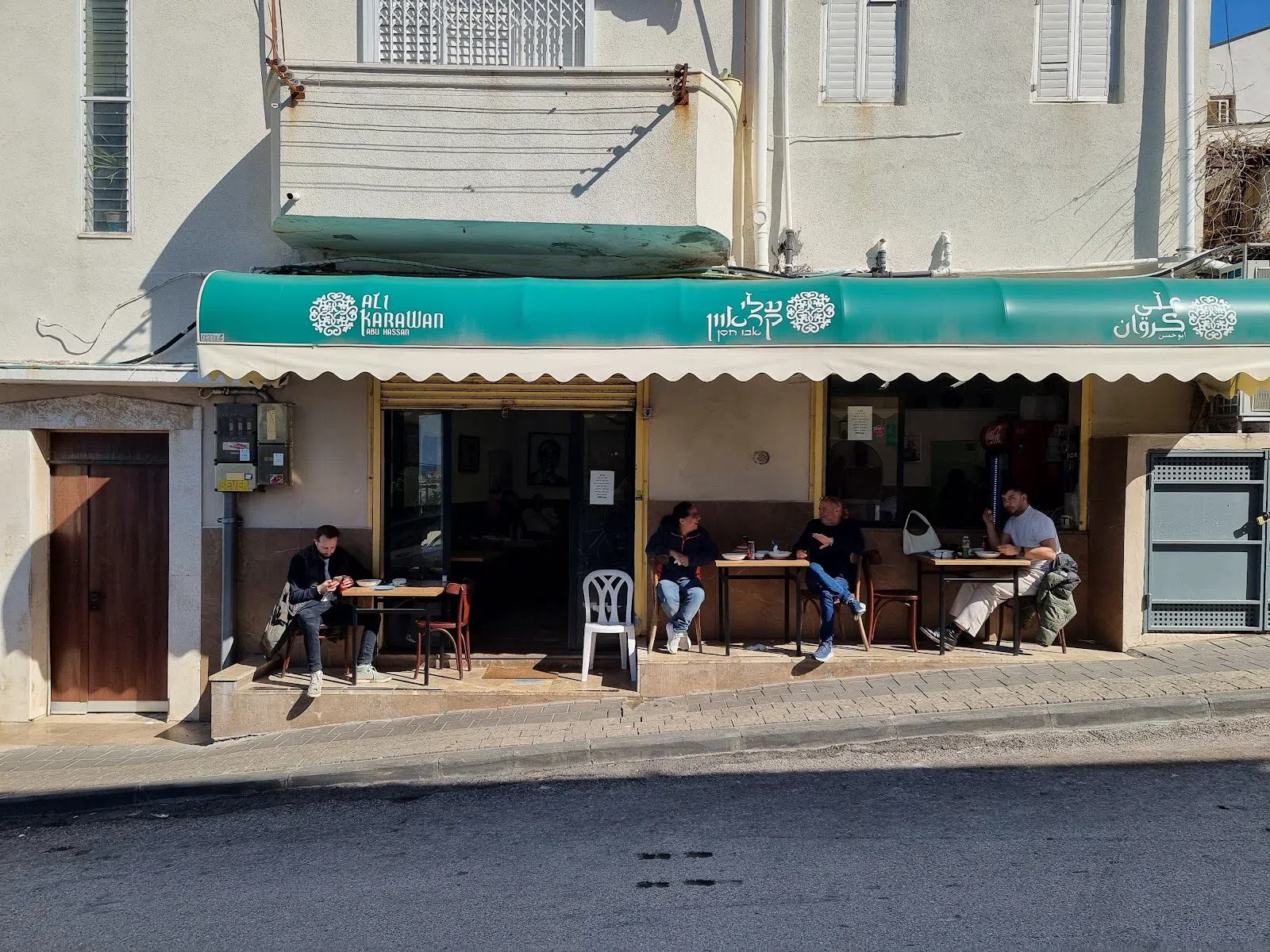
The first plate lands at 09:12: a shallow well of warm chickpea paste, dragged into a spiral, flooded with green olive oil and dusted with paprika so fine it stains the surface orange. The man on the bench beside me has already torn his pita in half before it fully hits the table, and nobody has said the word 'menu'. Tel Aviv does not treat hummus as a dip, a side, or a starter — it treats it as a devotional act with fixed opening hours, a real queue, and a hard stop the moment the pot scrapes empty. This is a guide to eating it the way the city's obsessives do.
What a plate actually holds
Before you pick a shrine, learn the vocabulary, because the counter staff will not slow down for you. A plain plate of hummus is warm mashed chickpea with raw tahini, lemon and garlic worked through it — smooth, faintly bitter from the sesame, sharp at the edges from the lemon. Ask for masabacha (sometimes msabbaha) and you get the same base loosened with whole chickpeas still swimming in their cooking liquor and cumin — looser, brothier, the version most regulars order second. Ful is stewed fava beans, earthier and darker, usually spooned into a crater in the middle so the two textures bleed together. And mashawsha, the house signature at one spot below, sits between the two: whipped lighter, almost airy.
A plate runs roughly 30 to 65 NIS depending on the room — the market counters sit at the low end, the sit-down chain at the top. It arrives with a stack of pita (refills are usually free and unasked-for), raw white onion in quarters, a few pickles, sometimes a hard-boiled egg, and a saucer of pickled chilli that will find you whether you want it or not. You eat with bread, not cutlery: pinch, scoop, wipe the plate clean. That last part is not optional if you want the staff to respect you.
One rule governs the whole itinerary: the best places open in the morning and close when the food runs out, not at a posted time. Plan around that or plan to fail.
Plan your Tel Aviv trip
Live prices from our booking partners.
Free cancellation on many rooms. We may earn a commission when you book.
The pilgrimage itself
Every serious hummus route in this city bends, eventually, toward one address. Abu Hasan (also written Ali Karavan, in the Ajami quarter of Jaffa) is the plate people mean when they say Israel's best, and the claim is hard to argue with once you've eaten there. It is a communal-table, walk-in-only operation — no reservations, no exceptions — with three branches: the original on HaDolphin plus two on Shivtei Israel. They open mornings only, Sunday through Friday, and stop the moment the last pot empties, which is often around 14:45 but can be a good deal earlier on a strong day.
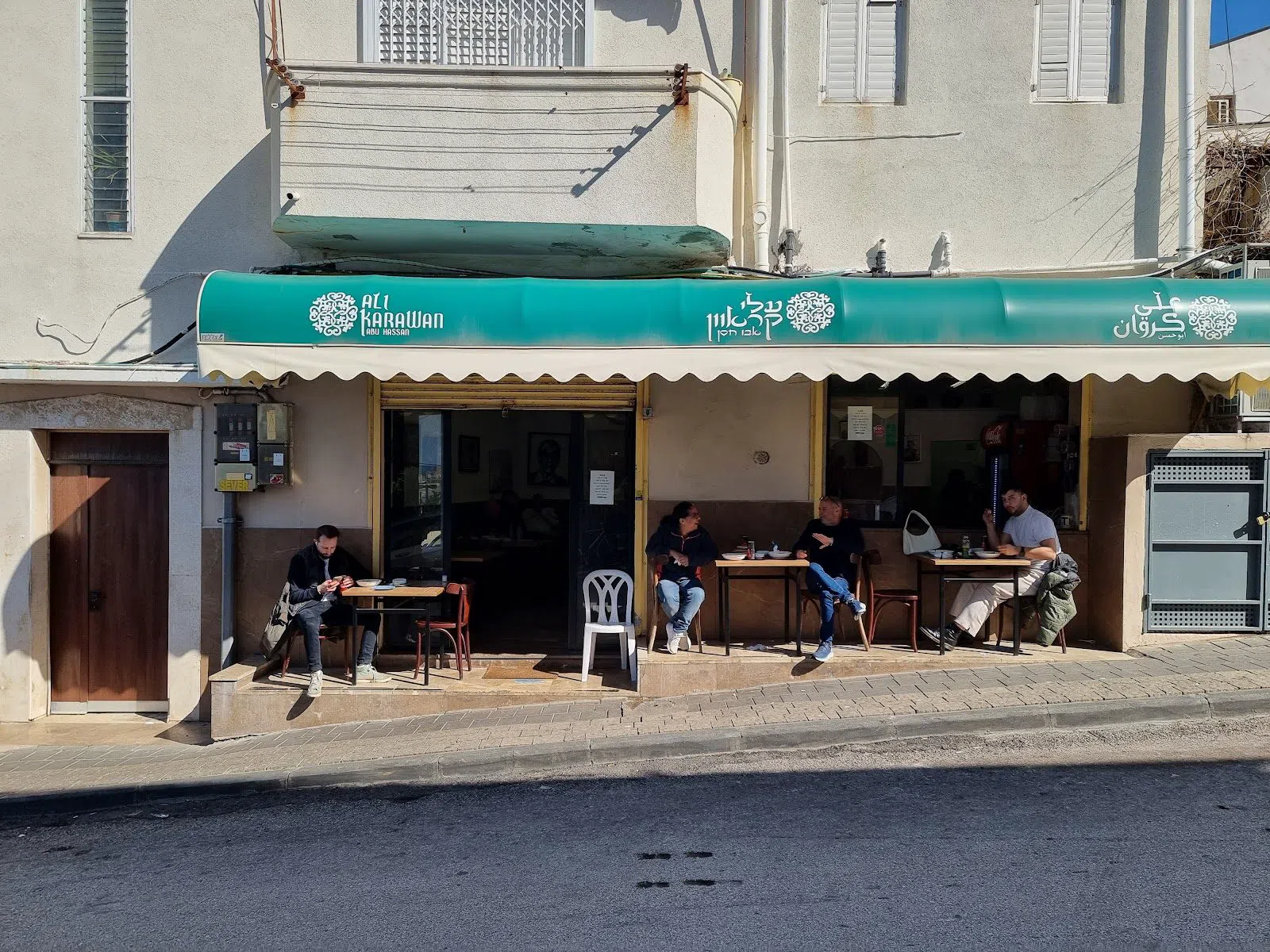
Go early. On a Thursday I arrived at 09:40 and stood for 17 minutes; by 11:30 the line outside the HaDolphin branch was down the pavement and moving slowly. The masabacha here is the thing to order — whole chickpeas, warm tahini, a slick of oil — at roughly 35 to 45 NIS a plate, which is remarkable value for what it is. Come as a pair or a trio and you'll be fine; come as a big group and you should accept, cheerfully, that you'll be split across benches and possibly across two of the three branches. Do not treat this as a leisurely sit-down. You order, you eat with intent, you free the seat.
The Carmel Market circuit
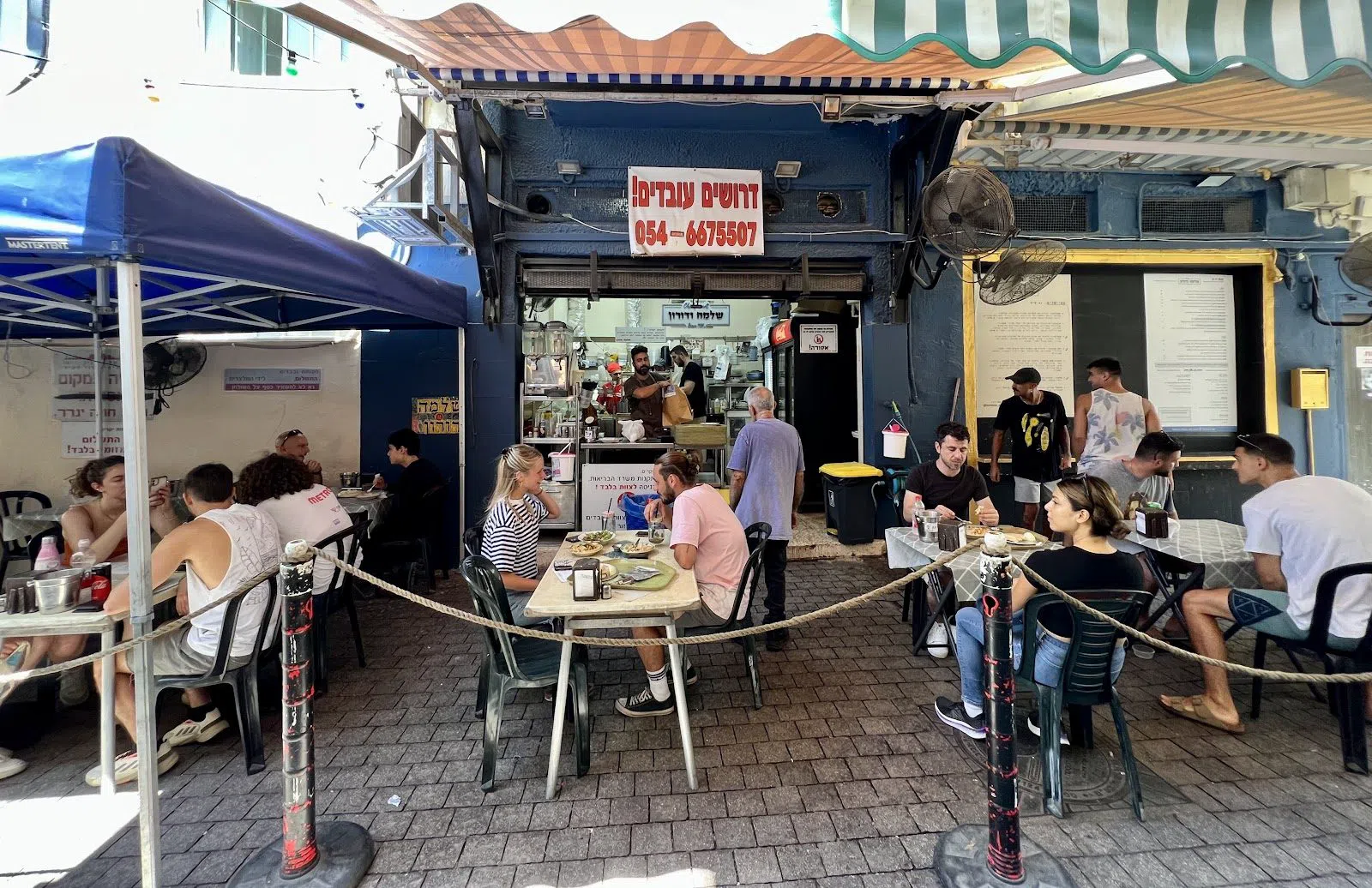
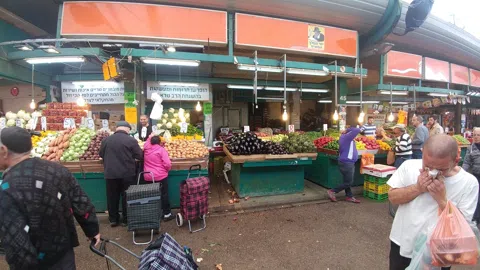
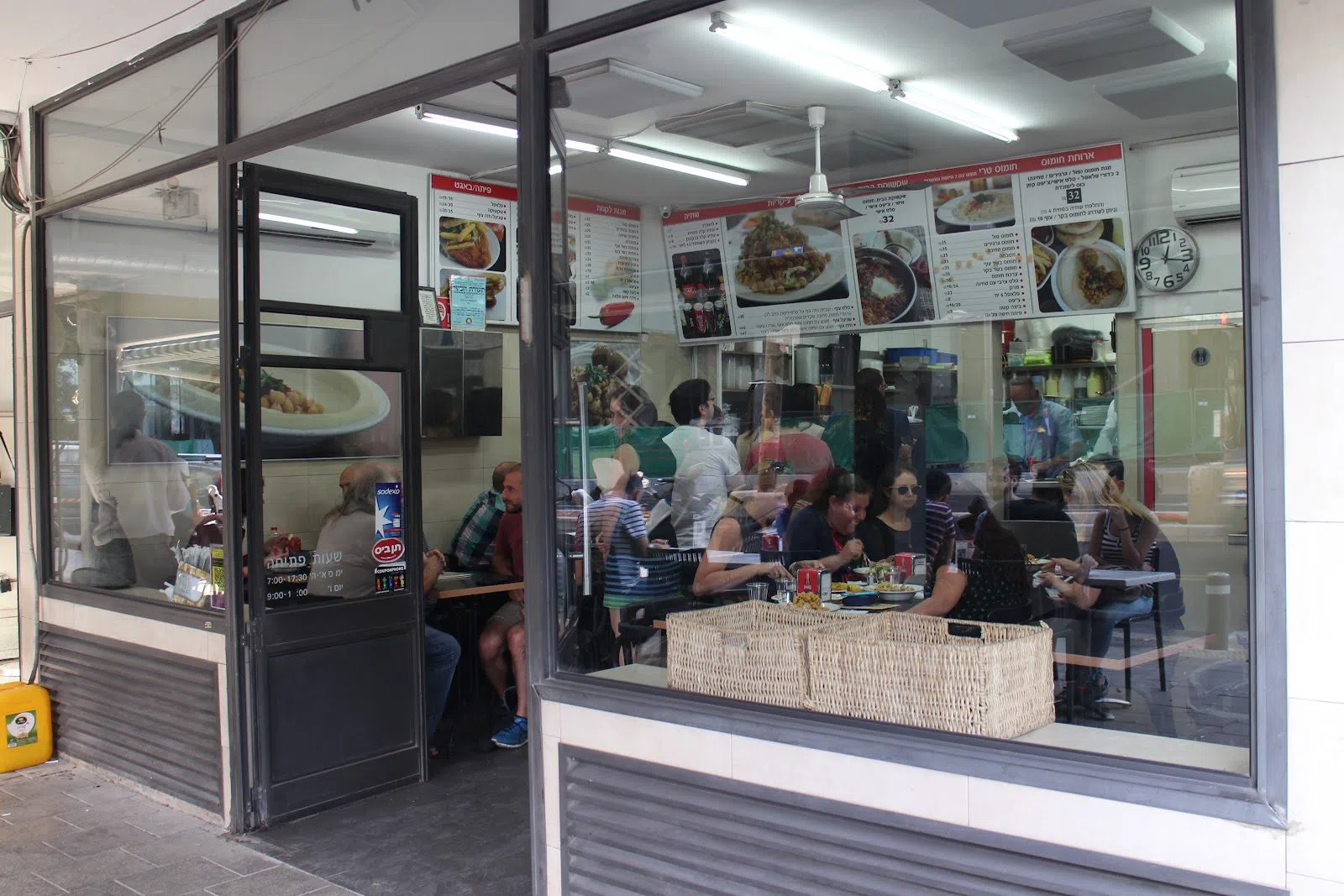
If Jaffa is the destination, Shuk HaCarmel is the warm-up lap, and you can build a genuine crawl here on foot. Start at Shlomo & Doron (beside Shuk HaCarmel), which has been family-run for four generations since 1937 and feels every one of those years — a cramped, first-come-first-served room where the counter never quite stops moving. Plates land at roughly 40 to 50 NIS, the hummus is dense and old-school, and the kitchen closes when the fresh food runs out, frequently by about 15:30. A few of you will squeeze in; a large group will wait, so arrive before the lunch surge rather than during it. I clocked an 11-minute wait at 11:05 and a much longer one an hour later.
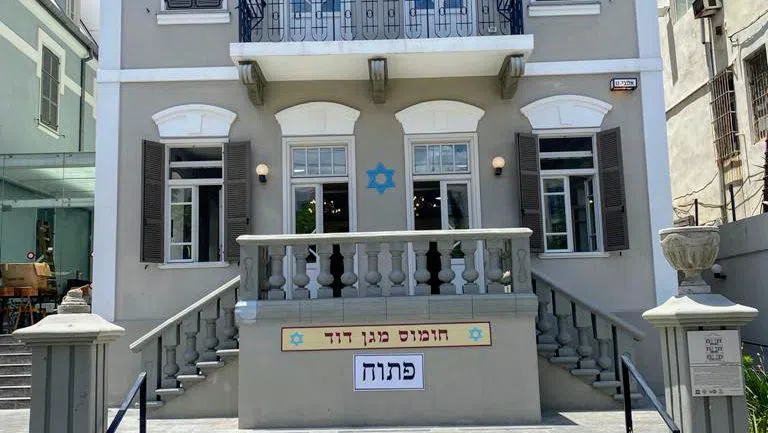
A short walk away, Hummus Magen David (by Magen David Square) is the low-key one you'll walk straight past if you're not looking — minimal signage, an atmospheric little synagogue-adjacent setting, and cheap, well-liked plates from around 30 to 45 NIS. It relocated from its old Carmel-Market pitch, so hunt for the quiet entrance. This is a pairs-and-quick-breakfast place, not a group table: two of you grabbing a fast, honest plate before the market gets loud.
Round out the circuit at Hummus Beit Ha-Ful (central, near the market's working edge), which is fava-forward as the name promises and built for volume — fast, informal, packed at lunch with people who work nearby. This is the spot to taste ful directly against hummus on the same table, plates around 35 to 50 NIS, turnover brisk. It's fine for a few people and tight for a crowd, so treat it as an off-peak stop: get there before noon or after the 13:00 rush thins out.
If you want a bed within walking distance of all this, start your Tel Aviv hotel search around the market and the lower city — it puts the morning shrines inside a 20-minute walk.
Central Tel Aviv, all day
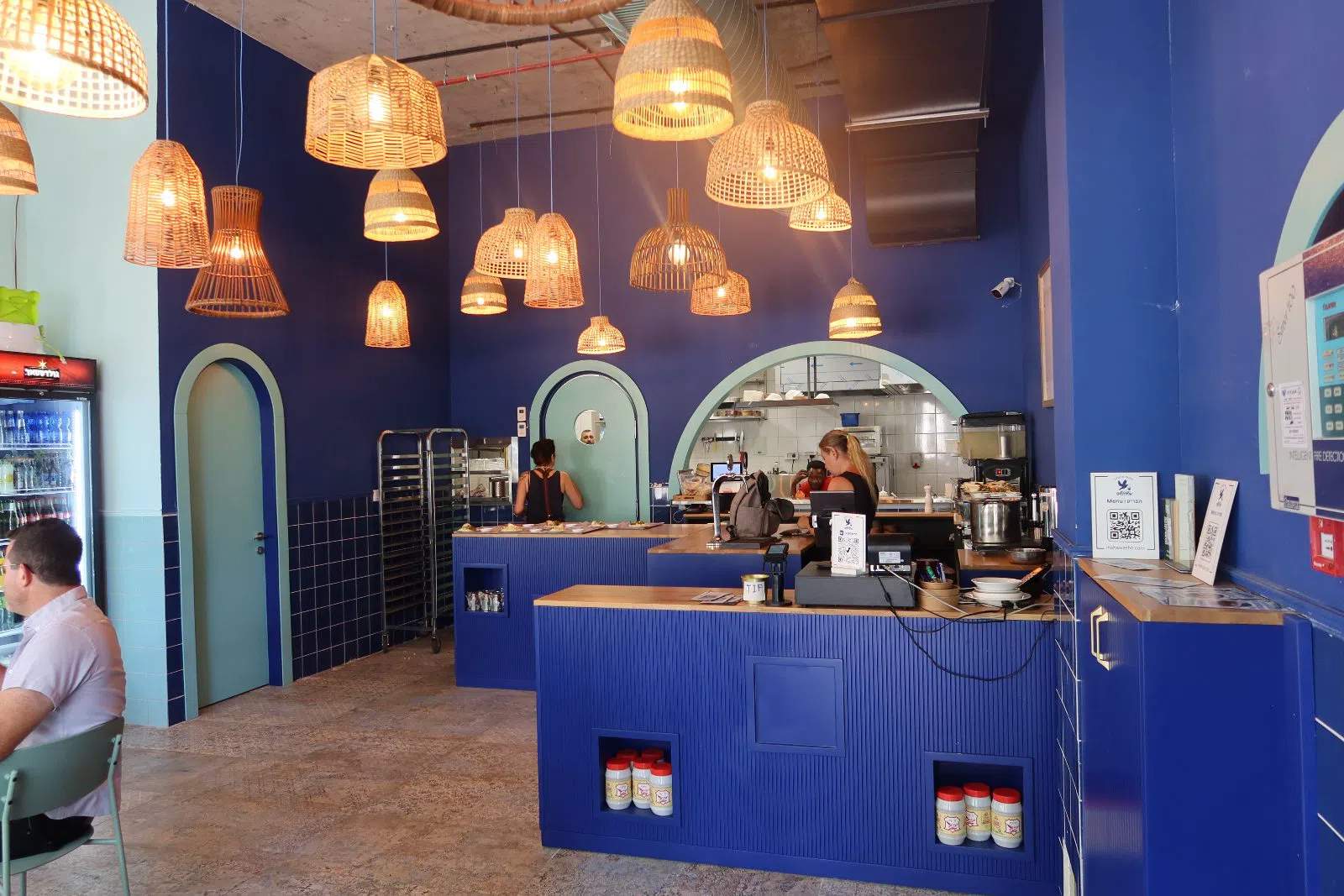
The market places shut early, so the middle of the day belongs to the roomier central hummusiyot. Hummus Mashawsha (central Tel Aviv) is frequently called the best hummus in the center, and it's the easiest first stop for a visitor: casual, takeaway-friendly, and roomier than the shrines, which makes seating a small group far less of a scramble. Order the namesake mashawsha — the light, almost whipped plate that gives the place its name — at roughly 40 to 55 NIS. The texture is the point here; it's airier than anything on the Carmel circuit.
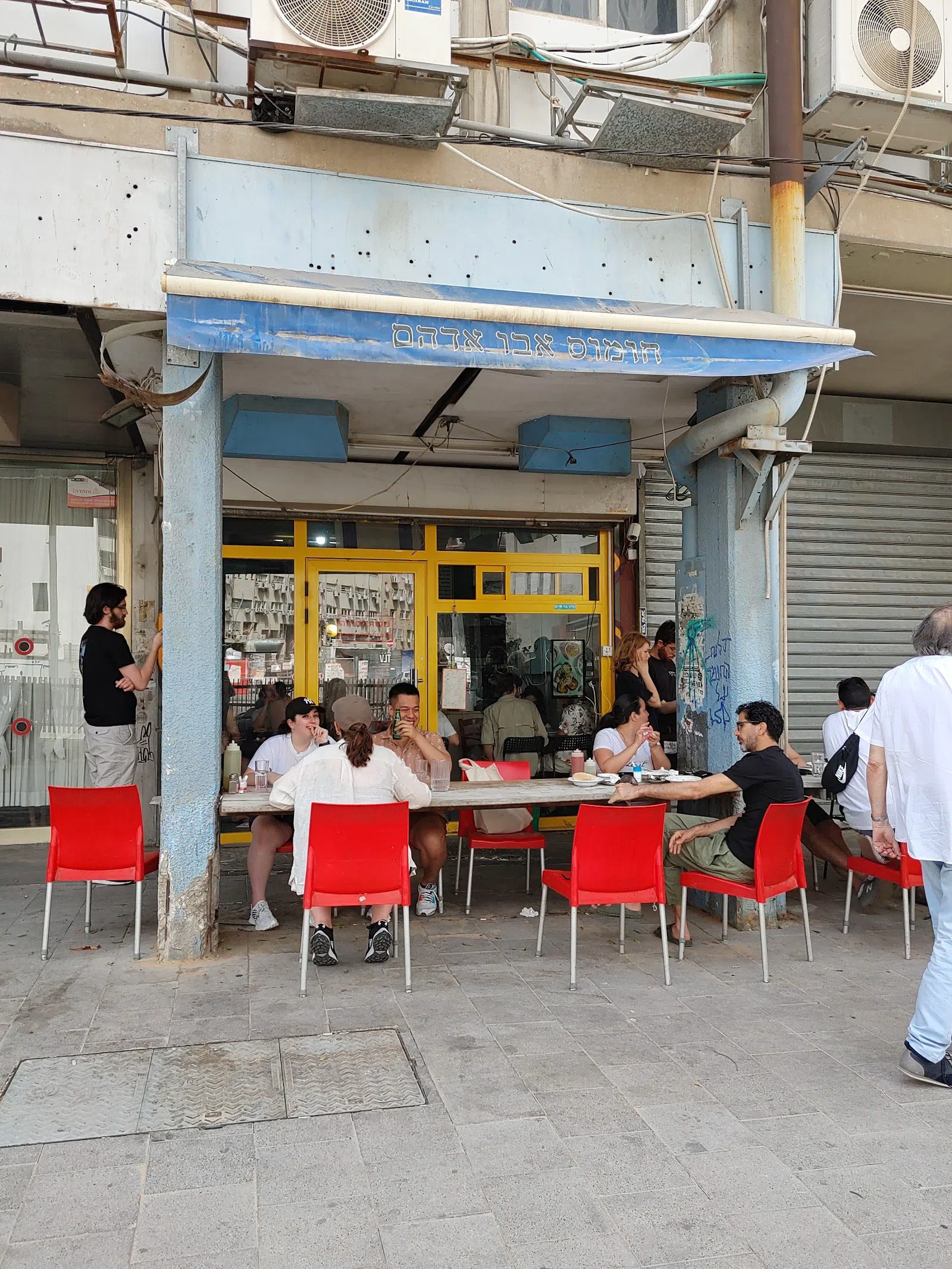
When you want longer hours than the morning-only crowd allows, Hummus Abu Adham (central) is the answer. It's been made by hand locally since 2003 with no preservatives, and it keeps a respected reputation among people who eat a lot of hummus. There are no reservations and the wait can be genuinely long at peak — I stood 24 minutes at 13:20 on a weekday — so the move is to dodge the middle of the day entirely: arrive before 12:00 or after 15:30 and a small group walks straight in. Plates run about 40 to 55 NIS.
South of the center: Florentin and Levinsky
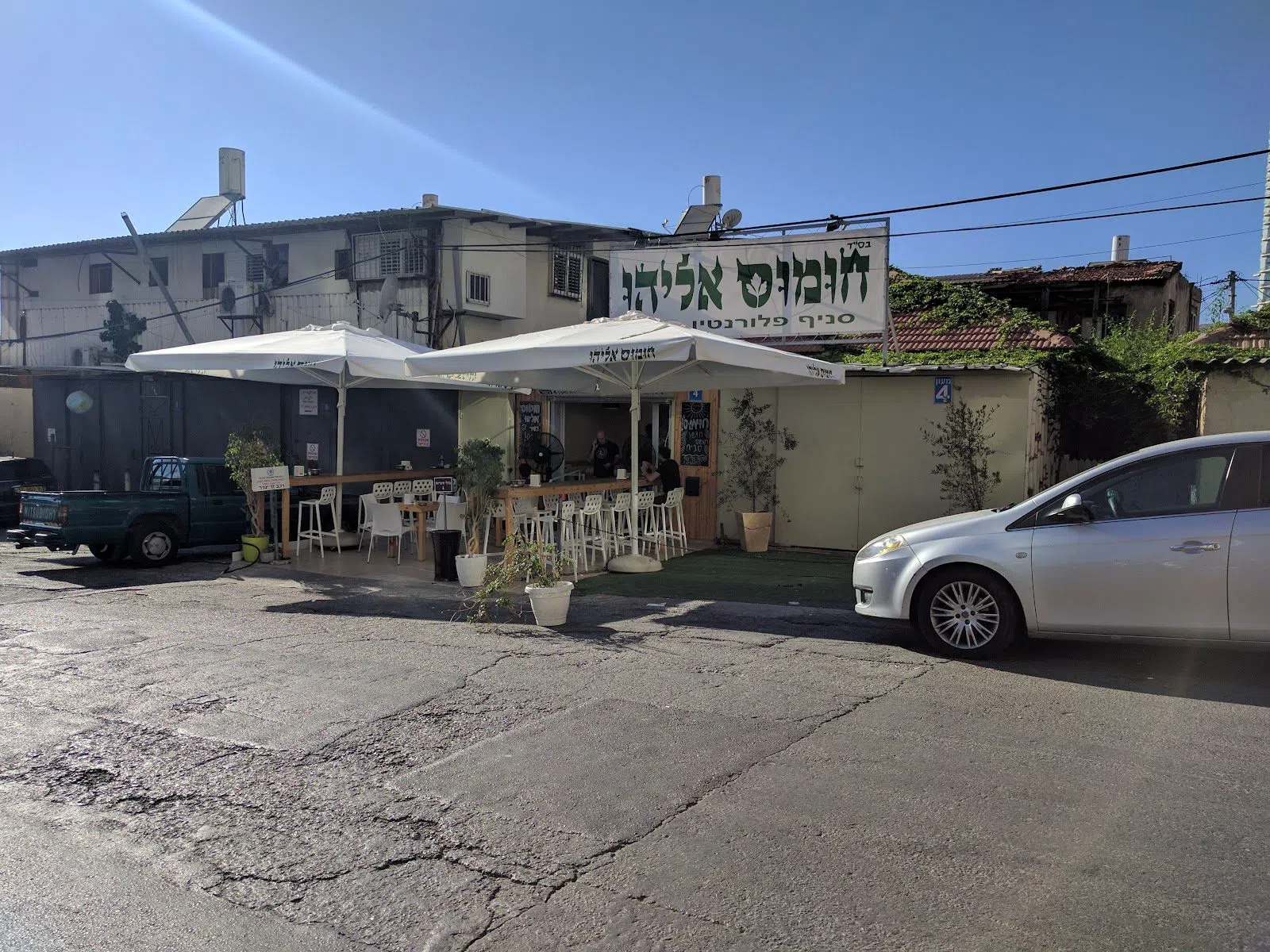
South Tel Aviv is where the ritual loosens up and the rooms get friendlier. Hummus Eliyahu (Florentin, with a second branch at the Jaffa Flea Market) trades on hospitality more than austerity: bottomless hummus and lemonade, free coffee and cookies on the way out, and a sit-down room that actually welcomes a few of you settling in. It's generous with refills to the point of being a filling, low-drama lunch — plates around 40 to 55 NIS. If Abu Hasan is the pilgrimage, this is the place you go to recover from it.
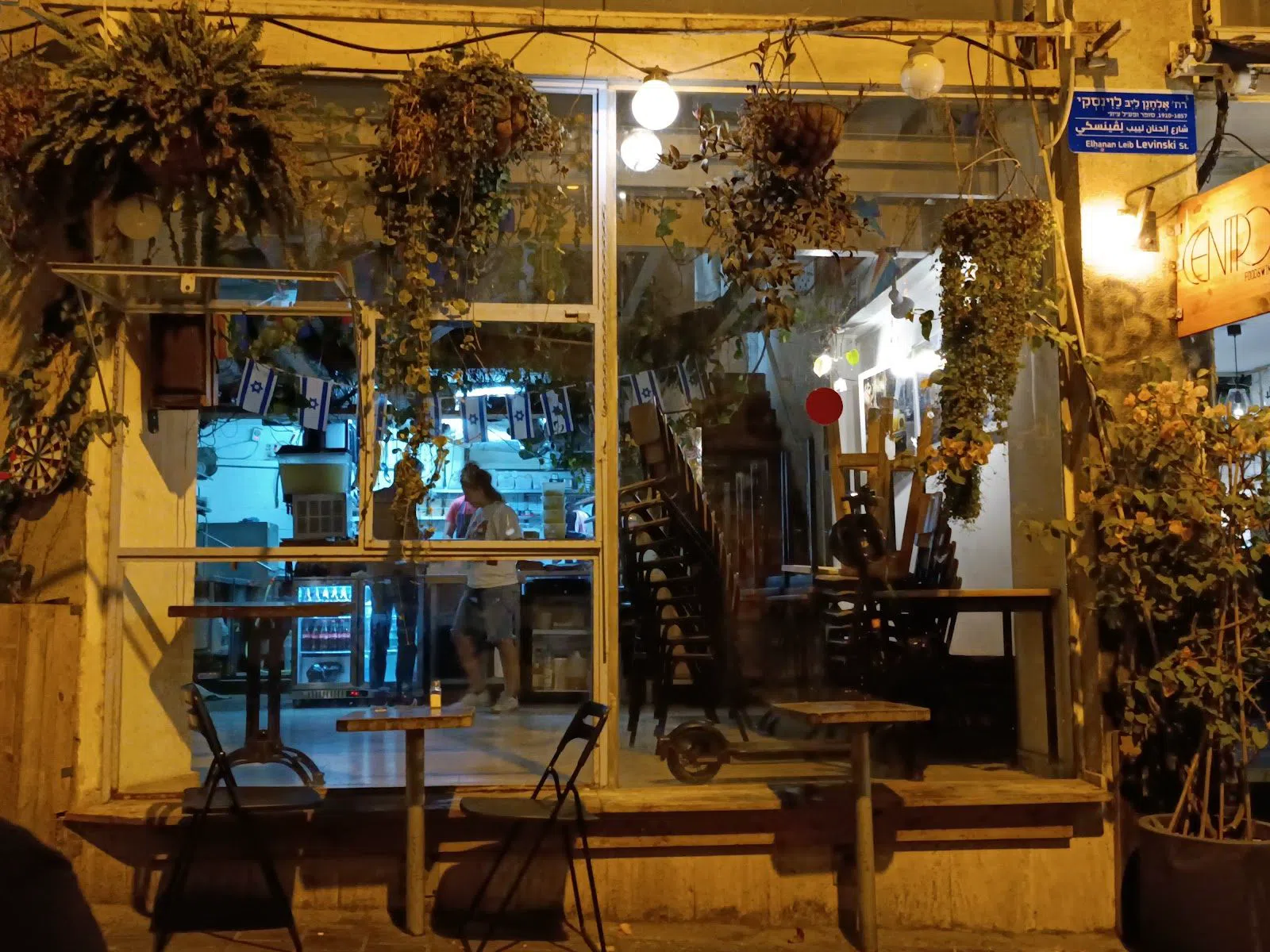
A little further into the south's food-crawl territory, Garger HaZahav (by Levinsky Market) brings a Galilean sensibility to the neighbourhood — founded in 2013 by hummus enthusiasts, a genuine locals' favourite, and a natural pause on a Levinsky wander among the spice stalls and bakeries. It's tiny and casual, best for a pair or a small group, and it does falafel alongside the hummus, so it works as one bite in a grazing afternoon rather than a sit-down group meal. Reckon on 35 to 50 NIS. Fold it into a Levinsky loop rather than making a special trip.
Stay-wise, the Florentin and Levinsky side rewards travellers who want a grittier, later-night base; the Tel Aviv guide breaks down how the neighbourhoods differ before you book.
For groups, and for after the shrines close
Here's the problem the pilgrimage doesn't solve on its own: the great places close by mid-afternoon, and almost none of them are built for eight people. Two spots fix that.
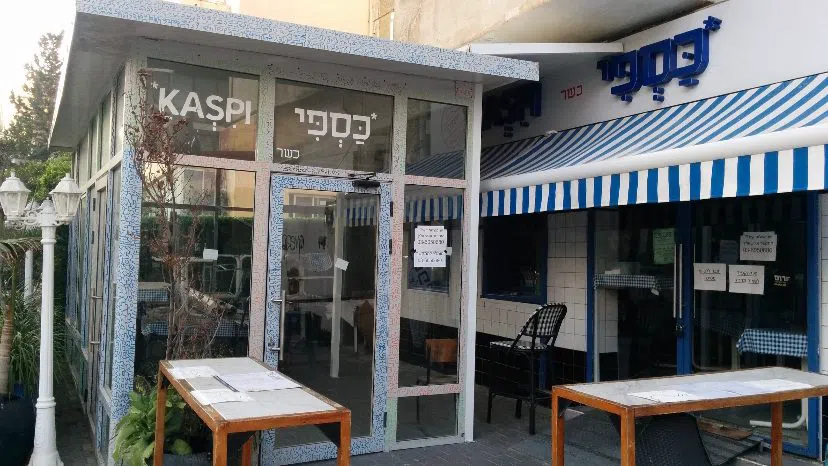
Hummus Ashkara (central) is the one to know when everything else has shut. It's roomy, casual, and the kitchen runs late into the night — roughly until 2am, which is genuinely rare for a hummus joint. That makes it one of the better central options for a group, and the obvious rescue when you surface at 21:00 craving a plate. Note that it's kosher, so it closes for Shabbat; plates land around 40 to 55 NIS. The hummus won't dethrone Jaffa, but the fact that it exists at midnight earns it a permanent slot on any itinerary.
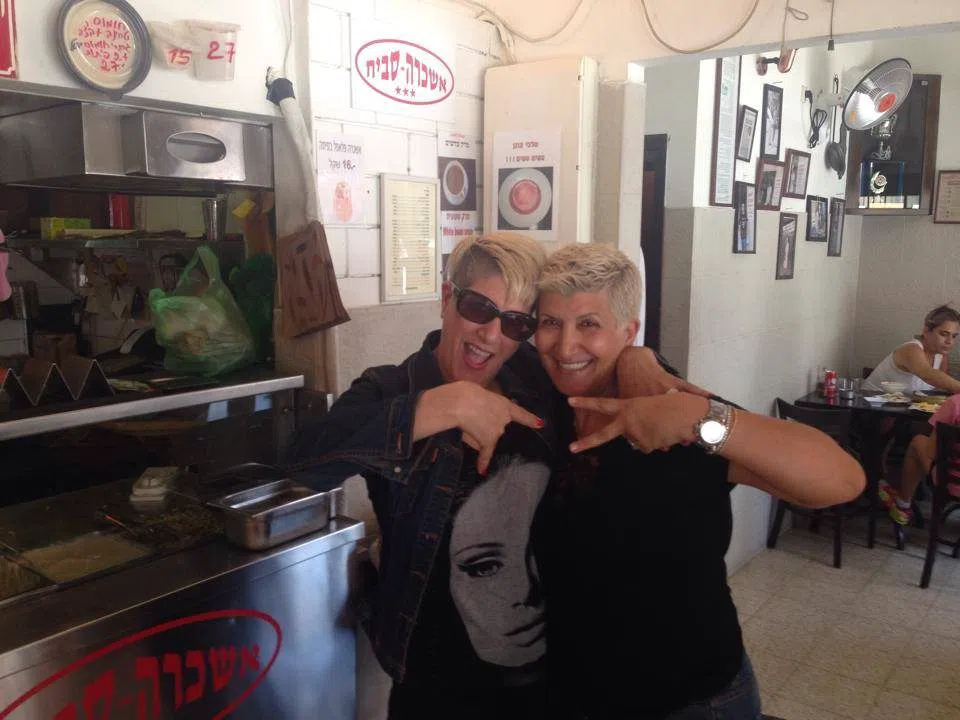
And when you simply need to seat a group properly — table service, chairs that match, an order that goes beyond hummus — Hummus Kaspi (branches on Ben Yehuda, King George, Arlozorov and in Ramat Aviv) is the pragmatic pick. It's a polished sit-down chain going since 2011, not a shrine, and it doesn't pretend otherwise: reliable, comfortable, easy to book a table for a crowd, at a slightly higher 45 to 65 NIS. Some branches are kosher and close for Shabbat, so check the specific one before you march everyone across town. Treat it as the group dinner, not the pilgrimage.
Planning it, practically
Timing is everything. The hierarchy of this city's hummus runs on a morning clock. Do Abu Hasan and the Carmel Market circuit before roughly 14:00, keep Mashawsha, Abu Adham, Eliyahu and Kaspi in reserve for the afternoon, and hold Ashkara for the night. Never build your day around eating at a shrine after 15:00 — you'll arrive to a scrubbed-down counter and a shrug.
Cash. Carry small notes in shekels (NIS). Several of the market and Jaffa counters strongly prefer cash, and the plates are cheap enough — 30 to 65 NIS across the whole list — that fumbling for a card at a fast counter marks you as a tourist and slows the line.
Getting around. Everything here is walkable in clusters: the Carmel Market spots form one loop, Florentin and Levinsky another, and Abu Hasan sits a short taxi or a longer stroll south into Jaffa. The tram and buses cover the longer hops; a stored-value transit card is worth setting up on day one if you're staying more than a couple of nights.
Shabbat. Kosher spots — Ashkara and some Kaspi branches among them — close from Friday evening through Saturday. The non-kosher Jaffa and market places generally don't, which makes a Saturday a good day to point yourself at Abu Hasan while half the city's kitchens are dark.
Budget. Two plates and a drink almost anywhere on this list lands between 60 and 120 NIS a head. This is one of the great cheap-and-serious eating traditions anywhere, and the discipline it asks of you — turn up early, eat with your hands, wipe the plate, leave — is exactly what keeps it that good.
Before you go
Where is the best hummus in Tel Aviv?
Abu Hasan (Ali Karavan) in Jaffa is the plate most people mean when they say Israel's best — order the masabacha, roughly 35-45 NIS. It's walk-in only, mornings until the pot empties (often around 14:45), so go early.
What time do Tel Aviv hummus places close?
The great ones close when the food runs out, not at a fixed hour. Abu Hasan typically stops around 14:45, Shlomo & Doron often by about 15:30. For the afternoon try Abu Adham or Mashawsha, and Hummus Ashkara runs late — roughly to 2am.
Which Tel Aviv hummus spots work for a group?
Hummus Kaspi is the most group-friendly — a sit-down chain with table service and branches on Ben Yehuda, King George, Arlozorov and Ramat Aviv (45-65 NIS). Hummus Ashkara is roomy and open late. The shrines like Abu Hasan will usually split a big group across benches.
What should I actually order?
Start with plain hummus (chickpea, tahini, lemon, garlic), then masabacha with whole chickpeas, and try ful (stewed fava beans). Mashawsha is a lighter, whipped version — the signature at Hummus Mashawsha. Eat with pita; refills are usually free.
Do Tel Aviv hummusiyot take cards, and do any close for Shabbat?
Carry small shekel notes — many market and Jaffa counters prefer cash. Kosher spots such as Hummus Ashkara and some Kaspi branches close for Shabbat (Friday evening to Saturday); the Jaffa and Carmel Market places generally stay open, making Saturday a good Abu Hasan day.