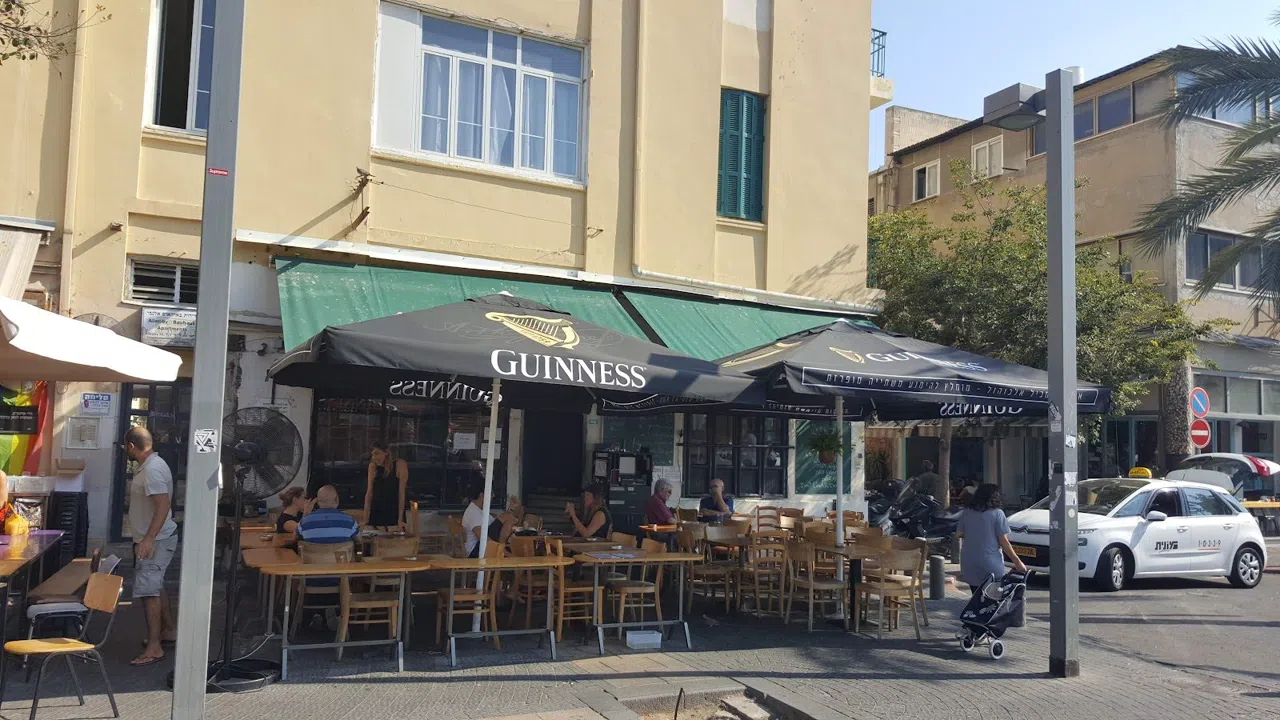

By four in the morning on a Thursday, a table of off-shift nurses trades places with a table of DJs just done with their set, and neither group draws a second look from the waiter carrying out the same bar menu he's been running since dinner. This is Tel Aviv's actual café culture — not a slogan about a city that never sleeps, but a working rotation of coffee counters, bar-cafés and porches strung along Rothschild, Dizengoff, and the Jaffa flea market that has simply never agreed to close. Walk it the way people who live here do, and the clock stops being the point; only the next table is.
The Espresso Ritual Before the City Wakes
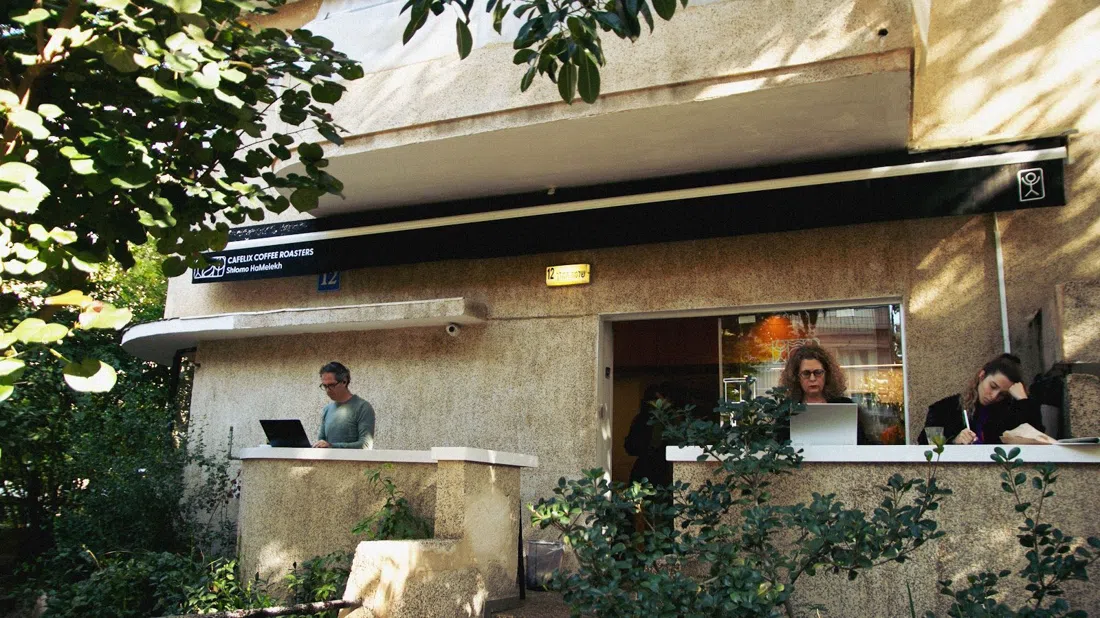
The morning half of this culture belongs to Cafelix (branches across south and central Tel Aviv), a German-founded roastery that treats a flat white the way a French bakery treats a croissant — as a small, non-negotiable daily ritual rather than a treat. It's a walk-in operation with smaller tables, better suited to a pair or two friends than a group booking; if you're travelling with six people, this is a coffee stop on the way somewhere else, not a destination table. Go early, before the laptop crowd claims the good seats, and you'll get the closest thing Tel Aviv has to a quiet hour.
Breakfast That Runs on Its Own Clock
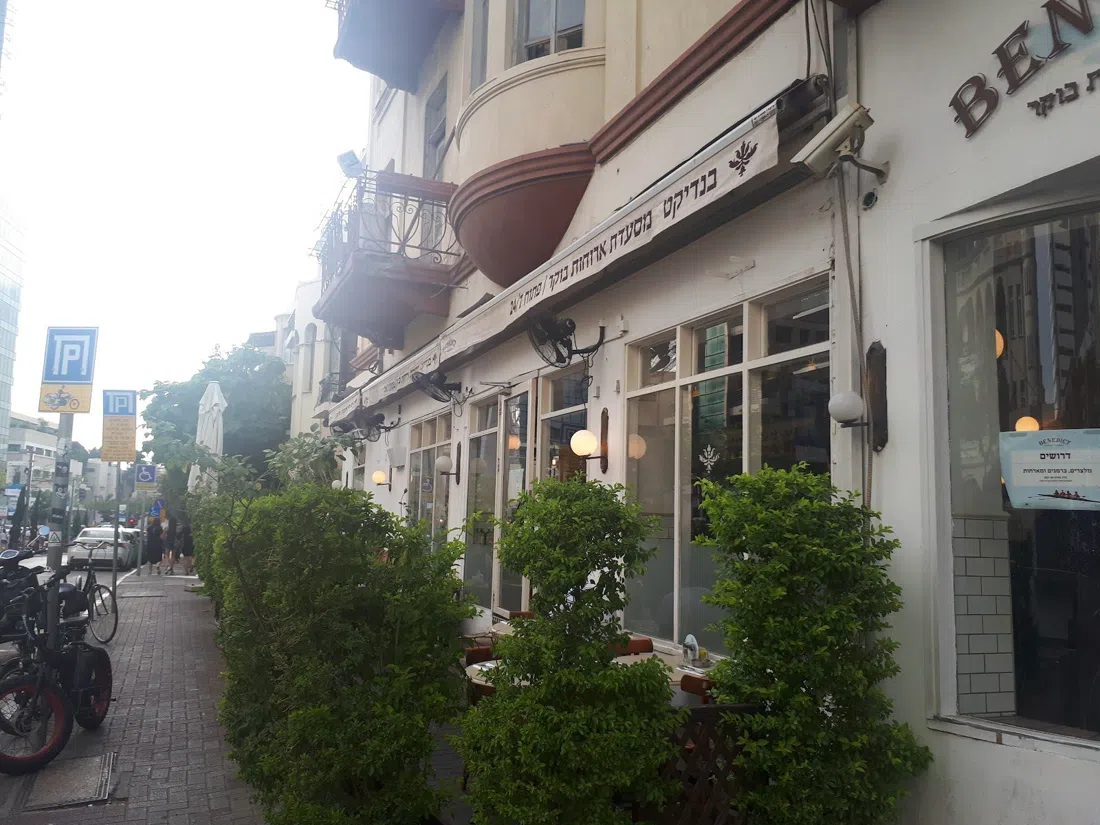
Tel Aviv's breakfast culture doesn't observe breakfast hours, and nowhere proves that better than Benedict on Rothschild Boulevard, the city's best-recognised 24-hour breakfast operation. The room is built around communal long tables, which is precisely why tour groups favour it for coordinated morning stops — you can walk in with a party of ten at 11 p.m. and be handed the same full egg menu a solo diner gets at 8 a.m. It's mid-range brunch pricing (₪₪), the service is brisk rather than intimate, and the point isn't subtlety — it's that the kitchen genuinely does not stop.
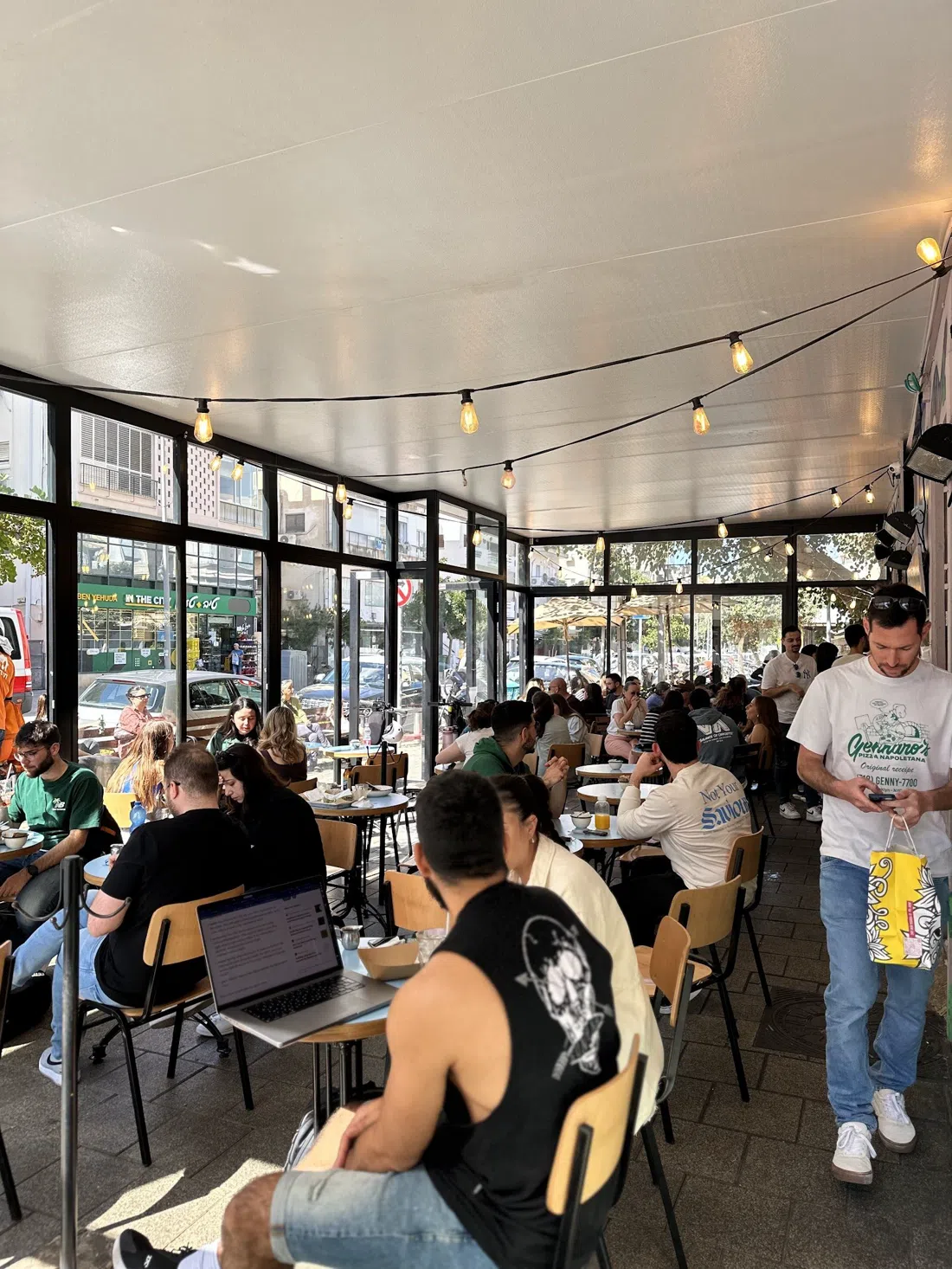
A few streets over, Under the Tree on Ben Yehuda plays the same trick with a gentler register. It's open nearly around the clock, closing only on Friday night for Shabbat, and the mixed indoor-and-garden seating makes it as comfortable for a laptop-and-coffee afternoon as for a post-midnight snack. It takes groups without fuss, sits at similar ₪₪ pricing to Benedict, and reads less like a tourist circuit stop and more like a neighbourhood living room that happens to never lock its door.
The One Place That Never, Ever Closes
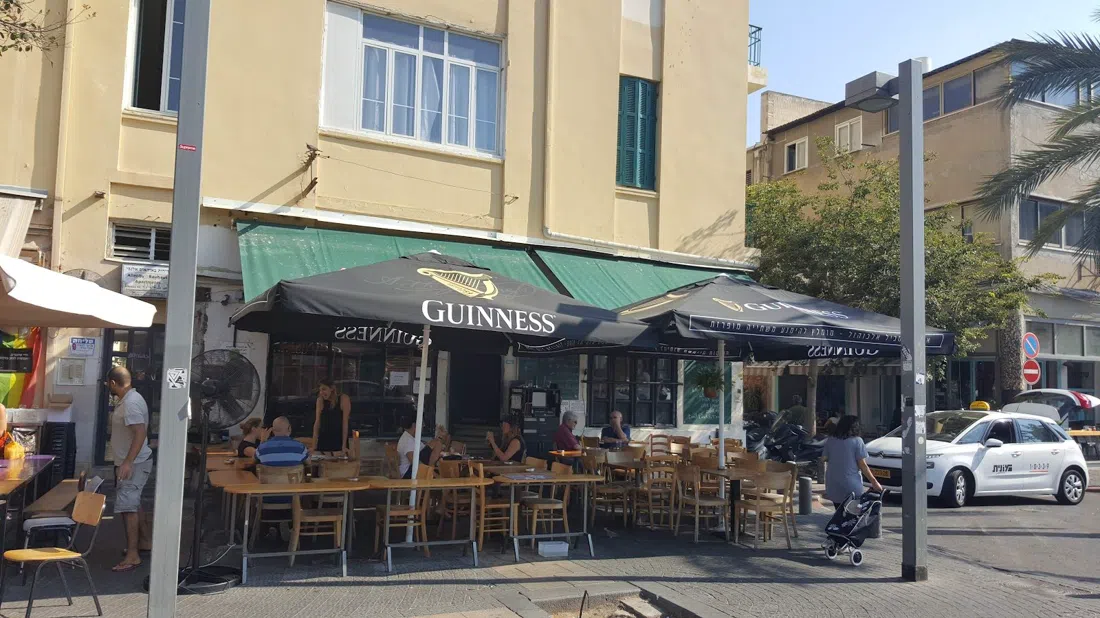
If Tel Aviv's café culture needed a single founding document, it would be HaMinzar, open twenty-four hours a day, seven days a week, since 1992. There's no door policy and no dress code — the communal tables fill with whoever's around, which in practice means it's one of the city's default landings for stag and hen parties and large birthday groups who need somewhere that will take them without a reservation at any hour. The beer and bar food are cheap (₪), the room is loud, and it is not the place for a quiet conversation. It is, however, the honest answer to "is anything really open all night here," and it has been for over three decades.
Gardens and Flea-Market Tables: Day Sliding Into Night
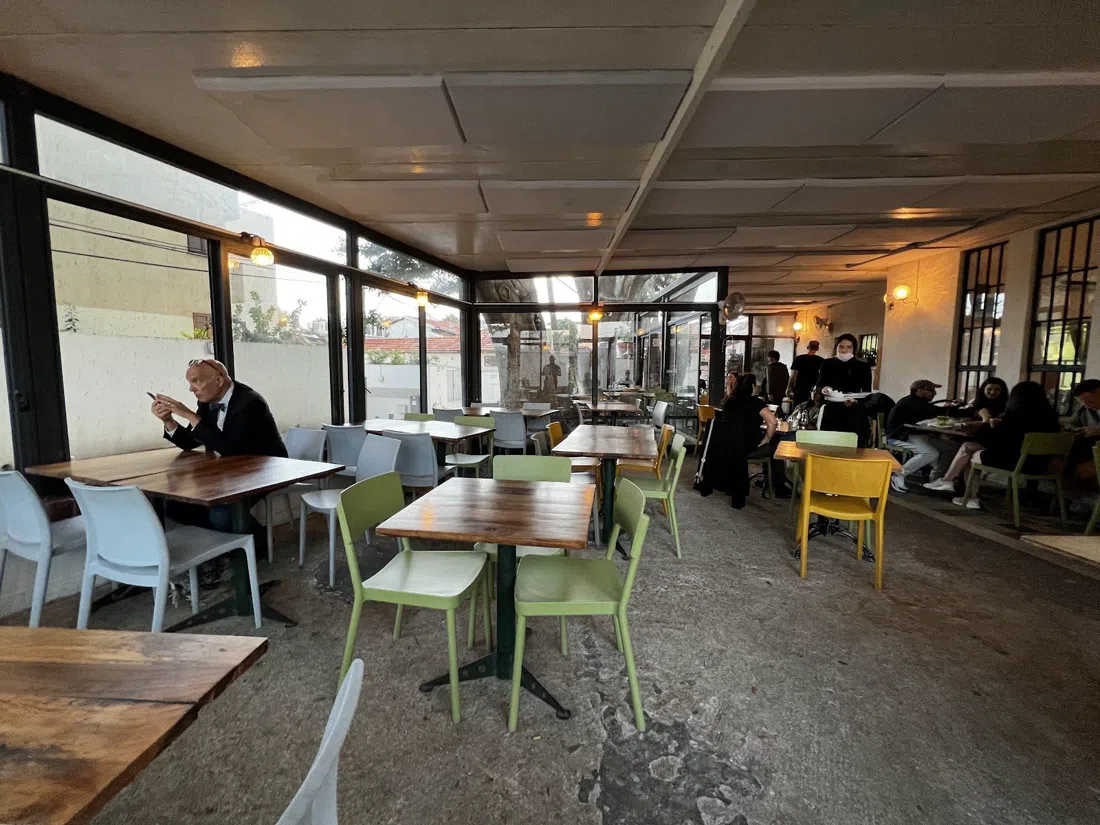
Some of the best stretches of this culture aren't about staying open late so much as never quite closing the gap between afternoon and night. Suzana, a garden café-restaurant with both a porch and an indoor dining room, is built for exactly that transition — you can sit down for coffee and cake in the afternoon and still be at the same table for wine and dinner without anyone asking you to move. It takes groups with a reservation, runs ₪₪₪, and rewards booking ahead if you're coming as more than two or three.
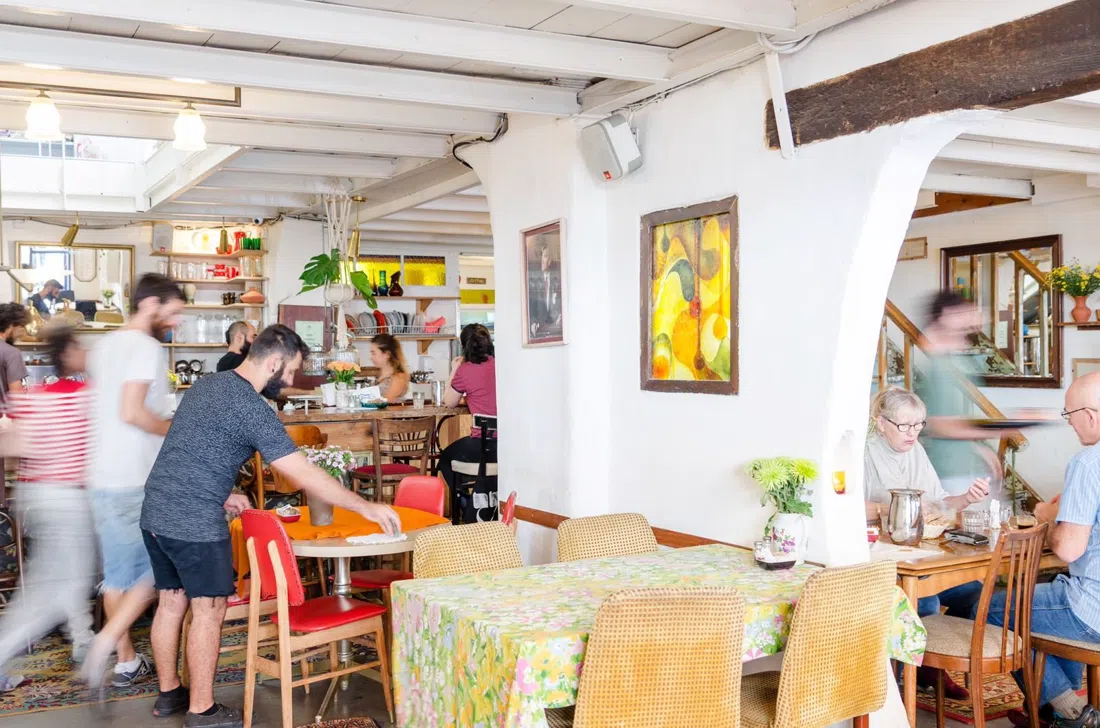
Down in Jaffa, Café Puaa sits inside the pedestrianised flea market lane, furnished — literally — from pieces pulled out of the market itself, which gives it a lived-in, mismatched charm no design brief could fake. It's group-friendly, with indoor and outdoor seating that can absorb a bigger party, mid-range at ₪₪, and stays open into the early hours on most nights, which makes it a natural stop if you're already wandering Jaffa after dark rather than planning a dedicated trip.
Midnight Cake and a Slow Nightcap
Dizengoff's late-night register belongs to Centro Café, a bistro-café that exists for the specific purpose of a dessert-and-cocktail wind-down once dinner elsewhere has finished. It takes groups, but book the table in advance — walk-ins after midnight on a weekend are a gamble. Expect ₪₪ pricing and a room that's built for lingering, not turning tables quickly.
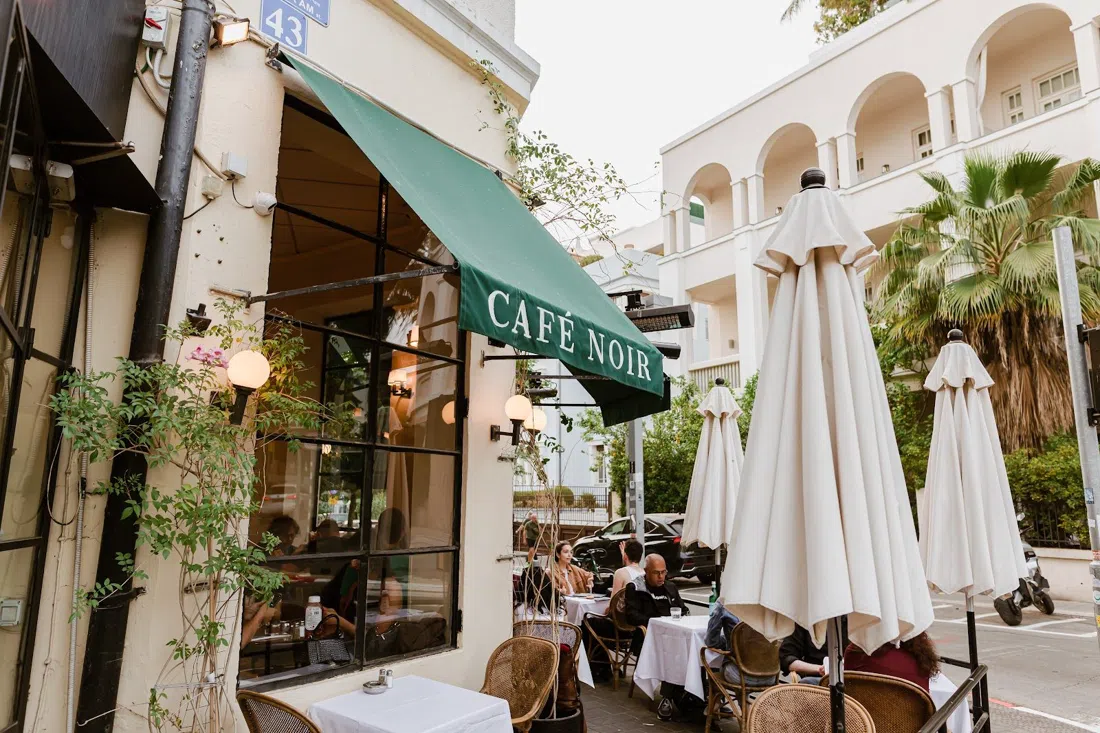
Café Noir, one of the city's original French-bistro institutions, plays a more polished version of the same role. The kitchen and bar both hold their footing well past dinner on weekends, the room has the kind of reliable, slightly formal comfort that comes from decades of doing the same thing well, and groups book online rather than showing up cold. At ₪₪₪, it's a step up in price from Centro, and it suits a dressier, slower evening more than a loud one.
Late Kitchens for When Everyone Else Has Stopped Cooking
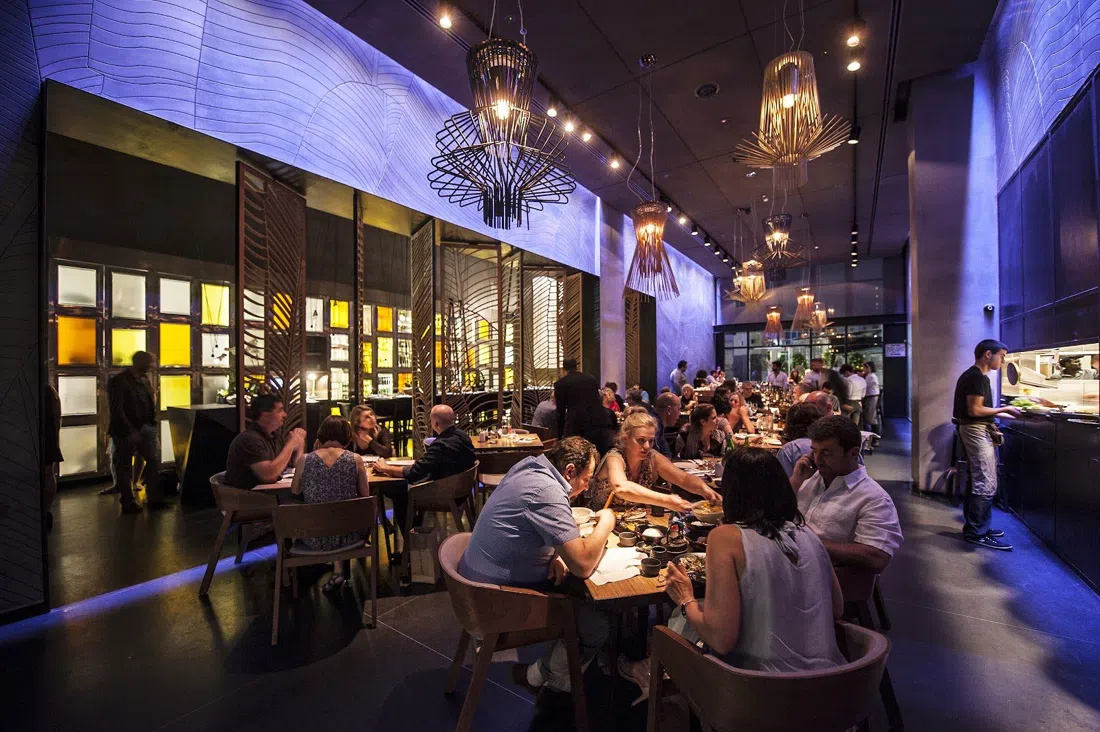
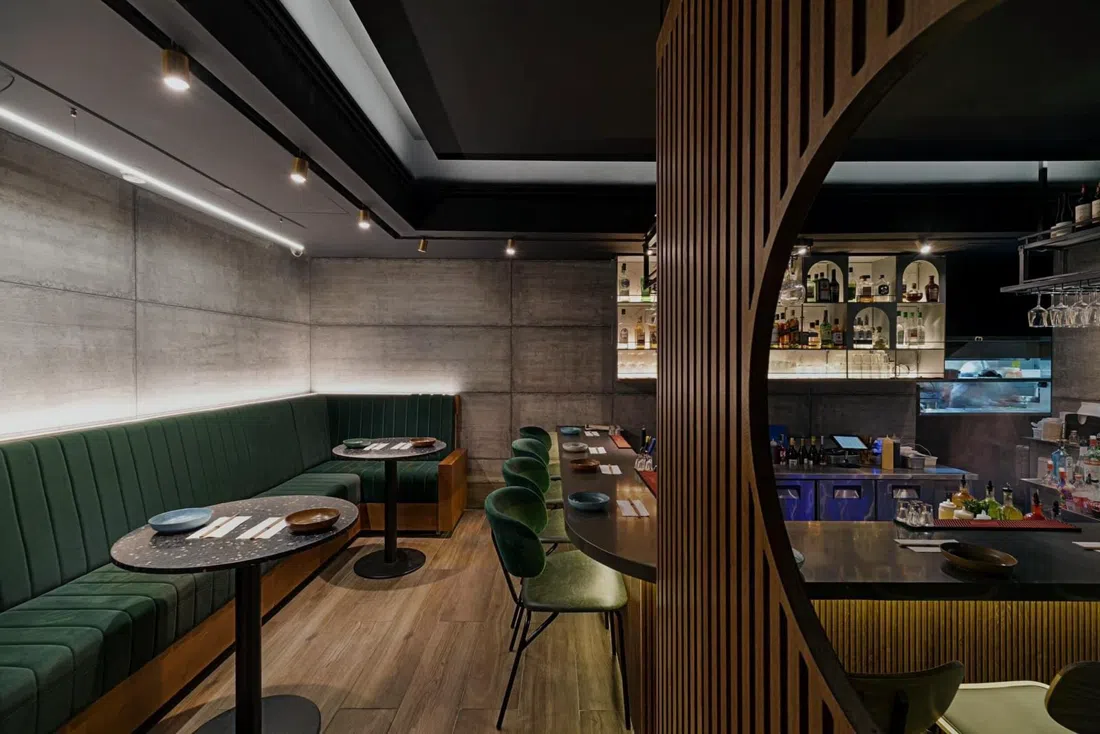
Two venues here do the specific job of feeding people after the rest of the city's kitchens have shut. Taizu is the more ambitious of the two — a late-kitchen restaurant-lounge with private and semi-private booth seating, aimed at the diner who wants Michelin-adjacent food that happens to still be plating dinner well into the night rather than a café snack. It takes groups, runs ₪₪₪₪, and is worth booking rather than chancing.
Alibi, on Dizengoff, is the more casual fallback — a late-night sushi bar serving food and drink until 2 a.m. daily, with happy-hour deals that specifically suit larger tables. It's group-friendly by design rather than by accident, mid-to-upper pricing at ₪₪₪, and the honest answer when everything else on the strip has already put its chairs up.
The Rooftop and the Seafront: Where the Night Actually Ends
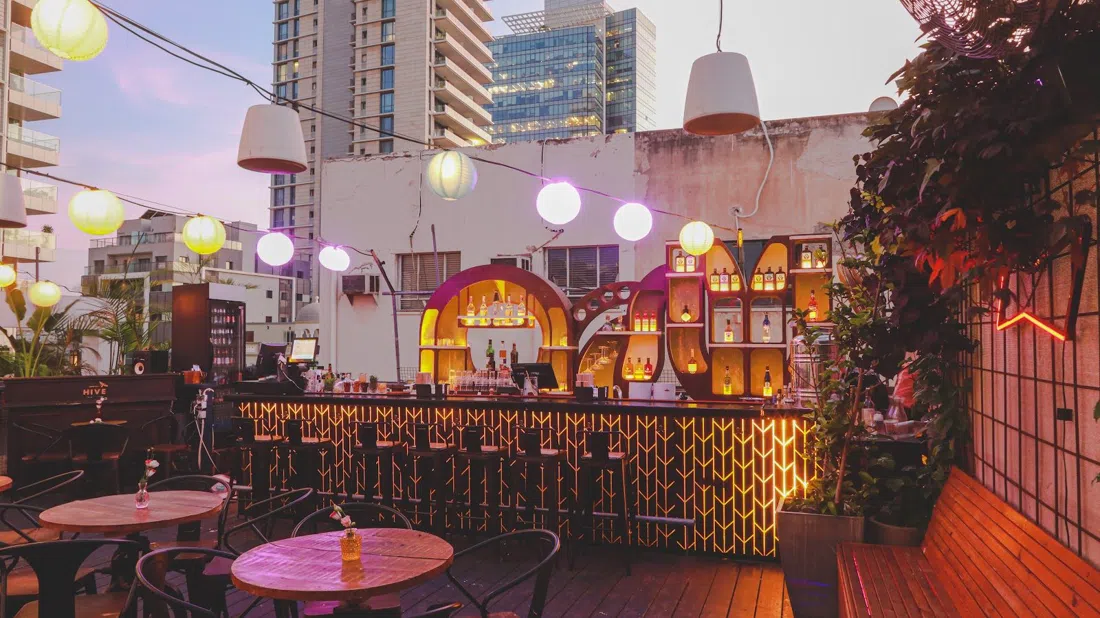
For a finale with a view, HIVE is a multi-level rooftop bar-lounge that splits its personality by floor — chef's plates and live jazz upstairs, DJ energy downstairs — and takes both group bookings and private events across the layout. It's the priciest venue on this list at ₪₪₪₪, and it rewards booking ahead if you want the upstairs section rather than taking whatever's left at the door.
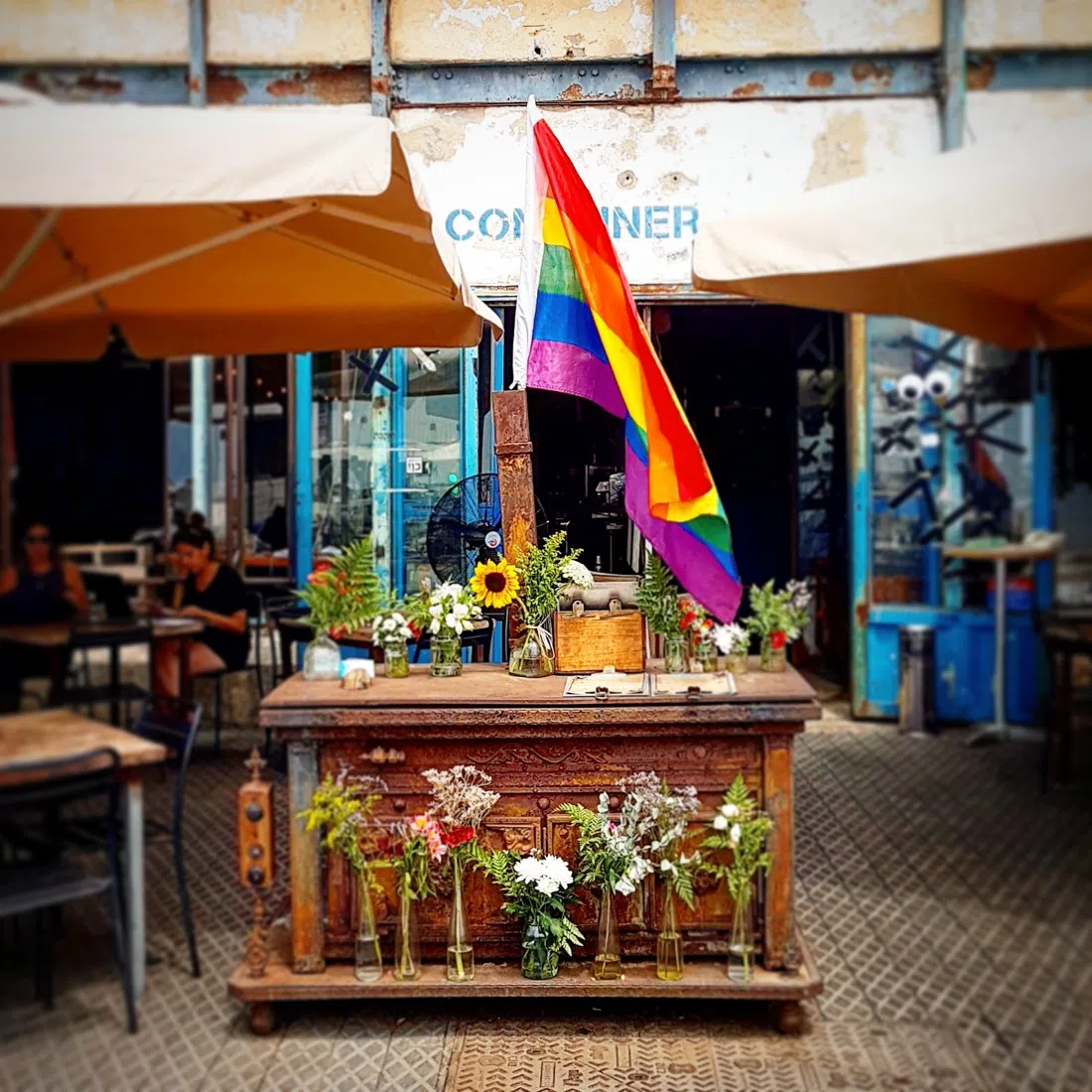
Down at the port, The Container occupies a genuine hangar space, which makes it the most physically group-friendly venue here — large, open, and built to absorb a crowd rather than squeeze one in. By day it serves fresh local fish; after dark it regularly hosts live music and art openings that keep the room loud well past the hour most restaurants would be closing the kitchen. If you're closing out a long café-crawl night, this is the natural last stop before the walk home.
Planning the Hours: Transport, Cash, Timing, Budget
Tel Aviv is compact enough that most of this route — Rothschild, Dizengoff, and the Jaffa flea market — is walkable in a single night if you pace it, though the port venues (The Container) are far enough that a taxi or rideshare makes more sense after midnight than the walk. Public buses thin out late at night and don't run through until dawn on most routes, so budget for a cab back if you're out past 1 a.m., especially from the port.
Cash still matters here — smaller places, HaMinzar included, are used to card payment now but a little cash speeds up a busy bar counter at 3 a.m., and tipping (roughly 10-15%) isn't always added automatically the way it is elsewhere. Friday night into Saturday is the one real wrinkle in a "24-hour" city: some venues, like Under the Tree, close specifically for Friday night Shabbat, so don't assume every name on this list runs the full week without a gap — check the specific night if you're planning around Shabbat.
Budget-wise, a HaMinzar beer round or a Café Puaa coffee sits comfortably under ₪50 a head; a Benedict or Under the Tree breakfast runs closer to ₪60-90; and a full night ending at Taizu or HIVE can easily clear ₪250-300 a head once drinks are added. If you're building a trip around this circuit rather than a single night out, it's worth starting your planning with a Tel Aviv hotel search for something within walking distance of Rothschild or Dizengoff, since that's the stretch doing most of the work on this list — and the broader Tel Aviv guide is the place to build out the rest of the trip around it.