The Tel Aviv issue
Beach by Beach: Tel Aviv's Mediterranean Strip from Dawn to Dusk
A calm, walked-in-order guide to Tel Aviv's shoreline — which sand suits couples, which suits groups, where to surf, and where to end the day as the sun drops behind Jaffa.

By Inês MarquesWalking the White City, Jaffa and everything in between
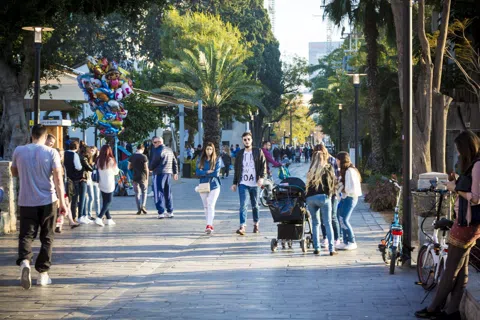
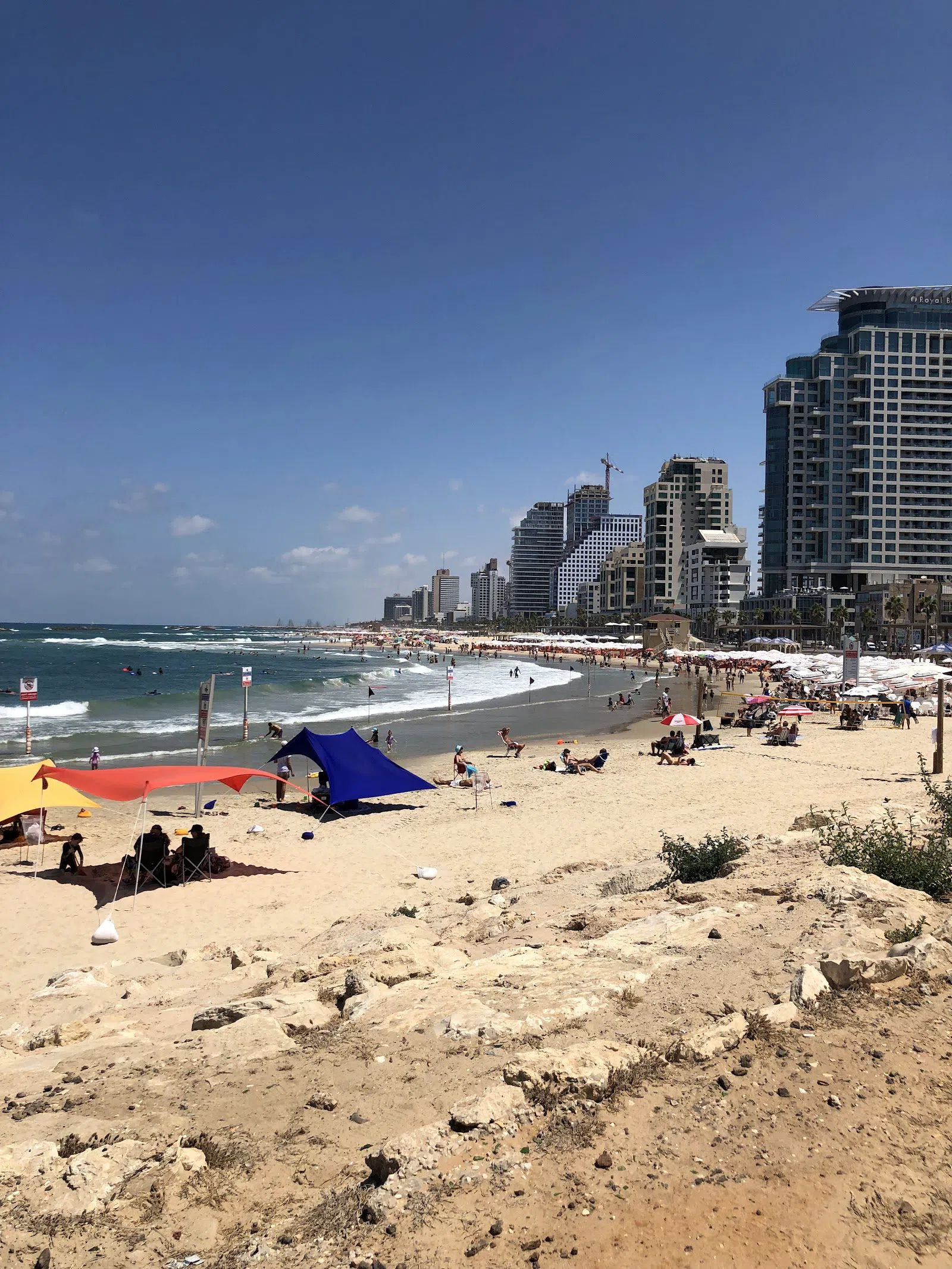
Tel Aviv is a city that turns to face the sea. Its promenade — the tayelet — runs for roughly fourteen kilometres, and along it the same Mediterranean water takes on a different character every few hundred metres, from the sheltered family shallows in the north to the wide sunset parkland in the south. This is a guide to walking that strip in the order the day itself suggests: north to south, dawn to dusk, one beach at a time.
Work out where you're sleeping first, because it decides how far you carry your towel each morning. Most of the beaches below sit within a twenty-minute walk of the central hotel row; if you're still deciding, the Tel Aviv hotel search covers the strip from the port down to Jaffa, and the wider Tel Aviv guide sets the shoreline in the context of the rest of the city.
Before the crowds: the northern beaches at dawn
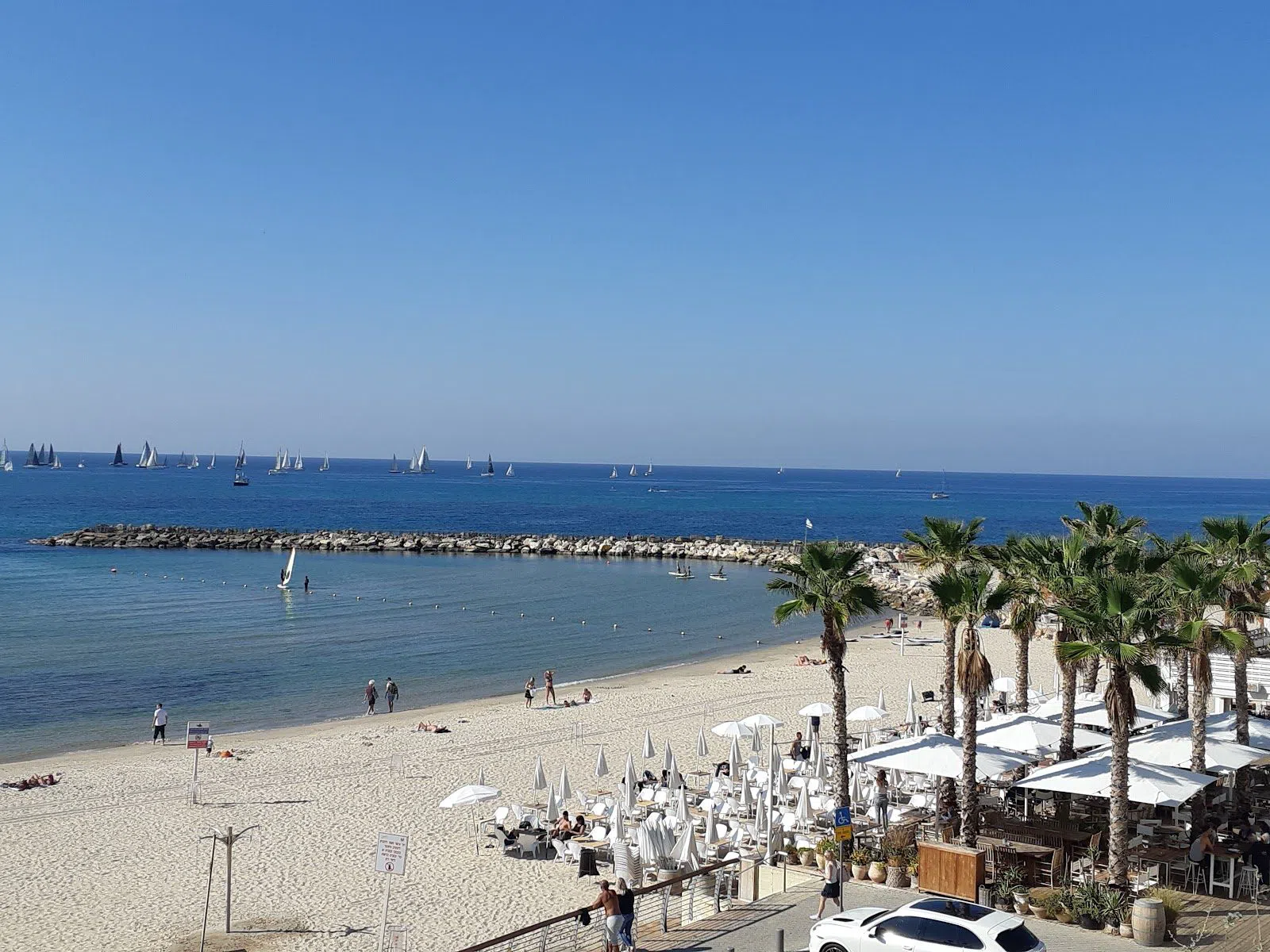
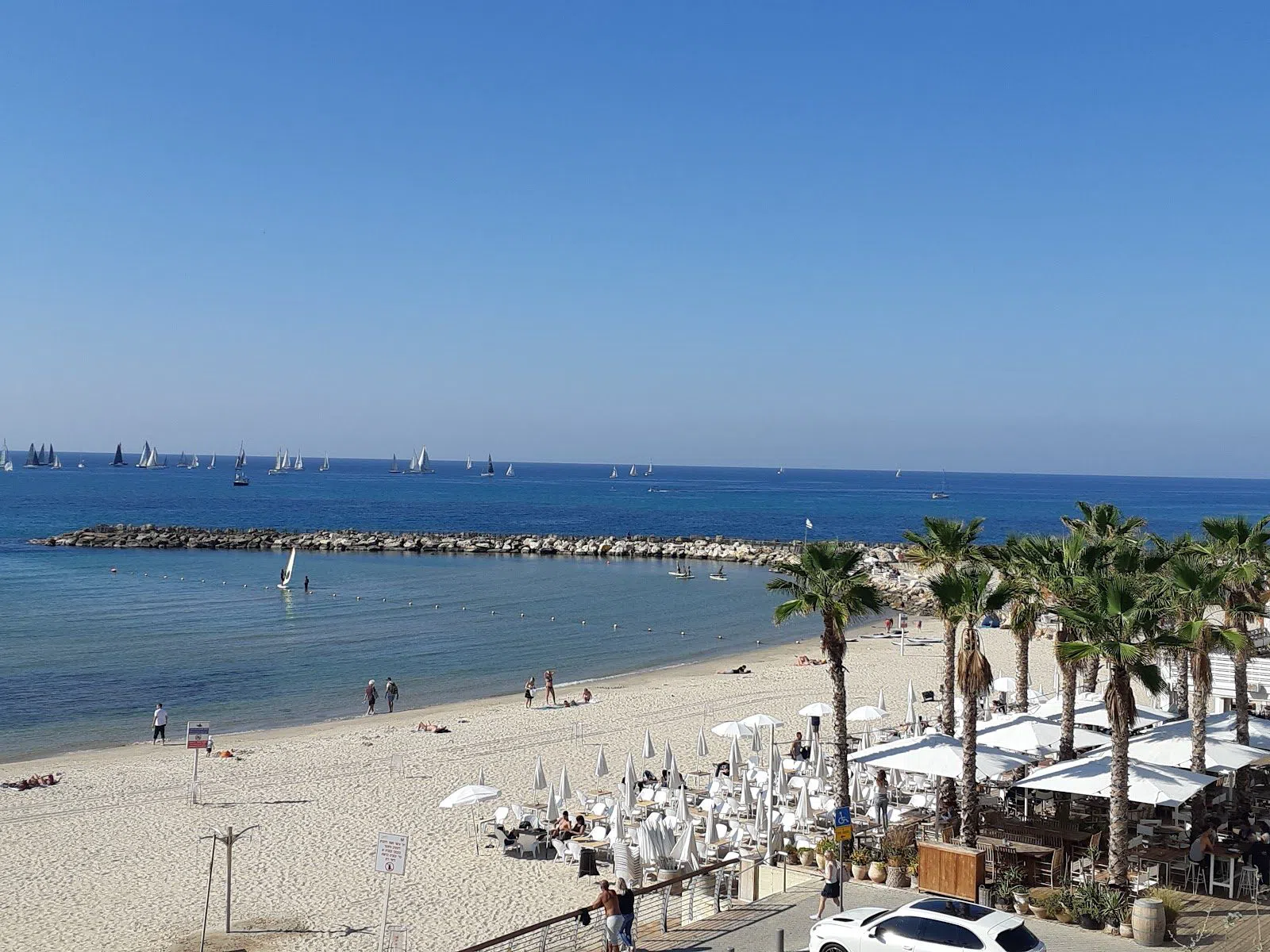
Start in the north, at the port, before the light gets hard. Metzitzim Beach (Tel Aviv Port) is the northernmost stop most visitors reach on foot, tucked just below the old harbour where the Yarkon meets the sea. It's Blue Flag–certified, protected by a breakwater, and shallow enough that the water barely reaches your waist for a long way out — which is exactly why local families claim it early. The name is affectionate shorthand from a 1970s film, and the beach still keeps that unhurried, neighbourhood feel. If you're travelling with children or with anyone nervous in open water, this is the calmest swim on the strip, and at dawn you'll often have the shallows to yourself. Groups and kids are equally welcome; there's no ceremony to any of it, and it's free.
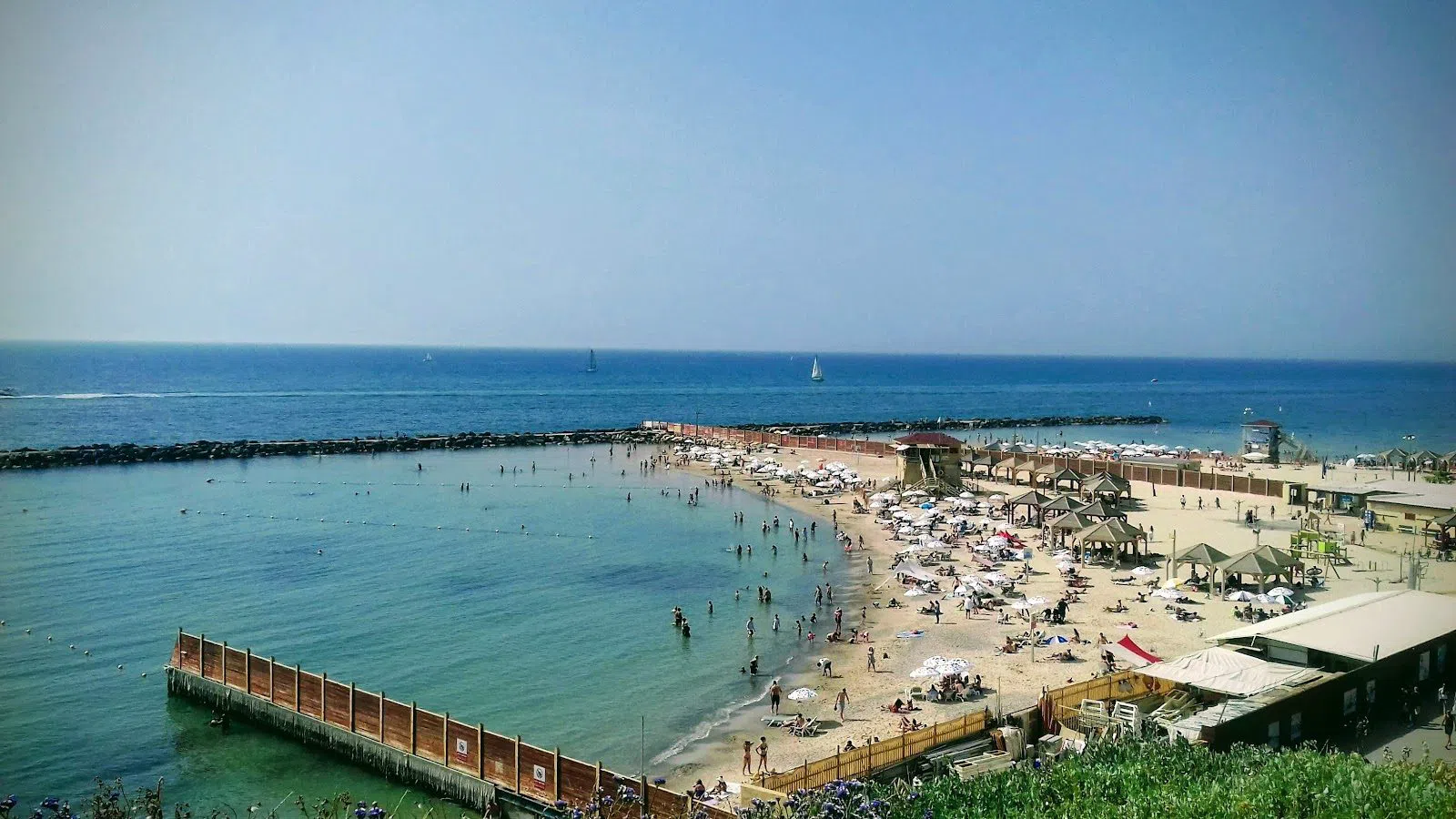
Walk south along the promenade for about ten minutes and the mood shifts. Hilton Beach (below Independence Park) is Tel Aviv's most characterful stretch, and the trick to understanding it is that it isn't one beach but three crowds sharing one arc of sand. The southern end is the surfers' beach; the northern end, backing onto the park, is the heart of the city's LGBTQ+ beach scene and has been for decades; and a section in between belongs to the dog walkers. Nobody polices the borders — it's a public beach, all welcome, groups gather freely, and there's no door policy to speak of. Sunbed and umbrella hire runs around ₪25. Come early and you'll watch all three crowds arrive in sequence as the morning warms up, which tells you more about the city than any single beach could.
Plan your Tel Aviv trip
Live prices from our booking partners.
Free cancellation on many rooms. We may earn a commission when you book.
Catching the first wave: surf, SUP and a saltwater pool
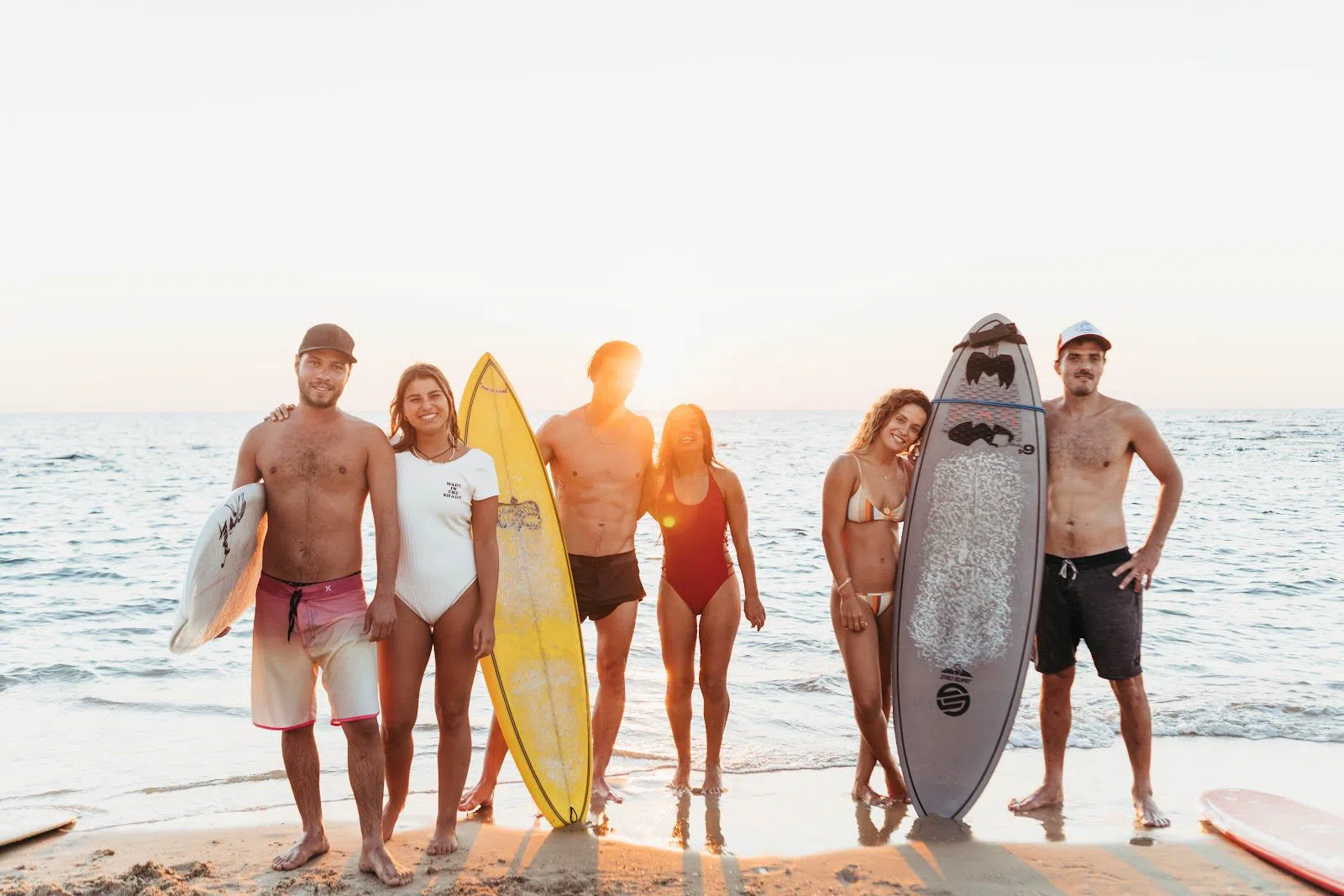
The waves here are modest by ocean standards, which makes this one of the friendlier places in the Mediterranean to learn. On the southern, surfers' end of Hilton, Topsea Surf Club (Hilton Beach) has been teaching visitors to stand up for years and runs group surf and SUP lessons seven days a week. A lesson runs roughly ₪150–250; if you already know what you're doing, board rental is around ₪60 an hour. It's the easiest place on the strip for a first wave, and because it's built for walk-ups, it handles parties and mixed groups without fuss — worth a message ahead in summer, when the morning slots fill.
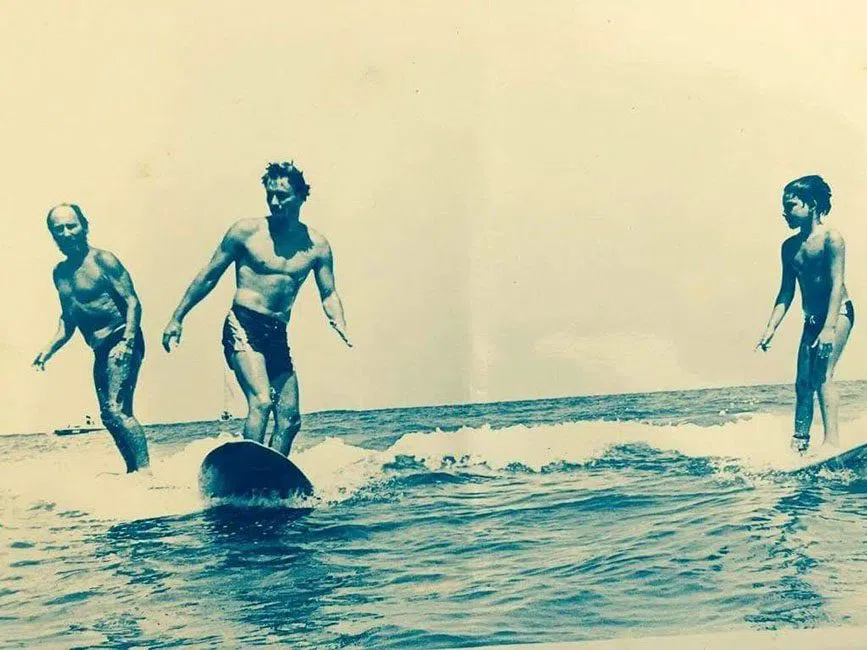
A little further south, off Gordon, Galim Surf School (Gordon Beach) is a separate operator and one of Israel's better-known clubs, open all year and certified for all levels. If your group spans confident swimmers and total beginners, Galim is used to splitting a lesson accordingly; expect ₪150–230. Keep the two straight in your head — Topsea is the Hilton school, Galim is the Gordon one, and they're genuinely different businesses rather than branches of the same thing.
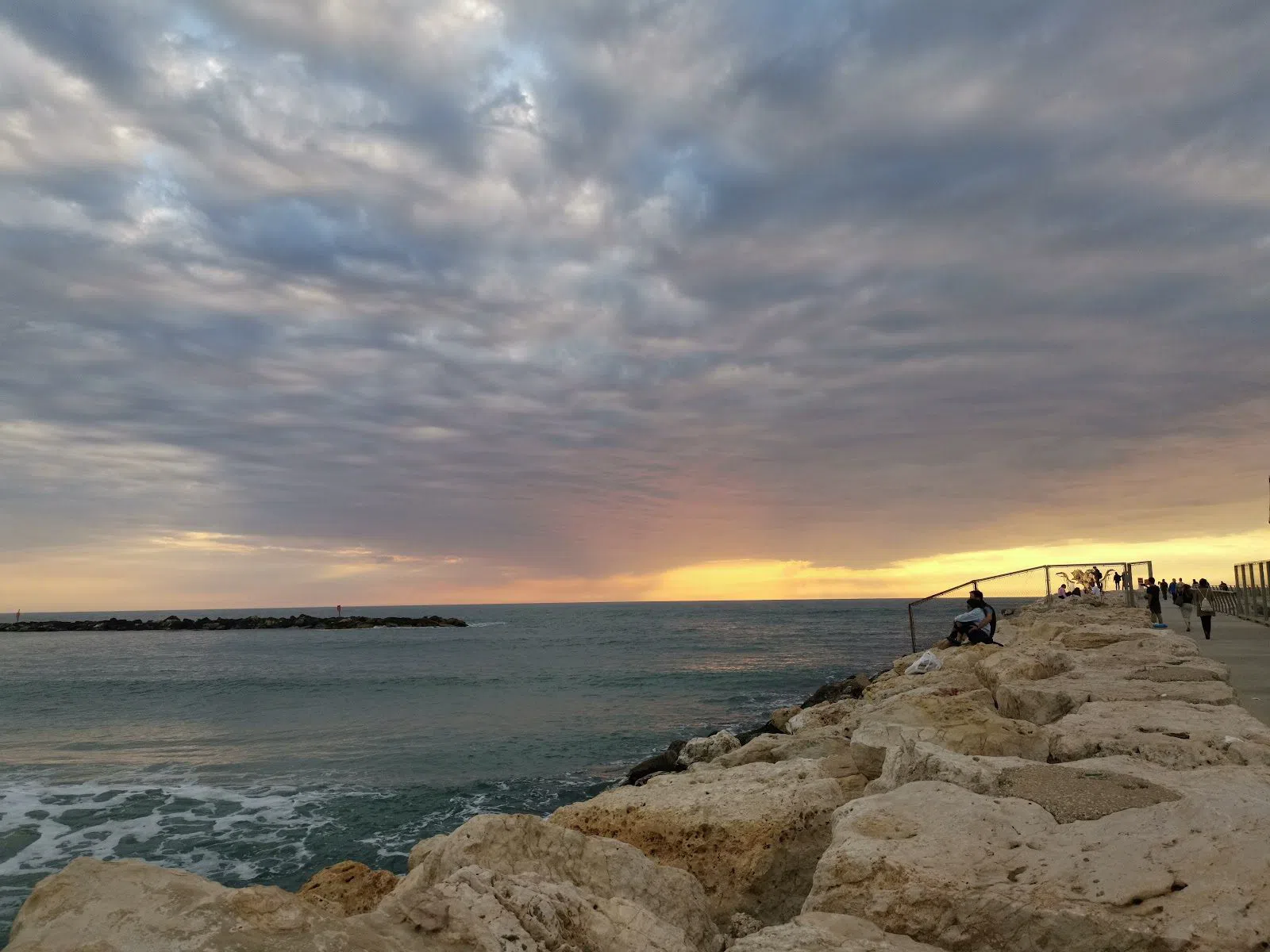
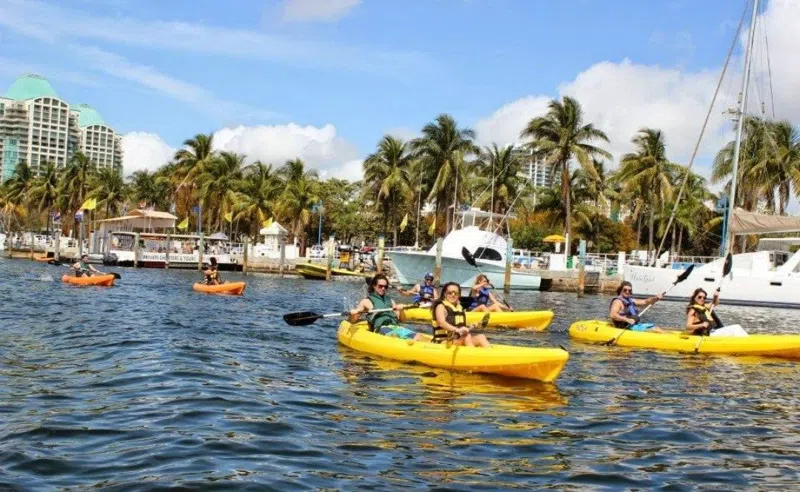
If it's a flat-paddle day, or you'd rather sightsee than surf, Aloha Surf School TLV (Hilton/Gordon area) specialises in stand-up paddleboard tours, including a route that takes you south along the coast with the old stone silhouette of Jaffa ahead of you. Tours run about ₪150–200. This is the pick when the appeal is the view and the calm rather than the coaching — a gentle way to see the shoreline from the water without committing to a wave.
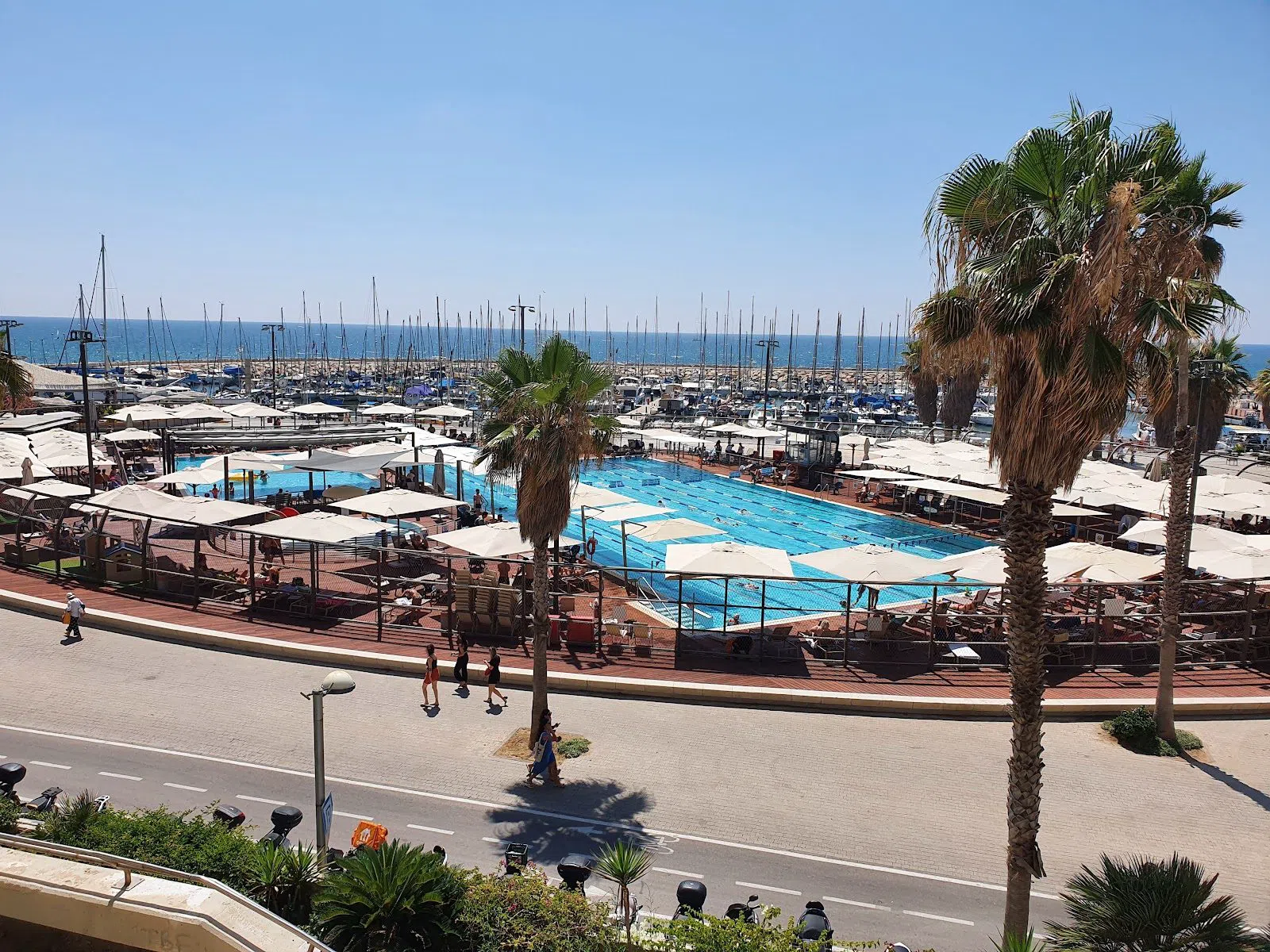
When the surf is too rough to swim comfortably — and on a windy afternoon it can be — walk down to Gordon Pool (Gordon Beach seafront). Opened in 1956 and filled with seawater, it sits right on the waterfront with the Mediterranean on one side and lap lanes on the other. A day pass is ₪69 on weekdays and ₪79 at weekends. The deck is spacious, there are multiple pools, and groups are fine; it's the reliable fallback that lets you keep the sea view while swimming in something calmer than the surf.
The central strip at midday: Gordon and Frishman
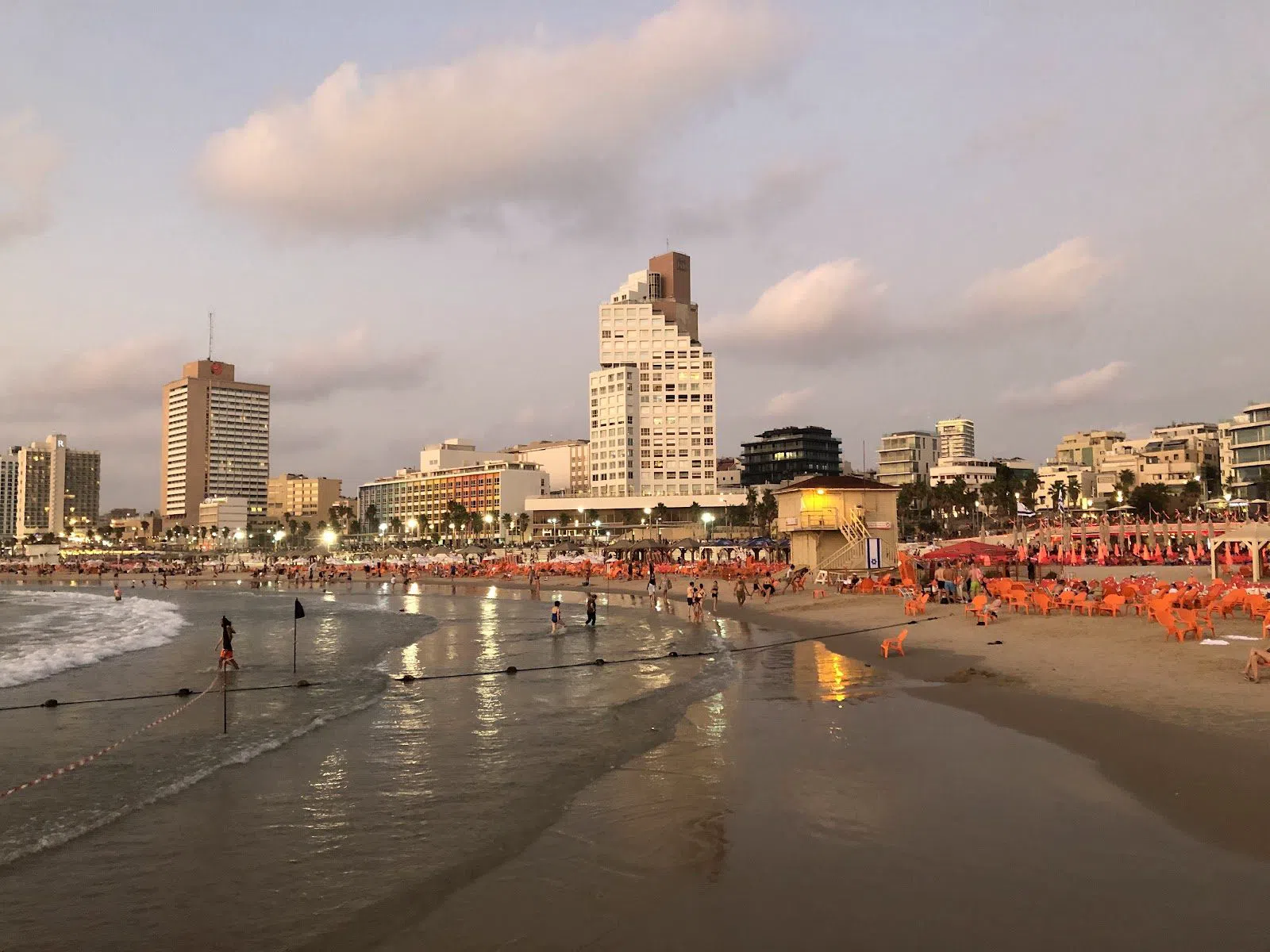
By late morning the centre of gravity moves to the two beaches that anchor the hotel row. Gordon Beach (end of Gordon Street) is the sporty, always-busy heart of Tel Aviv beach life and the default meeting point when a big local group needs somewhere everyone can find. This is where you'll hear the constant tok-tok of matkot — the wooden paddle-and-ball game that functions as the city's unofficial sport — alongside volleyball nets and rental stands. It's free, loungers are around ₪25, and it rarely feels empty. If your plan is simply to be where the action is, start here.
Immediately south, Frishman Beach (end of Frishman Street) is the cleanest and most central of the hotel-strip beaches, and it delivers the postcard: the crescent of towers behind you, the flags of the lifeguard station, safe supervised swimming in front. Managed sunbeds are plentiful and easy to book on the spot at around ₪25, which makes it the least stressful beach for a group that hasn't planned ahead — there's almost always room. Between them, Gordon and Frishman are the two you'll return to if you want the classic central-Tel-Aviv beach day.
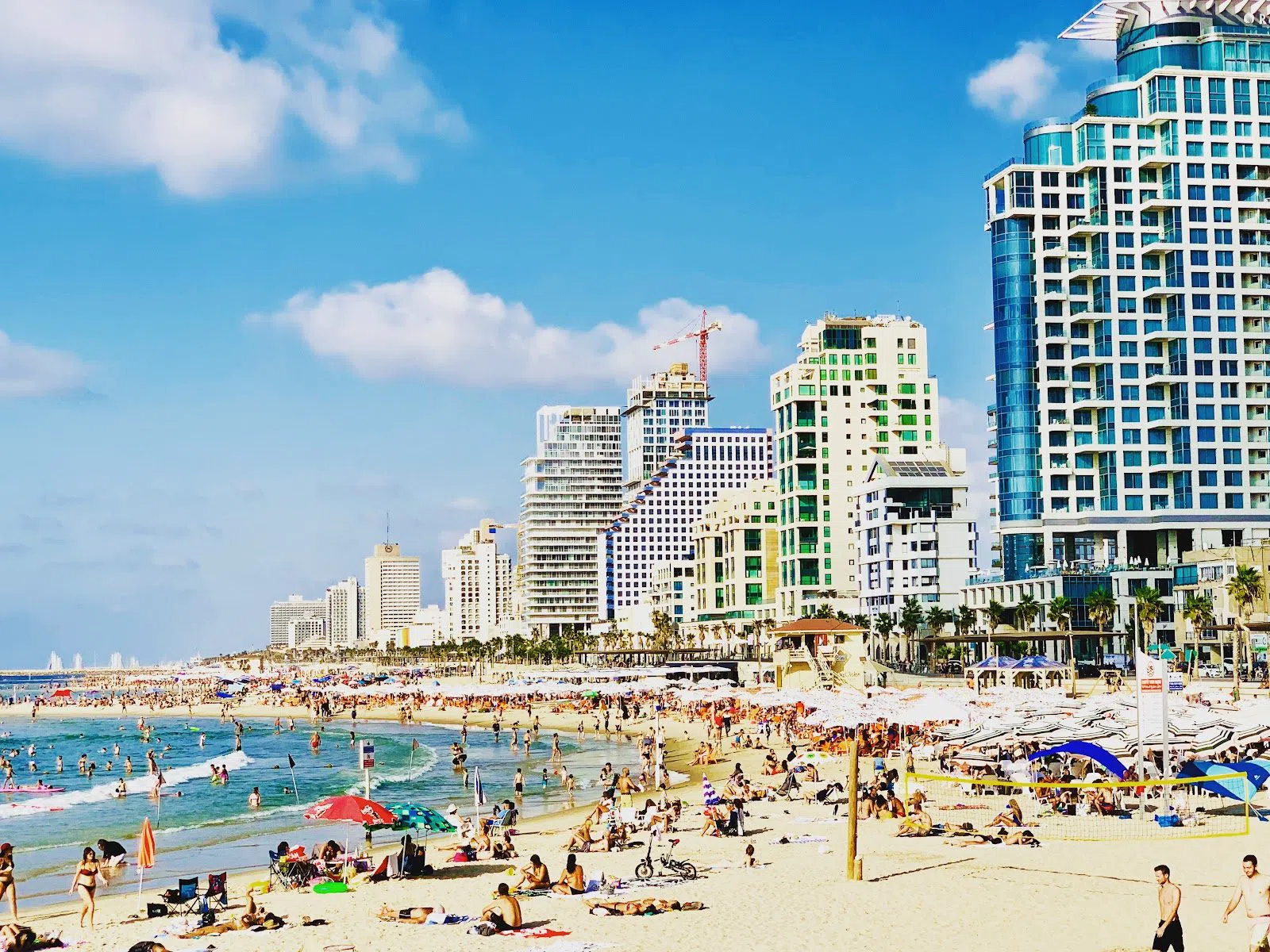
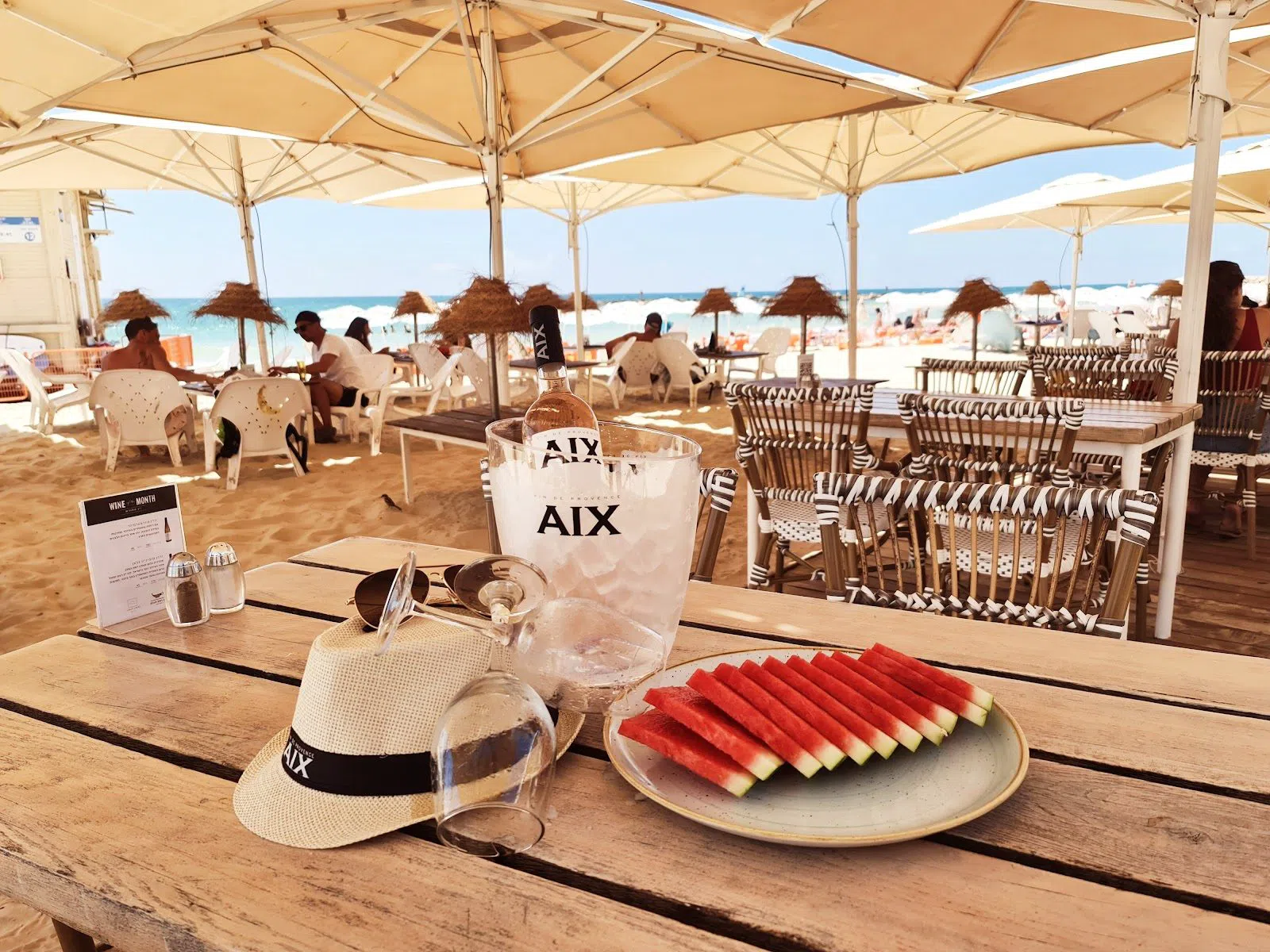
For lunch without leaving the sand, two beachfront institutions sit right here. La La Land (Gordon Beach) has been a fixture on this shoreline since 2006 — a large seating deck built for the long, slow session of lounging and cocktails that a Tel Aviv afternoon invites. Mains run roughly ₪70–140. Groups are welcome with a reservation, and given the size of the deck, booking ahead is the difference between a table on the sand and a wait. It suits both a couple settling in for hours and a group that wants one anchor for the day.
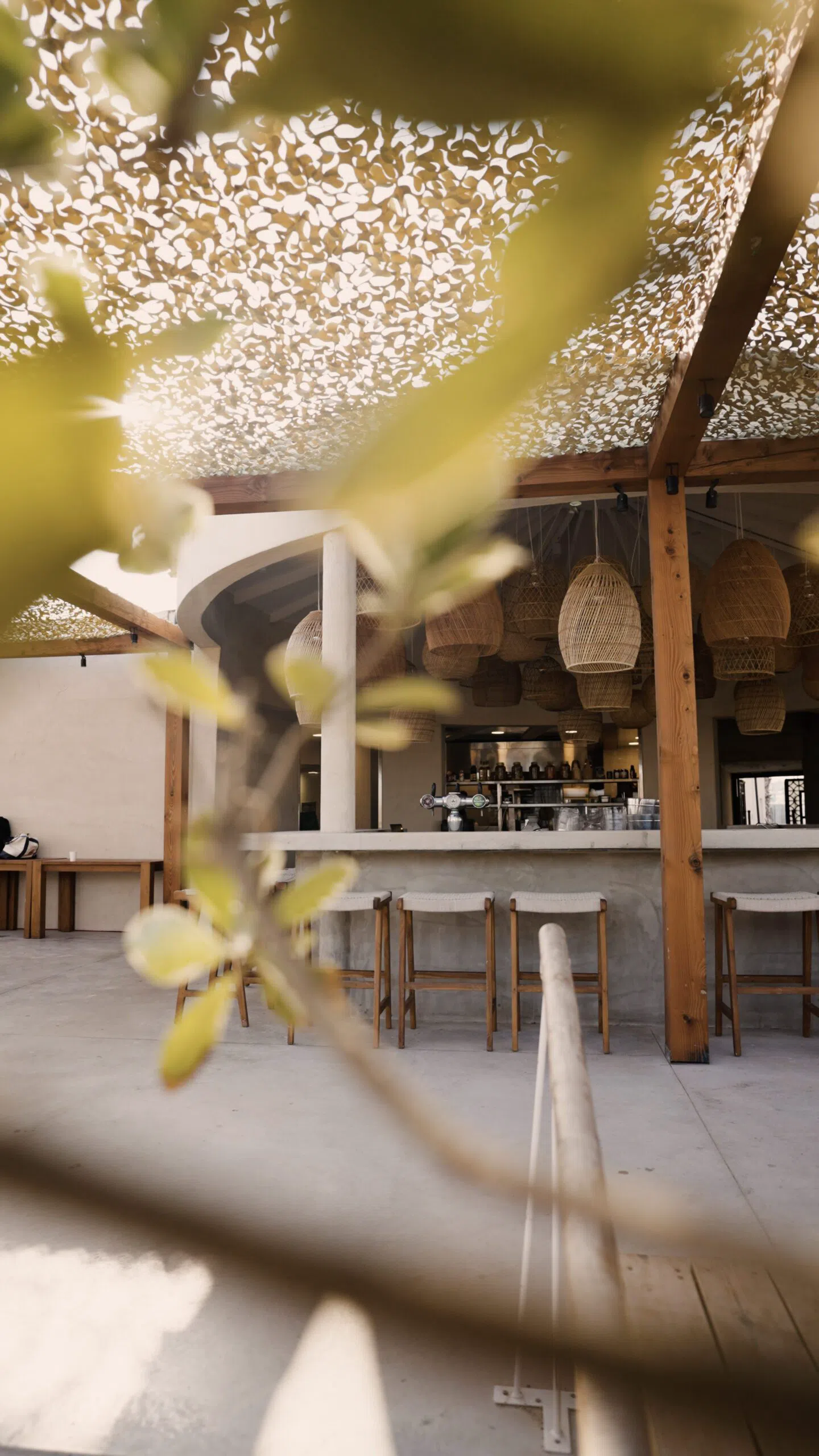
A short walk away, Bayz (Hilton and Metzitzim beachfronts) runs two sites along the promenade and has, to my eye, one of the best outdoor decks on the strip — buzzy, well-placed, ideal for a group. Mains are around ₪70–130, and reservations are advised in season. One honest caveat: at peak times the service can lag, so it's a better bet for a relaxed afternoon than for anyone in a hurry to eat and move on.
Friday afternoon: the drum circle and the walk south
If your visit crosses a Friday, plan the late afternoon around one thing. Drummers Beach (the southern end of Banana Beach) hosts a drum circle that has welcomed in Shabbat here for around twenty years — an open, free-form gathering where anyone with a drum can join the circle and everyone else is welcome to sit on the sand and listen as the sun goes down. There's no organiser, no ticket, no edge to it; it simply assembles itself each week and dissolves after dark. It is the most concentrated dose of Tel Aviv's free-spirited side you'll find on the whole coast, and it costs nothing. Arrive an hour or so before sunset, find a spot on the slope of sand, and let it build around you.
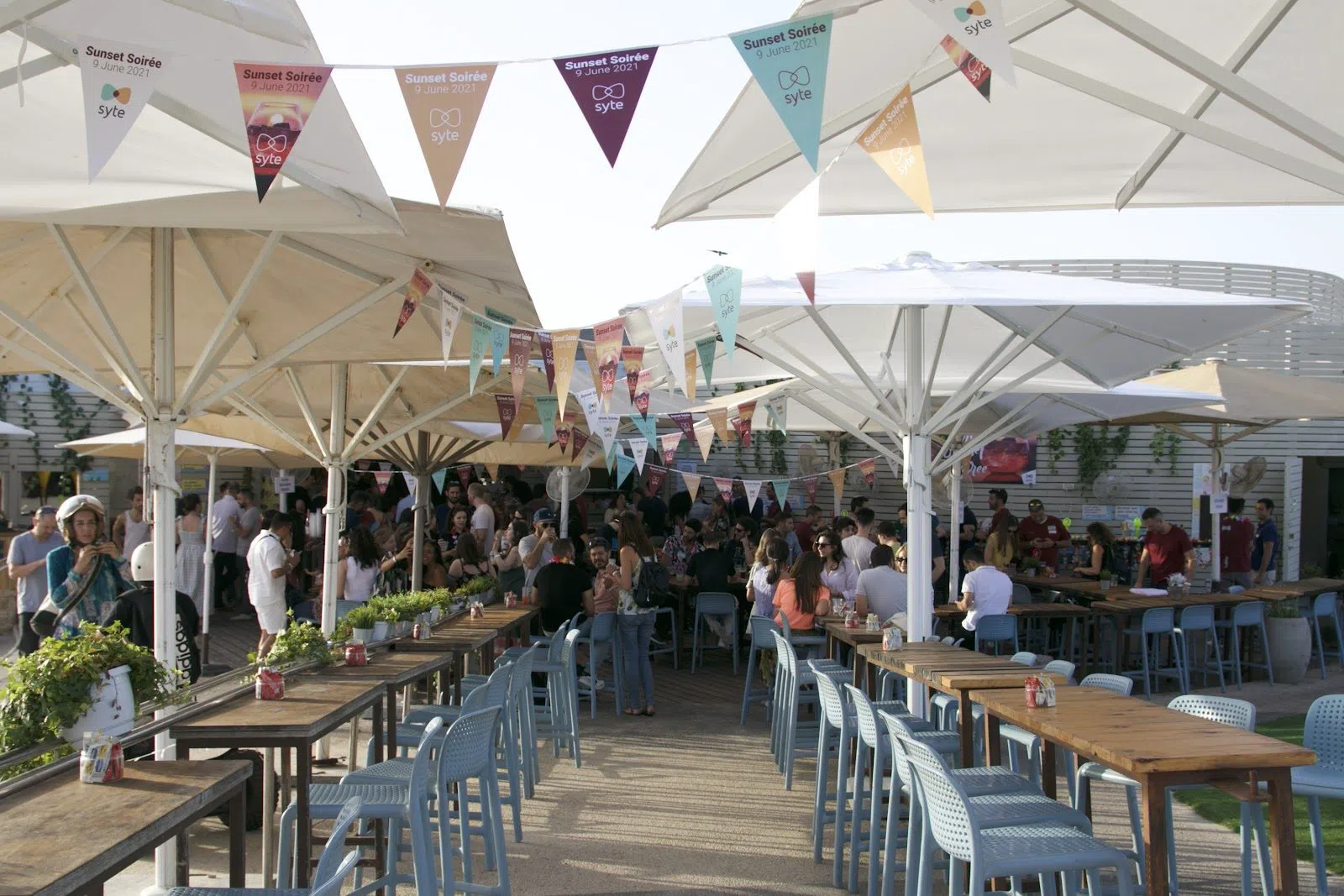
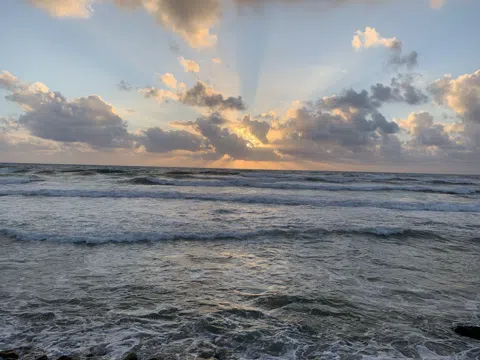
From Banana Beach the promenade carries on south into open parkland. Alma Beach (Charles Clore Park, below Jaffa) is where the hotel towers finally give way to grass and the horizon opens up. It's calmer than the central strip, with room for a group to spread out properly, and it's framed at its southern end by the ancient stone of Jaffa rising above the water. This is the city's sunset beach, and it earns the title honestly: the light here is softer than anywhere further north, the crowd is more relaxed, and the walk down from the centre — perhaps forty minutes along the water — is part of the pleasure. It's free, unmanaged, and all the better for it.
Sunset and after dark
Stay on Alma for the sunset itself; there's no better free seat on the coast, with Jaffa darkening to a silhouette as the sky goes. When you're ready for a drink and a beat, two very different options bookend the night.
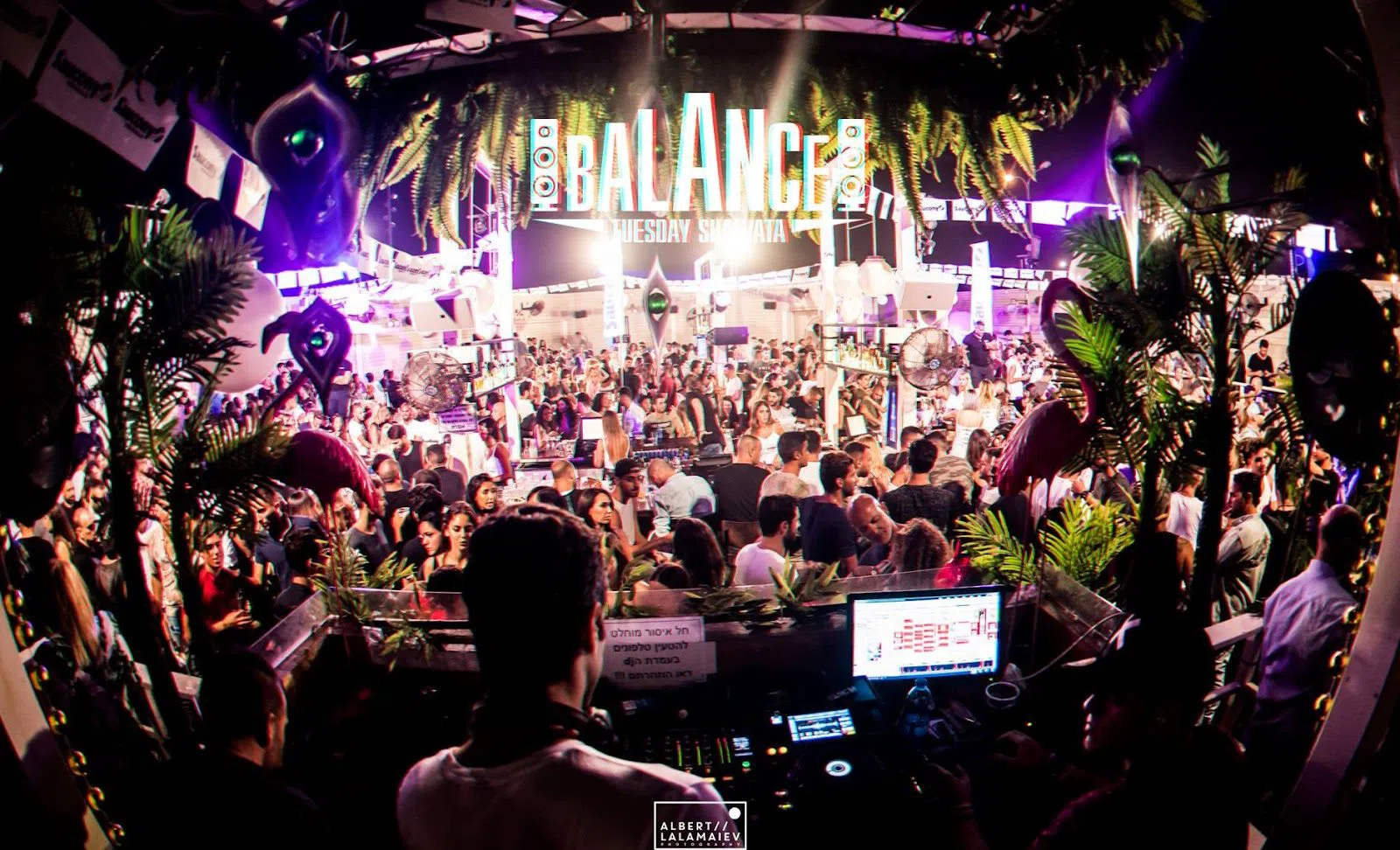
Back up at the port, Shalvata (Tel Aviv Port) is a laid-back beach bar by day that turns into a DJ-driven club after dark. It's built to handle numbers — it hosts private events for anywhere from twenty to five hundred people and takes table bookings — so it's the natural landing spot for a large group that wants to keep going. Drinks land around ₪45–60. There's no forbidding door ritual, but on a busy club night a table booking is what guarantees you a base rather than a scrum at the bar.
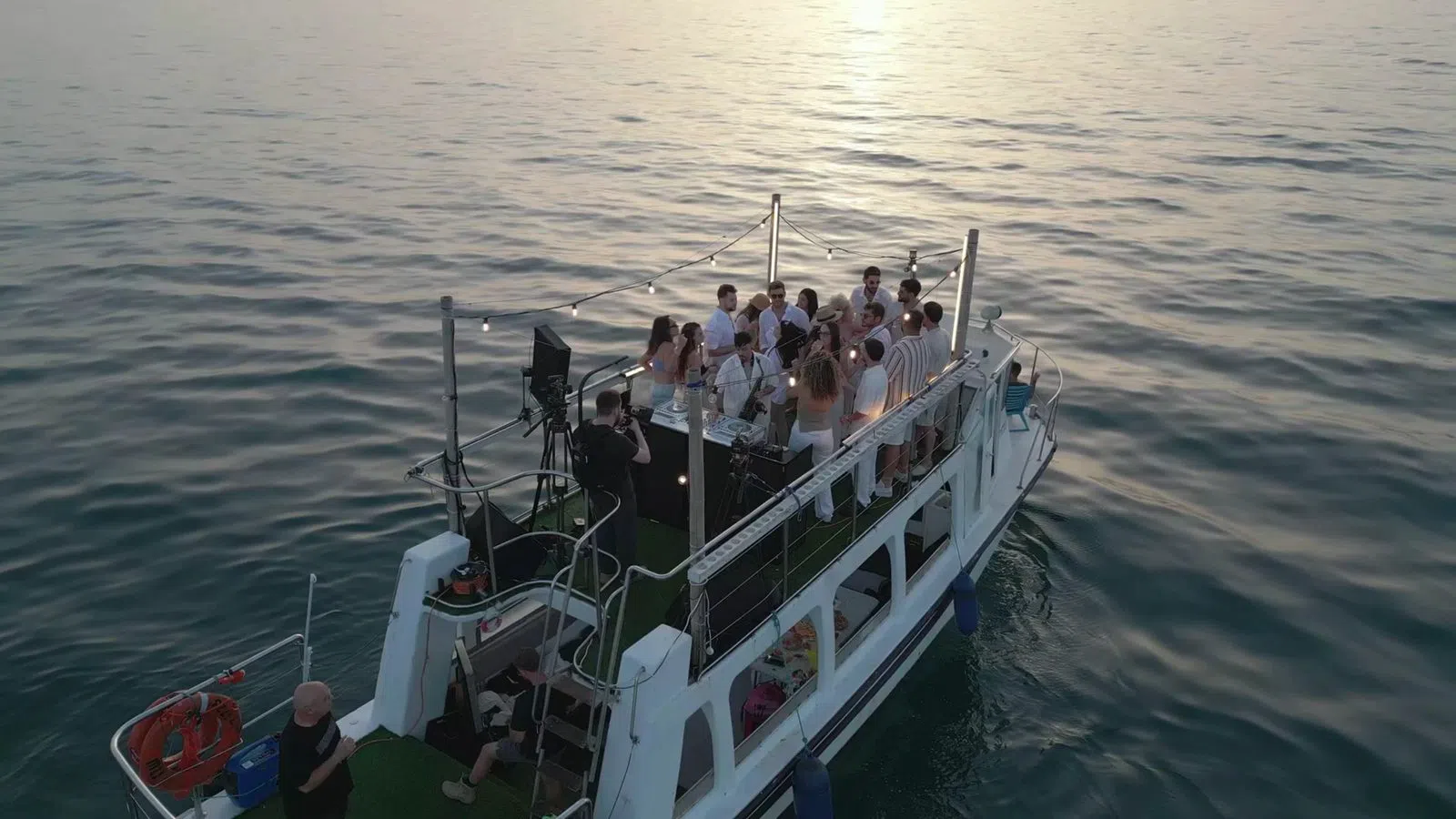
For something on the water instead, Danit Yacht Charters (Tel Aviv Marina) operates out of the marina and is the obvious choice for a group sunset or party cruise. The fleet runs from small yachts for a couple up to boats carrying around forty, and charters start from roughly \$230 an hour. This is the premium end of the day — worth it if you're marking an occasion and want to watch the whole strip you've just walked slide past from offshore, lit up against the dusk. Book ahead; the good sunset slots go early in summer.
Practical notes
Getting along the strip. The promenade is continuous and flat from the port in the north to Jaffa in the south, so walking is genuinely the best way to move between beaches — end to end is a couple of hours at an easy pace, and every stop above is a stretch of it. For longer hops, the city's dockless e-scooters and bike-share are everywhere along the front; taxis and ride-hailing apps work well when you're carrying gear or moving after dark.
Cash and cards. Bring some shekels. The beaches themselves are free, but sunbed and umbrella hire (around ₪25), a matkot set, or a cold drink from a kiosk are often cash-only, and the beach attendants who collect lounger fees rarely take cards. Bars, restaurants, the pool and the surf schools all take cards without trouble.
Timing and Shabbat. Mornings before around 10am are the quietest and coolest — best for swimming, surfing and the northern family beaches. From Friday afternoon into Saturday the beaches are at their busiest and their most local, which is the whole point of the drum circle but worth knowing if you prefer space. Restaurants and beach bars along the front generally stay open through Shabbat, though hours can shift, so confirm bookings.
Rough budget. A beach day costs almost nothing beyond a lounger and lunch — reckon on ₪25 for a sunbed and ₪70–140 a head to eat well on the sand. A surf or SUP lesson adds ₪150–250; the pool is ₪69–79. The splurge is the yacht, from \$230 an hour. Sun is fierce from late morning; a hat, high-factor sunscreen and more water than you think you need are the only things you'll regret leaving behind.
Before you go
Which Tel Aviv beach is best for families with young children?
Metzitzim Beach by the port. It's Blue Flag–certified, protected by a breakwater and shallow a long way out, so the water stays calm and safe. Frishman Beach on the central strip is the next-best bet, with supervised swimming and plentiful managed sunbeds.
Where can I learn to surf or paddleboard in Tel Aviv?
Topsea Surf Club on Hilton Beach runs surf and SUP lessons seven days a week (around ₪150–250). Galim Surf School on Gordon is a separate all-year operator good for mixed-ability groups. For a scenic paddle rather than surf coaching, Aloha Surf School TLV runs SUP tours with a Jaffa backdrop.
Are Tel Aviv's beaches free?
Yes — every public beach on the strip is free to enter. You only pay for extras: a sunbed and umbrella run about ₪25, food and drinks at beach bars vary, and Gordon Pool charges ₪69 on weekdays or ₪79 at weekends. Bring cash, as lounger attendants and kiosks are often card-free.
What is the Friday drum circle at Drummers Beach?
It's a roughly twenty-year-old gathering at the southern end of Banana Beach where people bring drums to welcome in Shabbat on Friday afternoon. It's free and open — anyone can join the circle with a drum, and everyone else is welcome to sit and listen. Arrive about an hour before sunset.
Which beach has the best sunset in Tel Aviv?
Alma Beach (Charles Clore Park), just below Jaffa. It's calmer and more open than the hotel strip, with room to spread out, and the ancient stone of Jaffa frames the horizon as the sun drops. It's free and unmanaged — walk down the promenade from the centre in time to settle before dusk.