Tel Aviv 특집호
Tel Aviv's Hatikva Market and the quarter around it
An Iraqi and Yemenite market built in the 1930s, where the coffee roaster, the spice sacks, the charcoal grills and the soup counters still serve its own neighbours.

글: Inês MarquesWalking the White City, Jaffa and everything in between
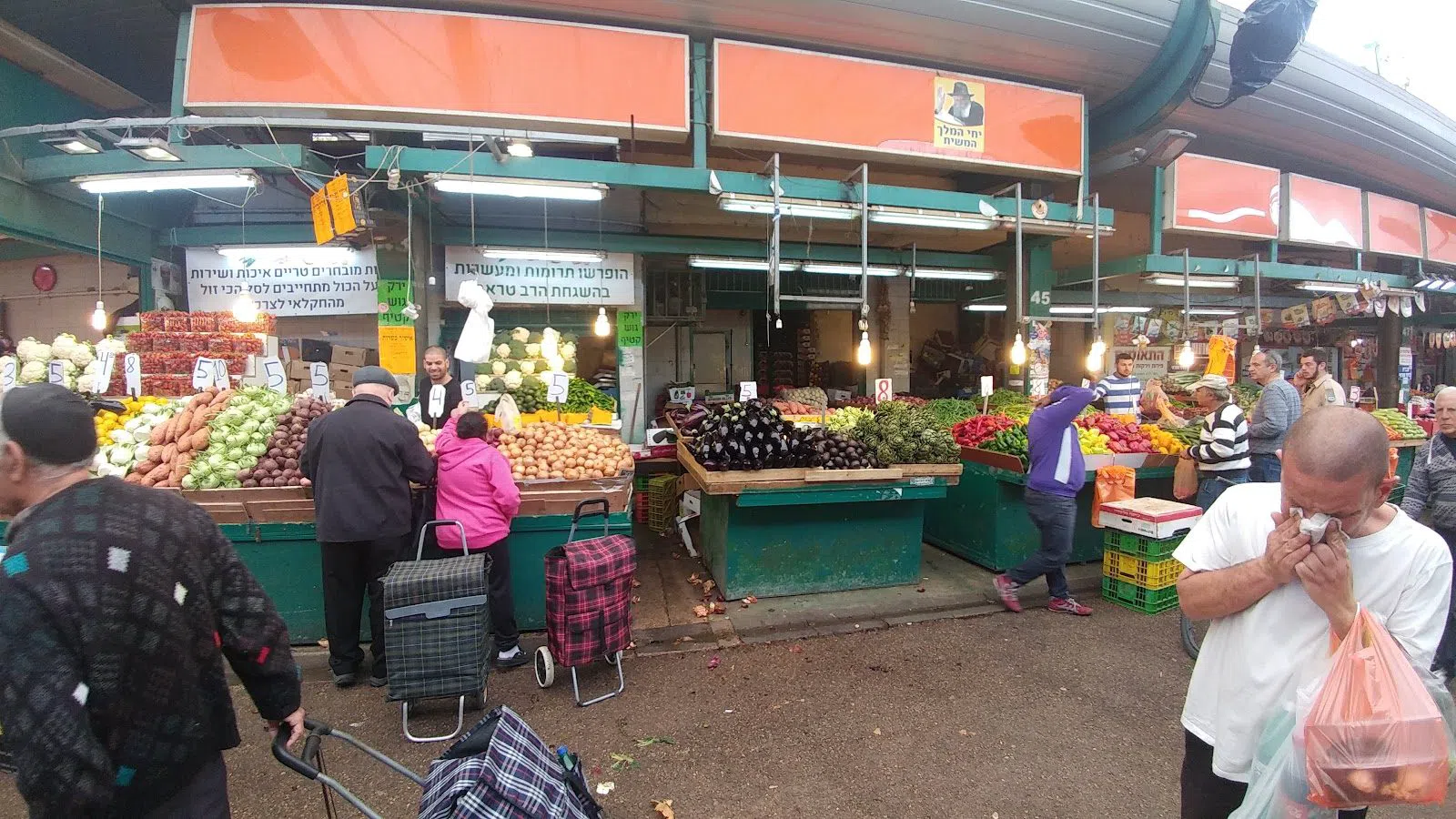
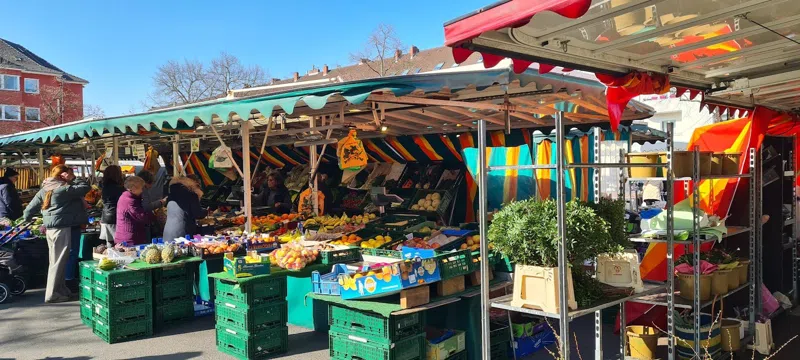
Shuk HaTikva (the triangle of HaEtzel, HaTikva and HaMvaser streets) goes back to the Iraqi and Yemenite immigrants who built it in the 1930s, and it still winds down by early afternoon. Corrugated and canvas awnings hang between two-storey blocks, and crates of herbs and dates spill onto the tarmac. It trades Sunday to Friday morning and shuts for all of Shabbat.
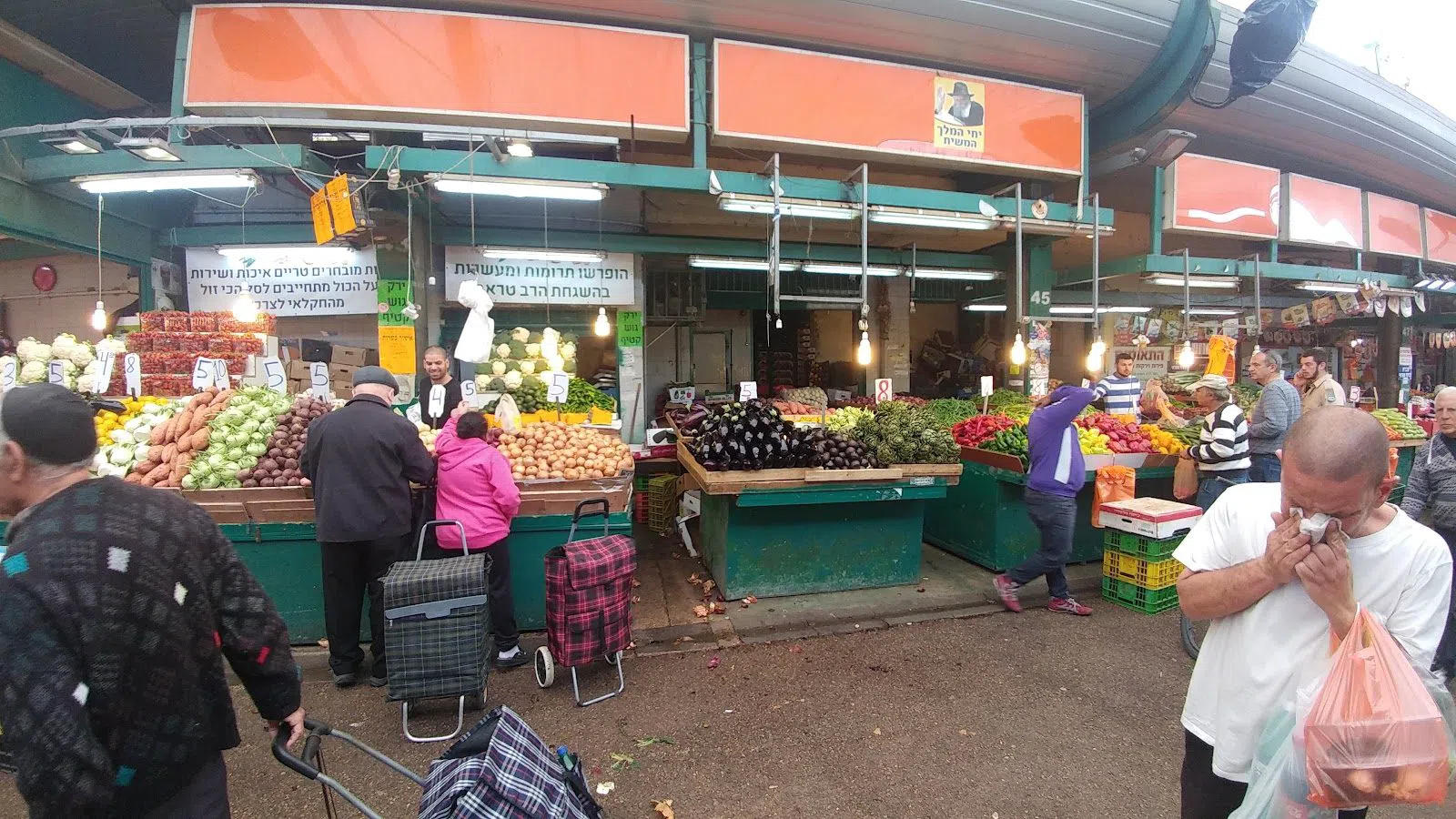
Walking the market lanes
The shuk is a set of low-rise open-air lanes with no gate and no entry charge. Butchers work an alley off Nuriel Street. The signage is hand-painted Hebrew, and nothing here has been polished for visitors.
It is a working neighbourhood market. Stalls begin closing once the morning trade is done, so come early enough to eat as well as shop. Licensed Iraqi and Yemenite food-tour operators walk the lanes on weekday and Friday morning slots, and those need booking ahead.
Tel Aviv 여행 계획하기
예약 파트너의 실시간 가격입니다.
많은 객실이 무료 취소 가능합니다. 예약 시 당사가 수수료를 받을 수 있습니다.
Coffee, spices and pickles
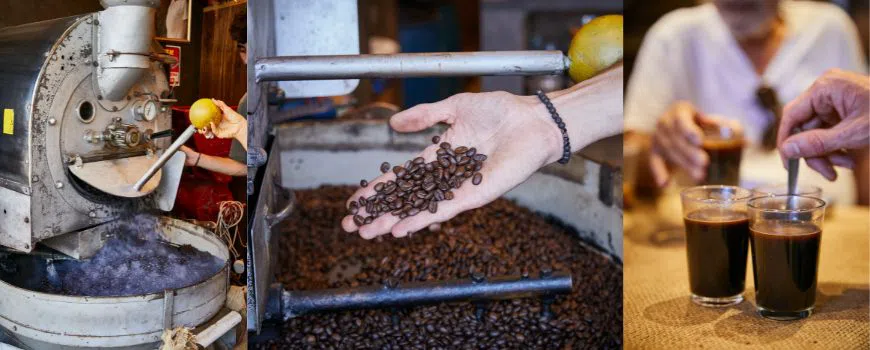
A family who had fled Damascus opened Kafe Mizrahi (HaEtzel 24) in late 1947, and it roasts on the same spot. The cast-iron drum from the 1940s stands at the door with sacks of green beans beside it. Behind the counter sit glass jars of cardamom-heavy Turkish coffee, ground to order, along with tea blends and nuts. Buy 100g and you carry the smell of the market out with you. Two or three customers fit at the counter at a time.
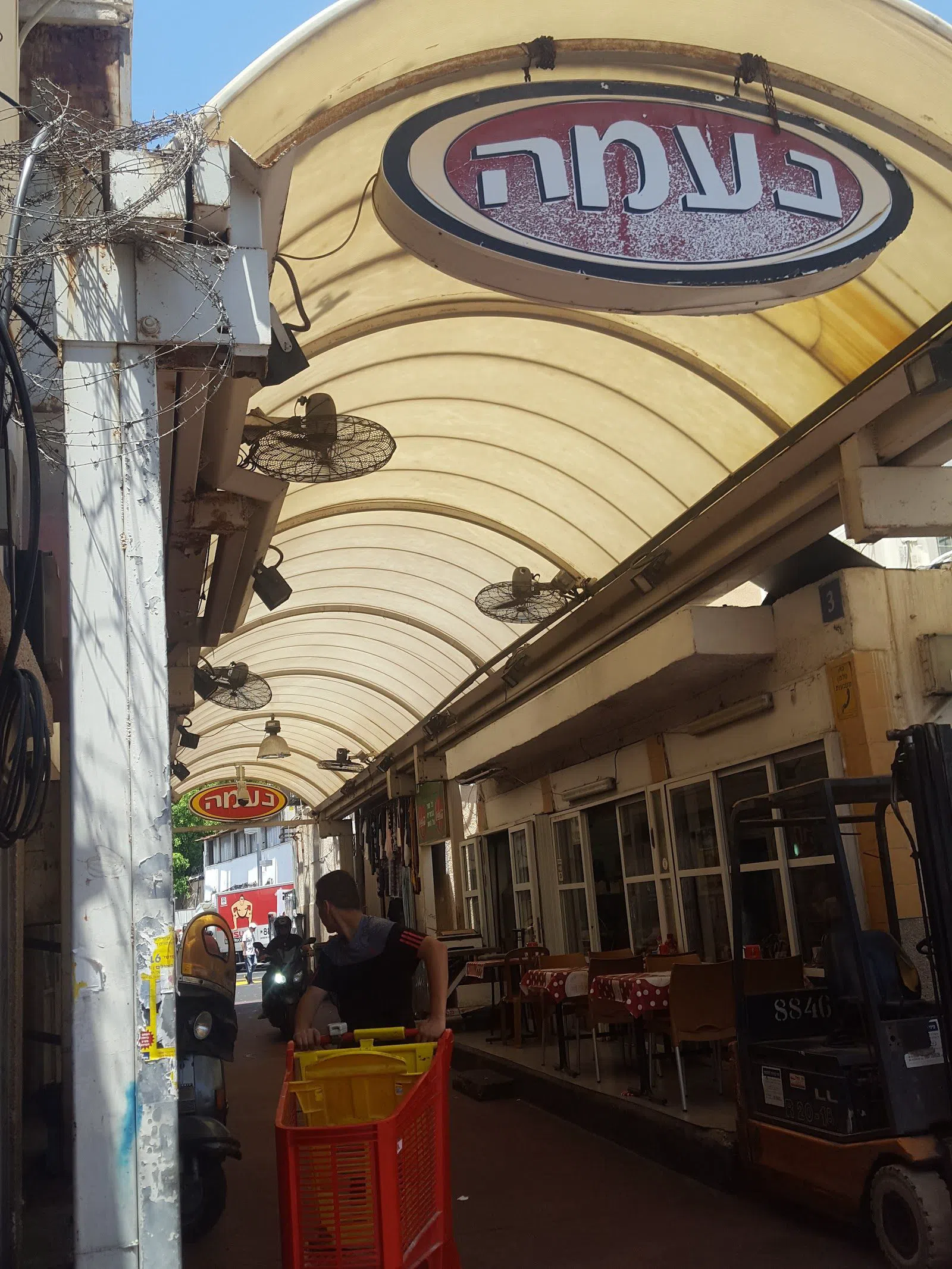
Na'ama Ovadia started Tavliney Na'ama, Na'ama's Spices, in 1963 as a few square metres of stall, and it is now one of Israel's best-known spice names. Open sacks and bins of sumac, turmeric, hawaij and baharat are banked in cones of ochre and red from wall to wall. Nuts roast on site, grinders run behind the counter, and your order is weighed on brass scales into paper scoops. Ask for the Iraqi baharat la-kubba blend. You will not find it packaged at home. Friday is tight with locals stocking up for Shabbat, so mid-morning on a weekday is the easier visit.
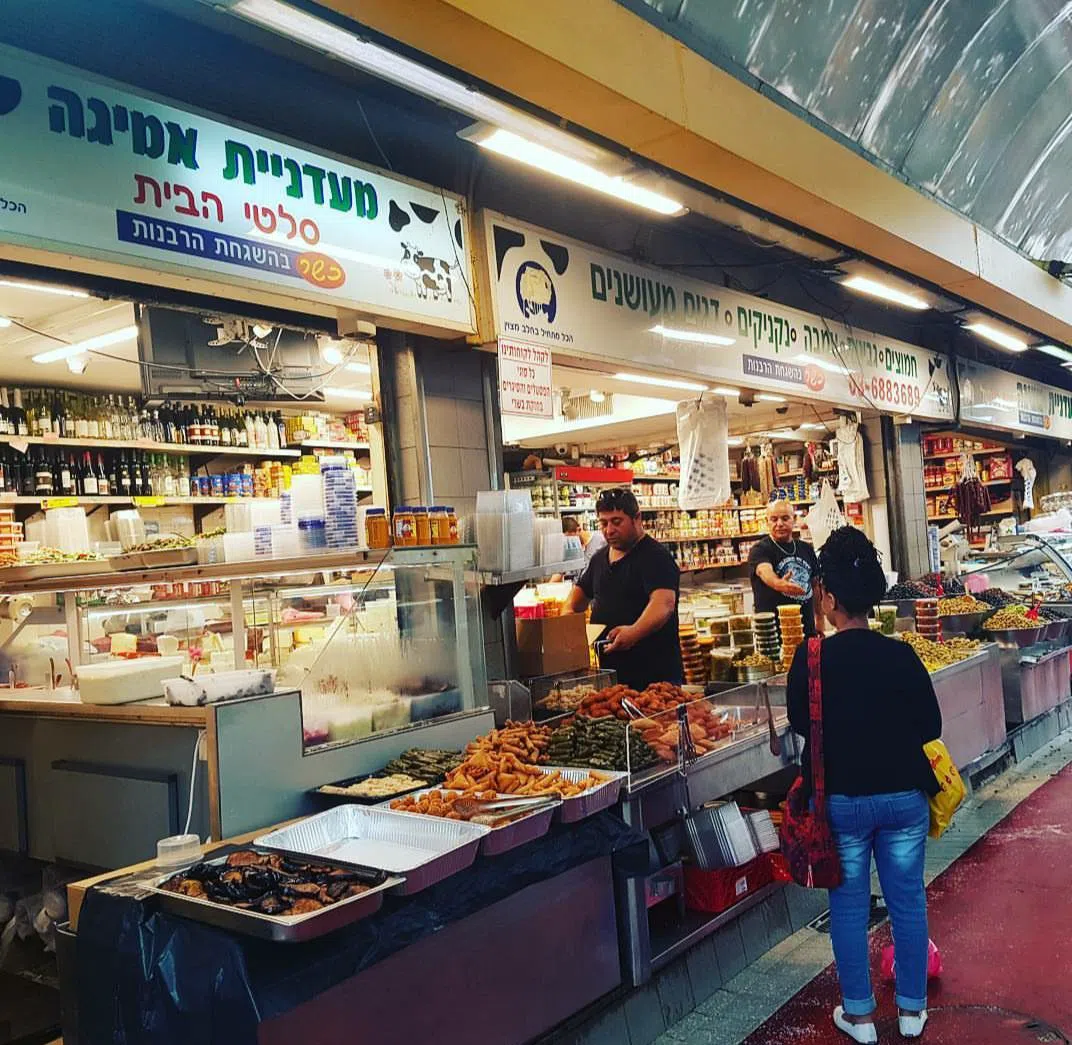
Ma'adaney Amiga (Nuriel Street) has been run by the Amiga family since 1950. Plastic tubs and barrels line the shopfront with 30 kinds of olive, turmeric-stained orange amba and pink pickled turnip. Jars of red and spiced hummus stack up beside smoked fish and Iraqi cheeses in the chiller. It is counter service with no seating. Ofer at number 10 trades in the same goods, so taste at both counters and buy from whichever one wins you over.
Bread, lahoh and the Friday hafla
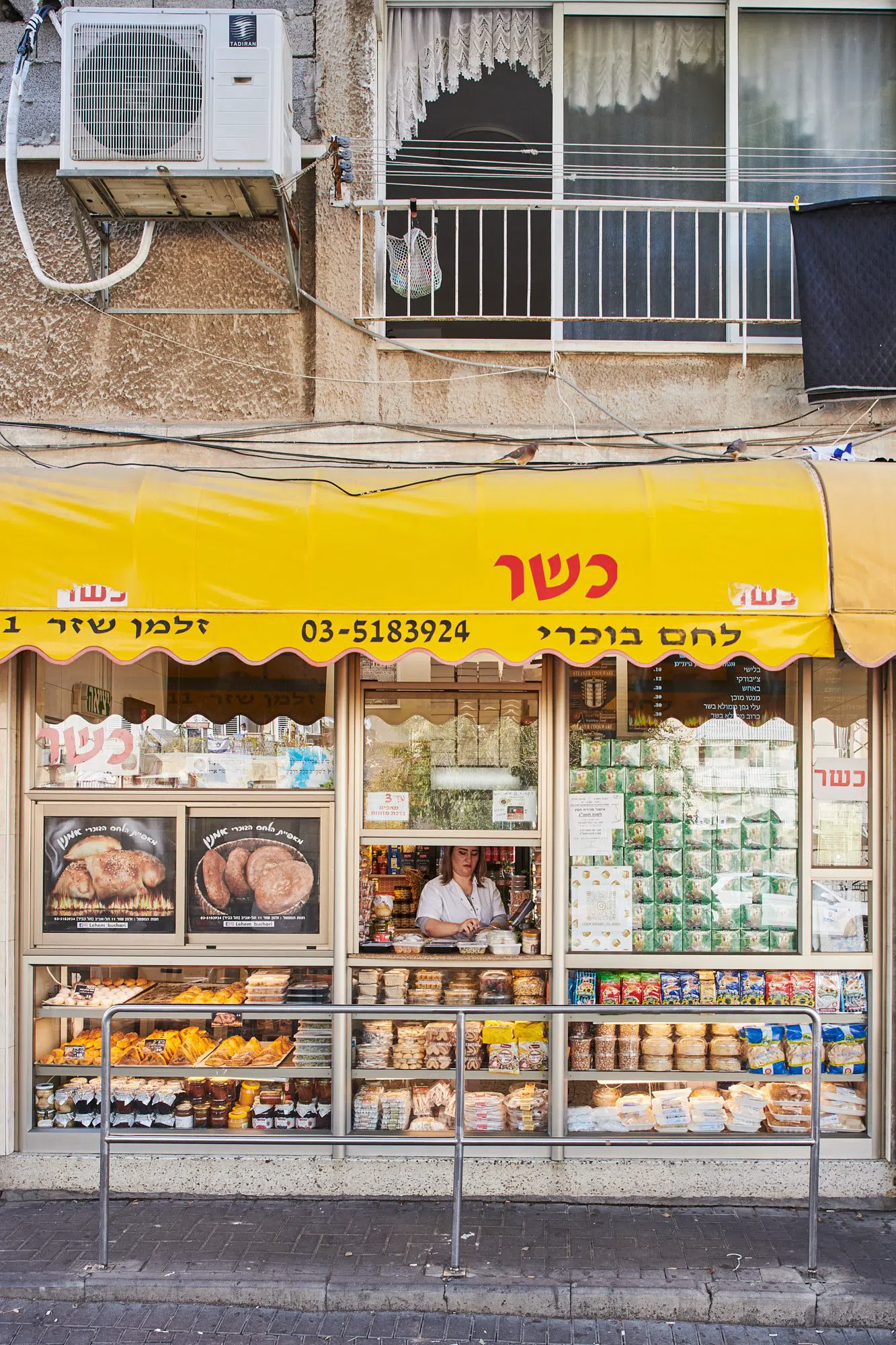
Lechem Bukhari (Hanoch Street) sits in a back alley off HaEtzel, where Albert has baked Bukharan breads since 1996. The oven is a walk-in room. Stamped round lipyoshka loaves go onto the hot walls, bowl-shaped crisp toki bread curls off an inverted saj, and meat-filled goz'gija pastries cool on trays. The bakery has no seating. Turn off HaEtzel for the toki if nothing else.
HaSaluf (the market's HaTikva Street entrance) has been run by the Tzuberi family for more than two decades, and it is where to start with Yemenite food here. Lahoh pancakes cook on a flat griddle beside trays of coiled jachnun and pale kubaneh, with zhug and grated tomato in small steel bowls. Order lahoh with egg, malawach and a bowl of marak. Dishes run ₪21 to ₪65. Plastic chairs stand on the pavement and the Mizrahi music is loud. Friday late morning turns into an open hafla with music, dancing and arak, so arrive early if you want one of those chairs.
Grills on HaMvaser and HaEtzel
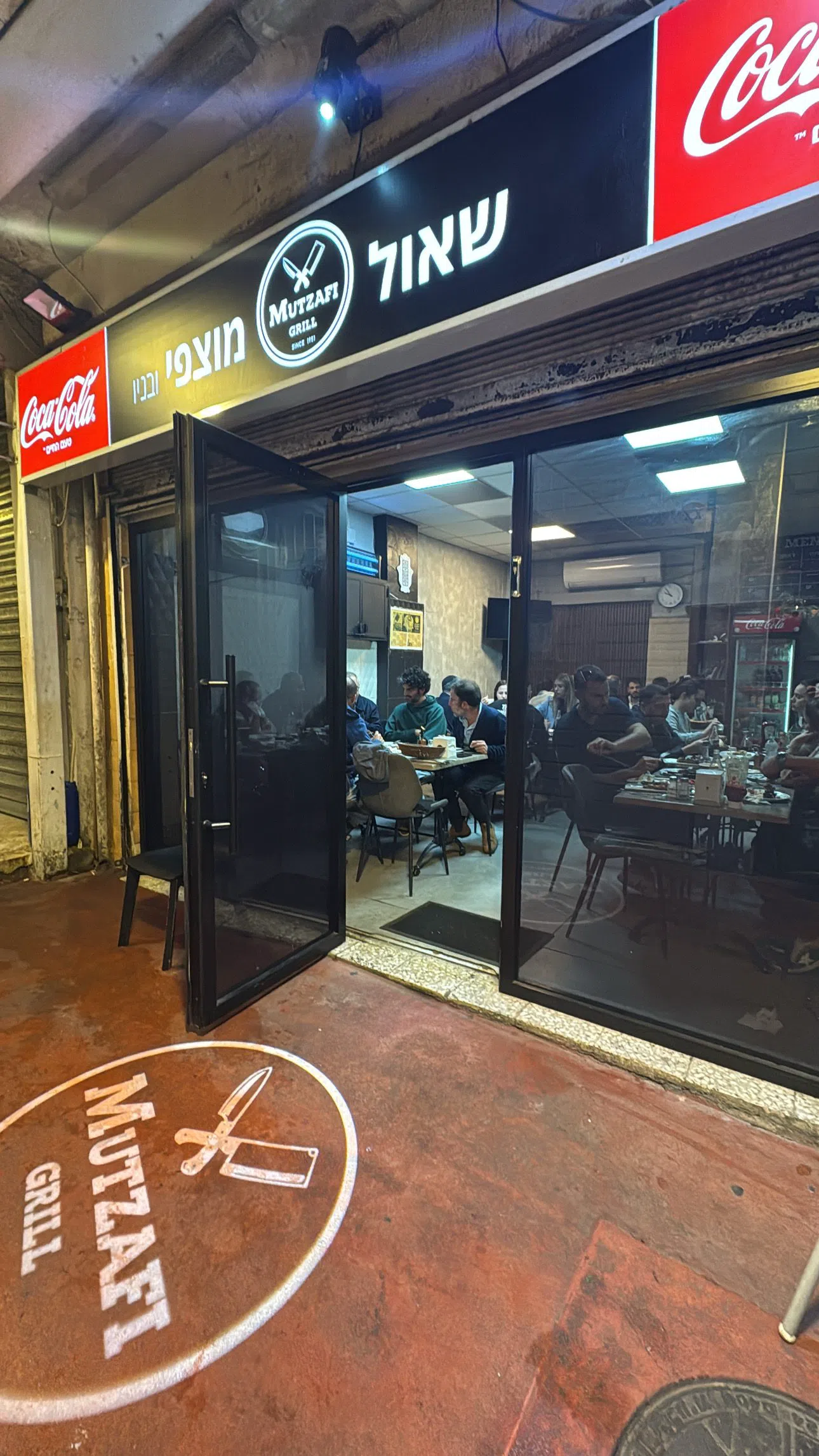
Ephraim Mutzafi opened Shaul Mutzafi (HaMvaser Street) in 1951, and his son Shaul runs it now. The charcoal grill is at the front window of a narrow room. The kebab is deliberately minimal, hand-chopped beef and lamb with onion, salt and pepper and nothing else, laid straight onto laffa. Tahini, amba and chopped salad crowd a small formica table. Many locals rate it the best kebab in Tel Aviv. Dishes run ₪35 to ₪70 (₪₪). The room is often full, and a group of more than six should come off-peak or expect to split tables.
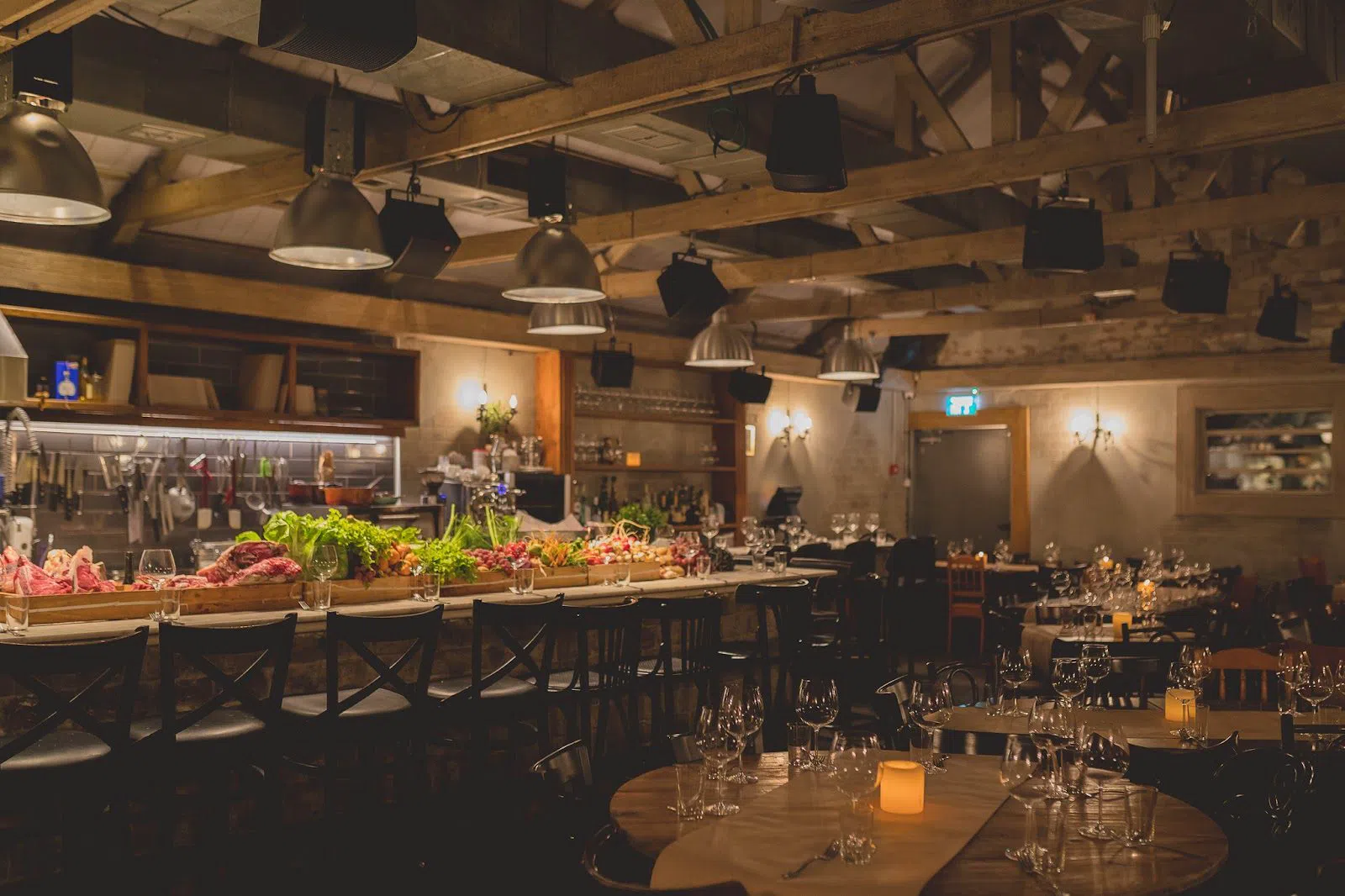
Shemesh has been grilling since 1952 and is in its third family generation. A long charcoal mangal turns skewers of kebab, chicken hearts, sweetbreads and goose liver over the coals. Salad dishes cover the table before you have ordered. The offal skewers are the point, and the menu carries plenty for the squeamish. Skewer dishes run ₪28 to ₪70 (₪₪) under strip lighting and tiled walls. It is the market's best bet for a table of eight or more, so book ahead at weekends.
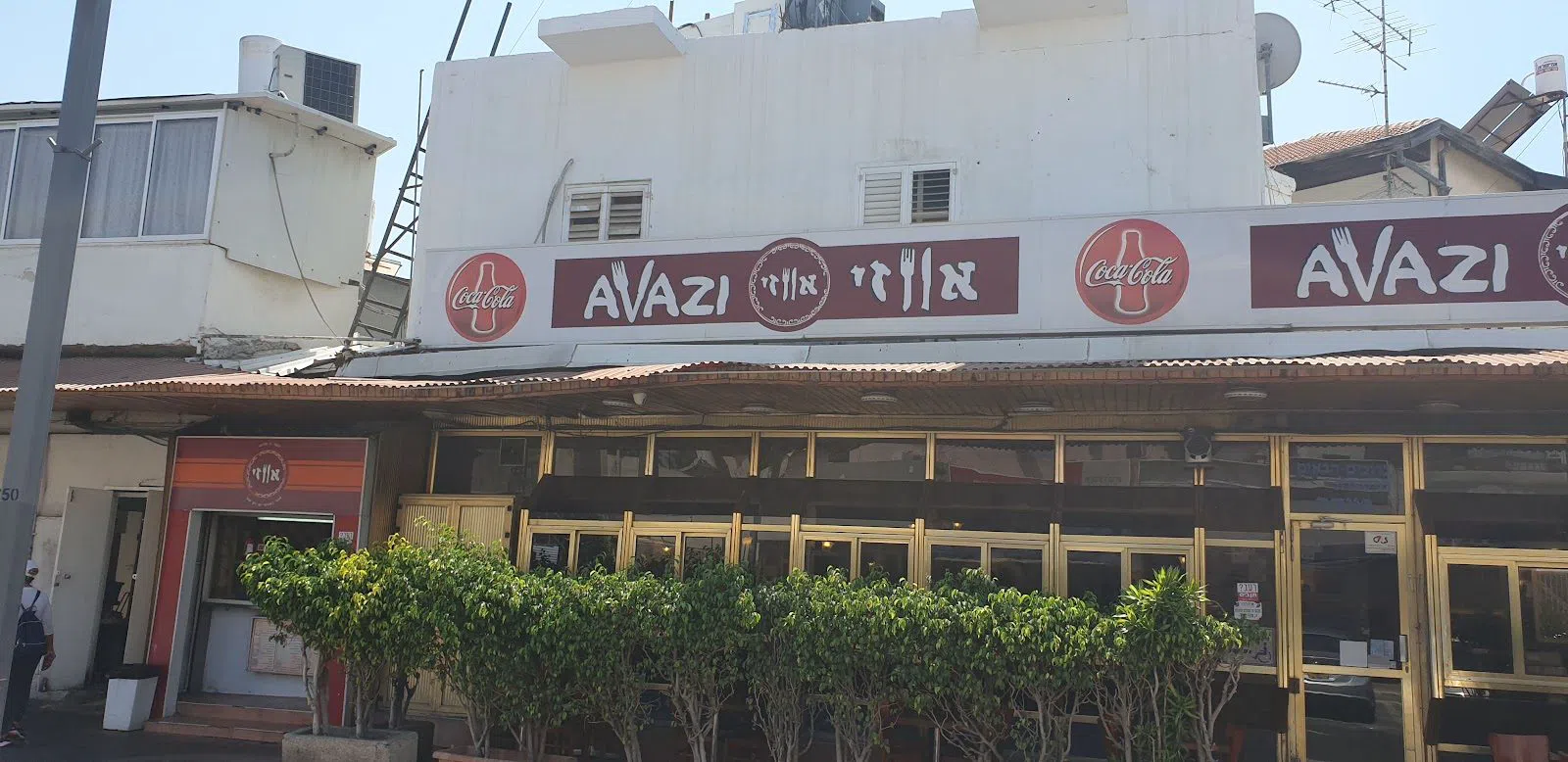
Yehuda Avazi founded Avazi (HaEtzel Street) in 1970, and it is credited with putting grilled goose liver on skewers on Israeli menus. Tables in the big, bright grill room disappear under a dozen small salad plates and fresh-baked pita, and the salad parade alone is worth the seat. Skewered goose liver blisters over charcoal. A Rabbanut kosher certificate hangs framed by the till. Skewers start at ₪25 and lamb chops run to ₪90. It closes Friday afternoon through Shabbat.
Soup, kubba and falafel
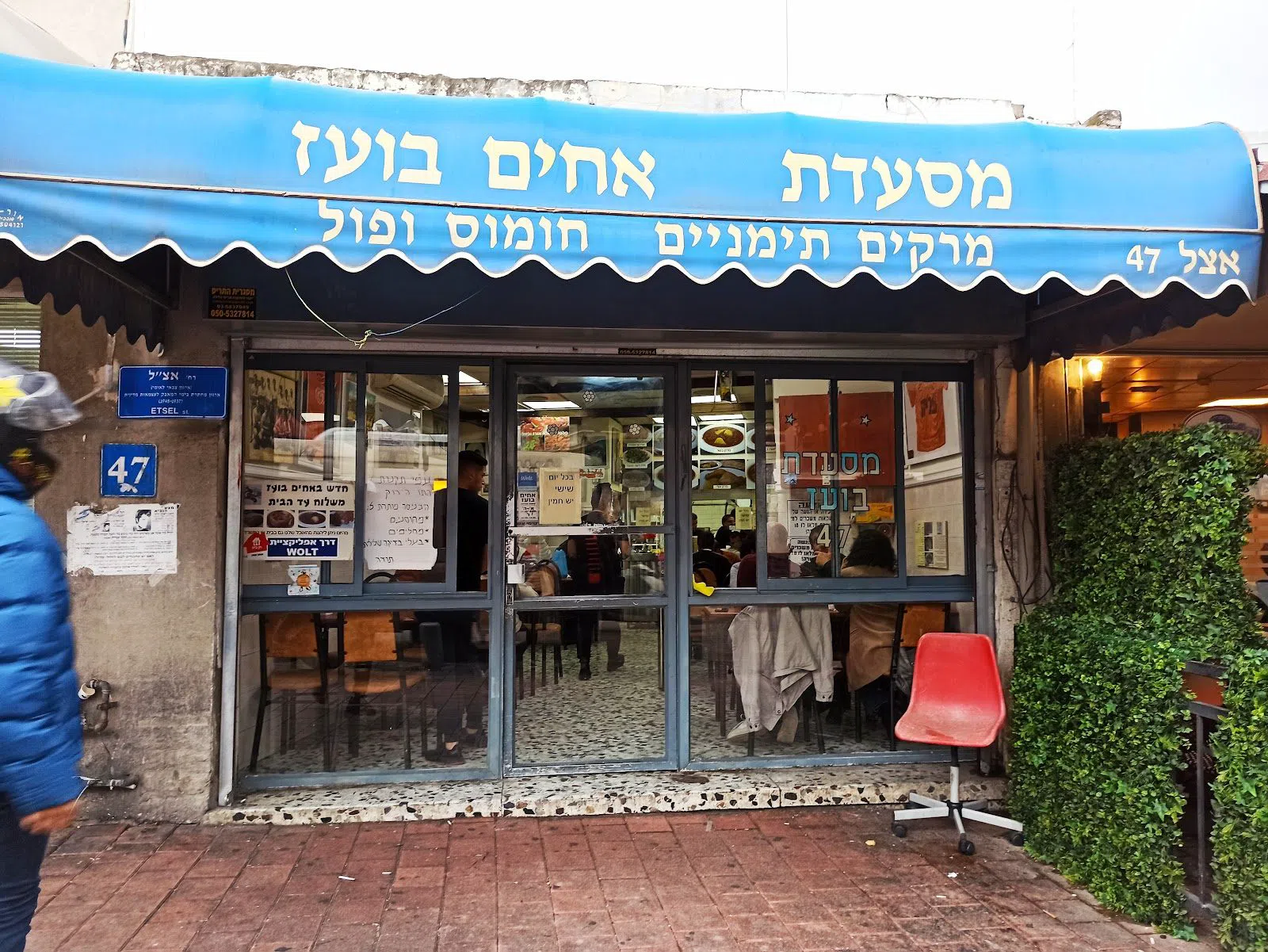
Ha'Achim Boaz (HaEtzel), the Boaz Brothers, started as a falafel stand in 1948 and has sold soup on this street ever since. Vats steam behind the counter of a plain tiled room with shared tables. The soup comes as a deep bowl of bone-coloured Yemenite meat broth with a whole marrow bone standing in it, hilbeh and fiery green zhug on the side, and torn pita instead of cutlery. Soup is ₪40. The lung and leg soups are the old-school order, and plain meat soup is the safe one. The room empties out by mid-afternoon and closes early on Friday.
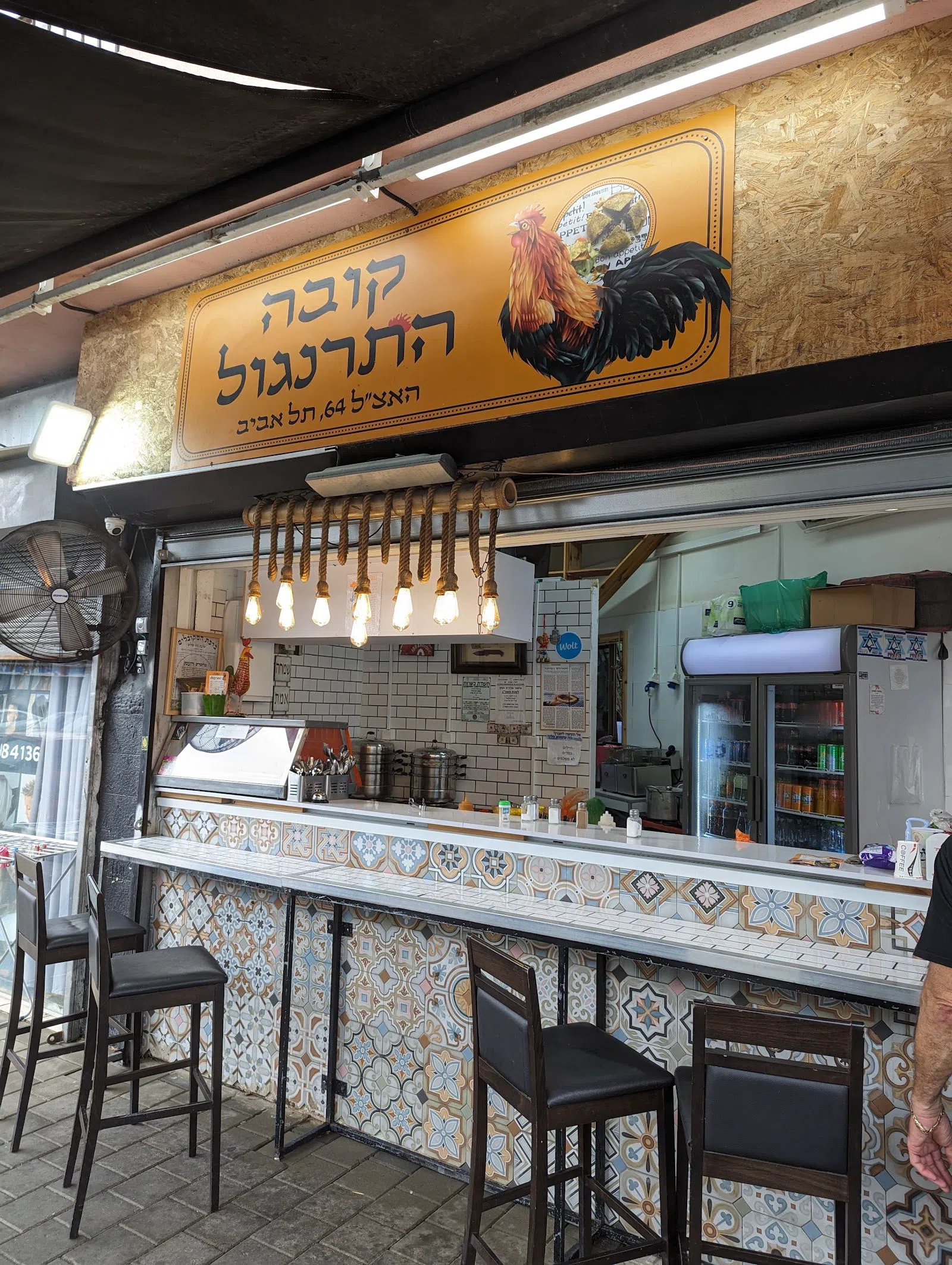
Yehuda, who has lived in the quarter 55 years, runs Kuba HaTarnegol (HaEtzel). Golden chickpea-and-semolina kubba patties fry to order and go into pita with tahini, pickles and salad. You eat standing at a shelf on the pavement. Patties cost ₪22 to ₪30. It is a newer arrival in the market, and a takeaway counter with no real seating.
Falafel Meir (HaEtzel 75) is the last surviving falafel stand in the market, more than 30 years in. A fryer bubbles with dark green falafel balls next to steel trays of salad and pickled chilli. The queue runs down the pavement from mid-morning. A pita is ₪15 to ₪18, and you pay cash at a stand with nowhere to sit. It shuts by late afternoon.
Faluda before you walk back out
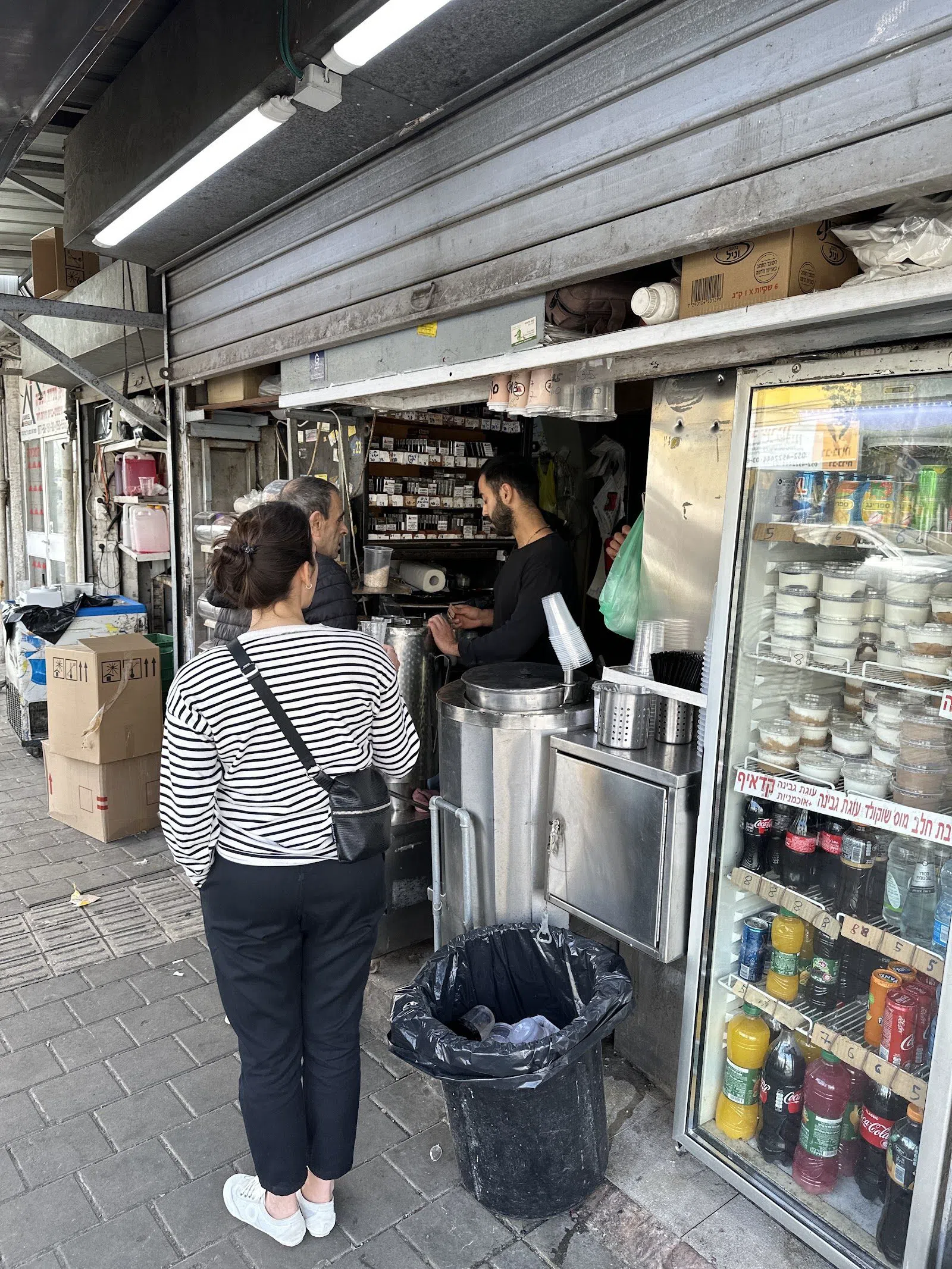
HaFluda shel Ilana (HaEtzel) has been open since 1975, and Ilana, now in her late 80s, still oversees the kiosk daily. Tall glasses hold rose-pink Persian faluda full of translucent noodles and basil seed. Hot milky sahlab arrives dusted with cinnamon and coconut, and set malabi sits in plastic cups under a slick of red syrup. Drinks and desserts run ₪5 to ₪40. The kiosk is standing only. Make it the last stop.
Gan HaTikva and the Ofra Haza hill
Gan HaTikva (corner of Derech HaHagana and Givati), also called Gan New York, is a 50-dunam municipal park from the 1950s and the quarter's only real breathing space. Mature ficus and palms shade worn concrete paths, and entry is free.
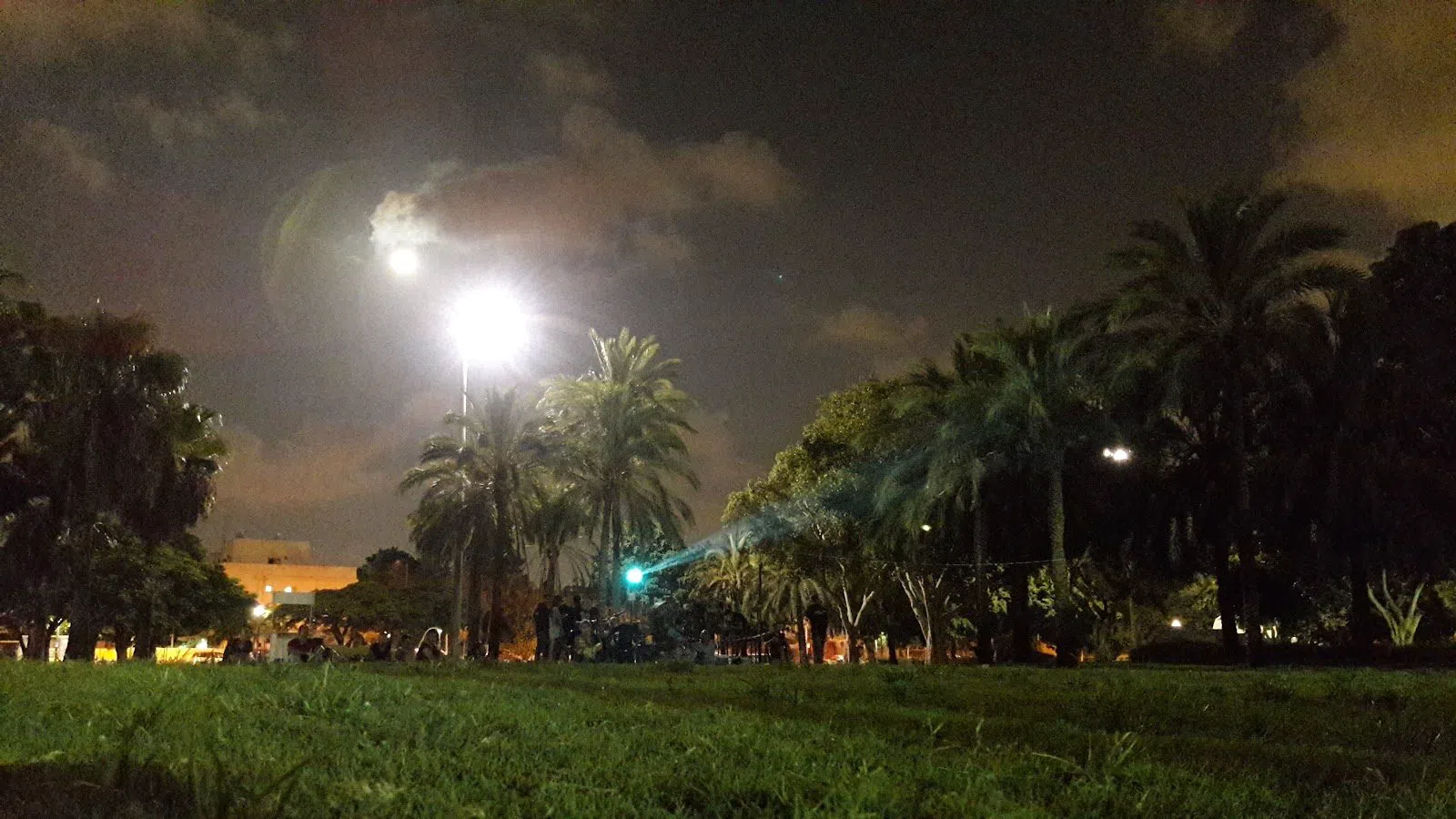
A treble-clef-shaped metal monument to the singer tops a small grassy rise at one side, Givat Ofra Haza. Ofra Haza grew up at 39 Boaz Street beside the park, and the hill was named for her after her death in 2000. It is the natural meeting point for a walking tour.
Beit Dani and the 1991 memorial
Beit Dani (Simtat Kabir) is a low municipal complex with sports halls and an outdoor summer pool. Out front stands the 1992 'Angel of Peace', a three-winged rusted-iron sculpture, its base cut with the Hebrew words 'covering with their wings'. The memorial marks the shelter outside the centre that took a direct Scud hit on 19 January 1991. The forecourt and memorial are freely walkable. DocAviv screenings and dance classes run year-round, with tickets at ₪30 to ₪60.
Matchday at the Hatikva stadium
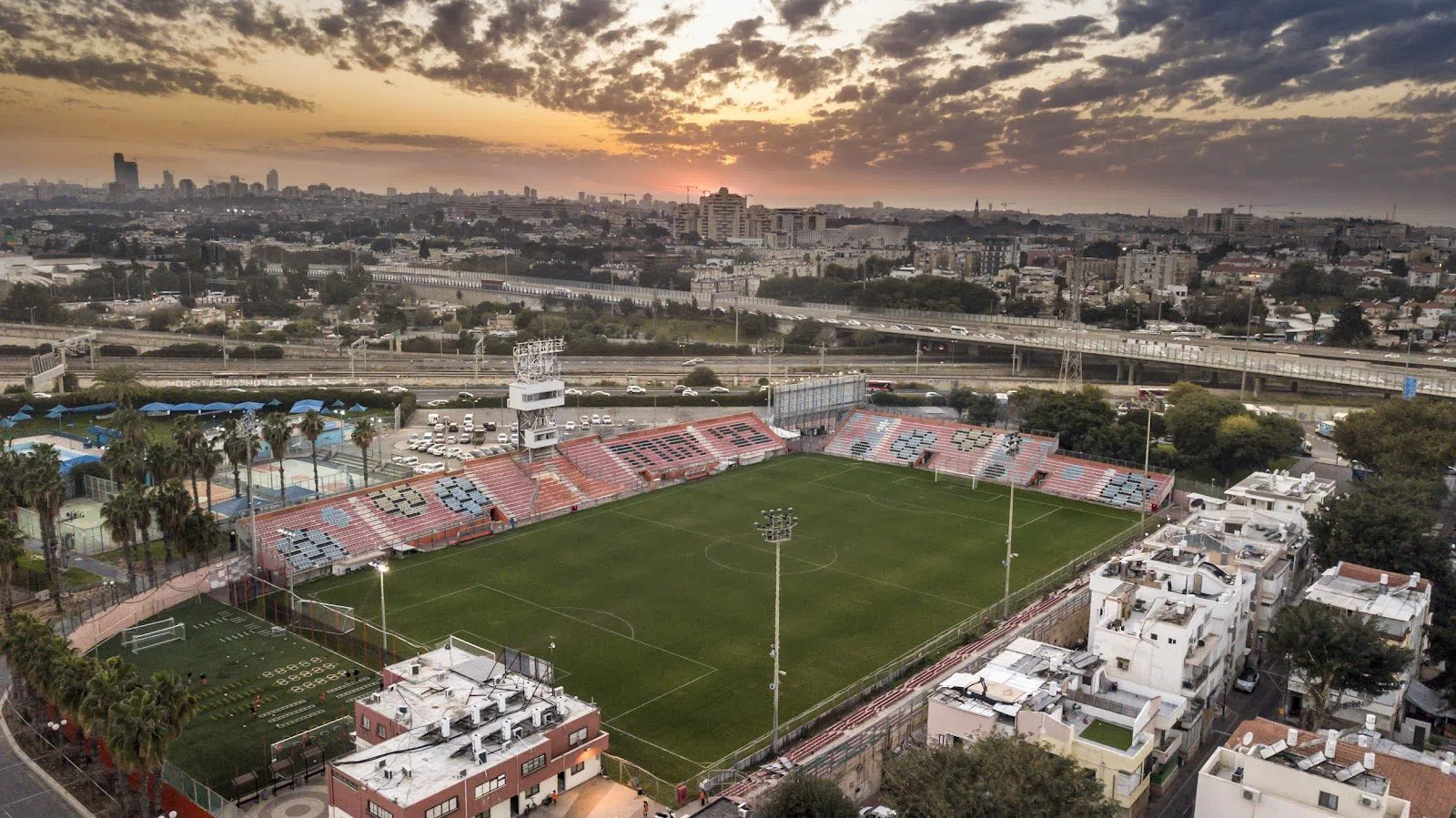
Hatikva Neighborhood Stadium (Kabir Street) is a 2,570-seat ground from 1951, hemmed in by apartment blocks, with a single covered stand and orange-and-black Bnei Yehuda colours on the seats and walls. Its floodlight pylons are visible from the market lanes. Bnei Yehuda Tel Aviv came home here in 2025 after two decades at Bloomfield. Tickets cost ₪40 to ₪70, and derbies need buying in advance. The crowd is loud and entirely local, and a matchday shows the neighbourhood as itself.
Opening days and booking
Plan around Shabbat, when the market and its grills are shut. Book a weekend table at Shemesh, and buy derby tickets before you arrive.
See the Tel Aviv guide and the Tel Aviv hotel search.
떠나기 전에
When is Hatikva Market open?
It trades Sunday to Friday morning, winds down by early afternoon and shuts for all of Shabbat. Avazi closes from Friday afternoon through Shabbat. Ha'Achim Boaz empties out by mid-afternoon and closes early on Friday.
What should I eat in the market?
Lahoh with egg, malawach and a bowl of marak at HaSaluf; the minimal onion, salt and pepper kebab at Shaul Mutzafi; offal skewers at Shemesh; a bowl of Yemenite meat broth at Ha'Achim Boaz; and faluda or malabi at Ilana's kiosk on the way out.
Does it cost anything to visit?
The market is a public street with no door policy and no entry charge, and Gan HaTikva is an open park, free too. Beit Dani costs nothing to walk around; its screenings and performances are ticketed at ₪30 to ₪60.
Can I bring a group?
For a table of eight or more, Shemesh is the one to try, booked ahead at weekends. Shaul Mutzafi is small and often full, so more than six of you should come off-peak or split across tables. Licensed Iraqi and Yemenite food-tour operators walk groups through the lanes on weekday and Friday morning slots.
Can I see a football match in the neighbourhood?
Bnei Yehuda Tel Aviv came back to Hatikva Neighborhood Stadium on Kabir Street in 2025, after two decades at Bloomfield. Tickets for the 2,570-seat ground cost ₪40 to ₪70, and for a derby you should buy ahead.