Speciale Tel Aviv
Yarkon Park from the bird hides to Tel Aviv Port
You pass an Ottoman mill site, two free gardens, dragon boats and a tethered balloon, in that order, along 10 km of Tel Aviv riverbank.

Di Inês MarquesWalking the White City, Jaffa and everything in between
At Seven Mills (Shivat HaTachanot), 11 pairs of millstones were turned by the Yarkon into the 1920s. The mills were abandoned in 1936 and partly restored in 2000-01, and water still runs through the arched sluice channels. Downstream the river widens into 3.5 sq km of flat lawn, free, unticketed and open at any hour.
The 10 km riverside walk
Yarkon Park (Ganei Yehoshua) runs across the north of the city, and the walk from the confluence of the Ayalon and the Yarkon out to the sea gives you the whole of it. The asphalt cycle path hugs the water for 10 km, crossing low footbridges beneath tall eucalyptus and washingtonia palms, with north Tel Aviv's apartment towers standing behind the treeline. The river beside you is slow and green and fringed with reeds.
Walk or cycle it in the cool of early morning, or at dusk. The lawns on either bank are wide and flat with little cover, and a summer afternoon on them is brutal. Picnic tables and barbecue pits are first-come. A large organised event needs a permit from the park company.
Organizza il tuo viaggio a Tel Aviv
Prezzi in tempo reale dai nostri partner di prenotazione.
Cancellazione gratuita su molte camere. Potremmo ricevere una commissione quando prenoti.
The Rock Garden and the Tropical Garden
The Rock Garden (Gan HaSla'im) is Israel's geology hauled in and stacked over 40 dunams, one of the largest rock gardens in the world. Huge transplanted boulders of dark basalt, pale limestone and pink granite form ridges and ravines, with cacti and succulents wedged between them. Gravel paths run through, past a small cascade pool, and 3,500 plant species are planted into the rock. Entry is free and needs no booking. The park company runs guided geology and nature walks here for groups that book in advance.

The Tropical Garden (HaGan HaTropi) is 20 dunams of rainforest engineered in the 1970s, and the one part of the park that stays cool at midday. A raised wooden boardwalk winds over a small dark pond with swans and koi, the canopy closes overhead, orchids and climbing vines grip the trunks, and the air is humid and dripping in the middle of a dry Mediterranean city. The boardwalk is narrow, so cross it in twos.

Entry is free during posted daylight hours and stops 30 minutes before closing. In winter the garden shuts mid-afternoon while the park around it stays open. Check the seasonal hours before you walk over.
Seven Mills
The restored Ottoman stone mill buildings straddle the Yarkon at its narrowest point. Millstones sit in the ground, rough limestone walls face the green water, and the current still passes through the sluice arches. The site is open air, free and ungated, and it is a standard stop on guided park tours. It is the oldest structure in the park, and it shows you why a city grew on this river.
Rosh Tzipor and the eastern end
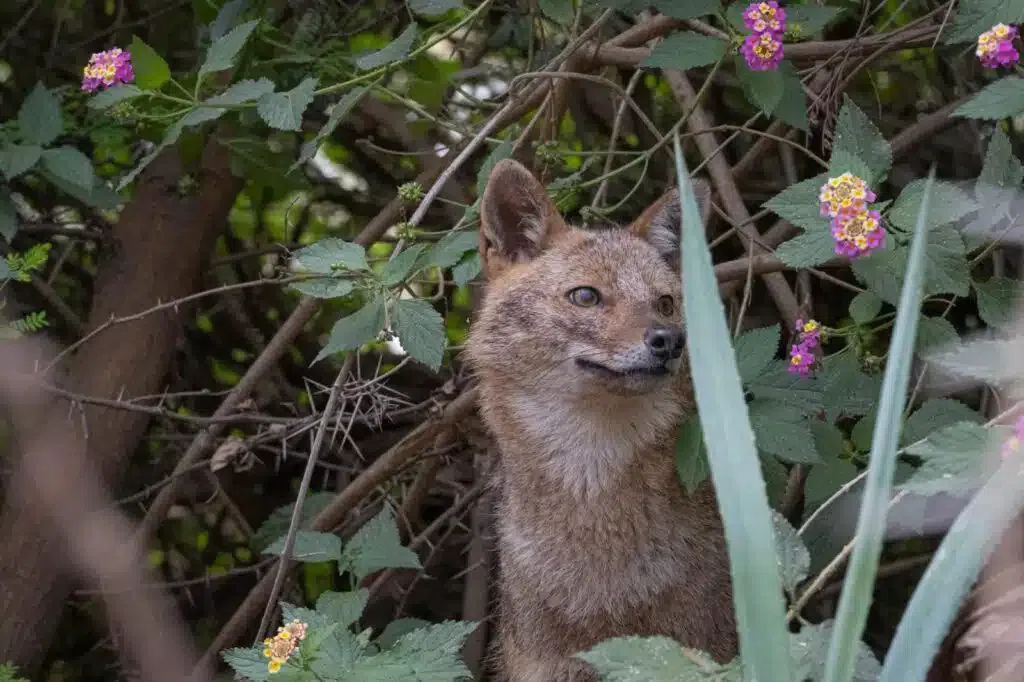
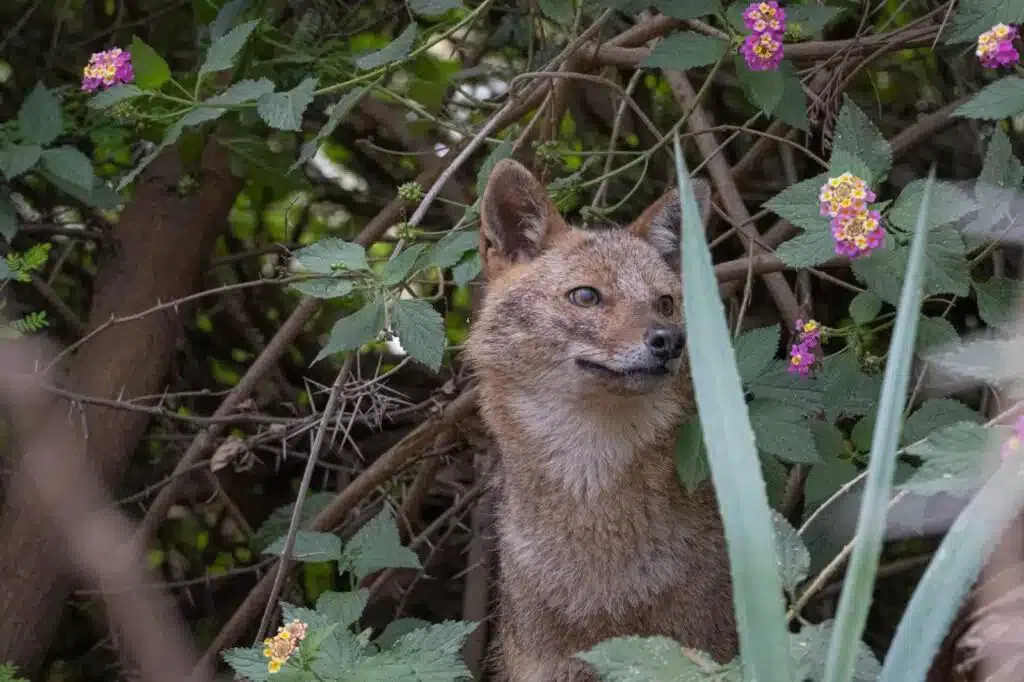
Rosh Tzipor Birdwatching Centre holds eight acres of wetland at the eastern end of the park, where the Ayalon meets the Yarkon. Shallow ponds are fringed with reeds, timber observation hides stand on stilts with horizontal slits cut into the planking, and herons and kingfishers sit on dead branches with a motorway flyover faint beyond the trees. Watch from inside a hide and you will not flush the migrating birds.
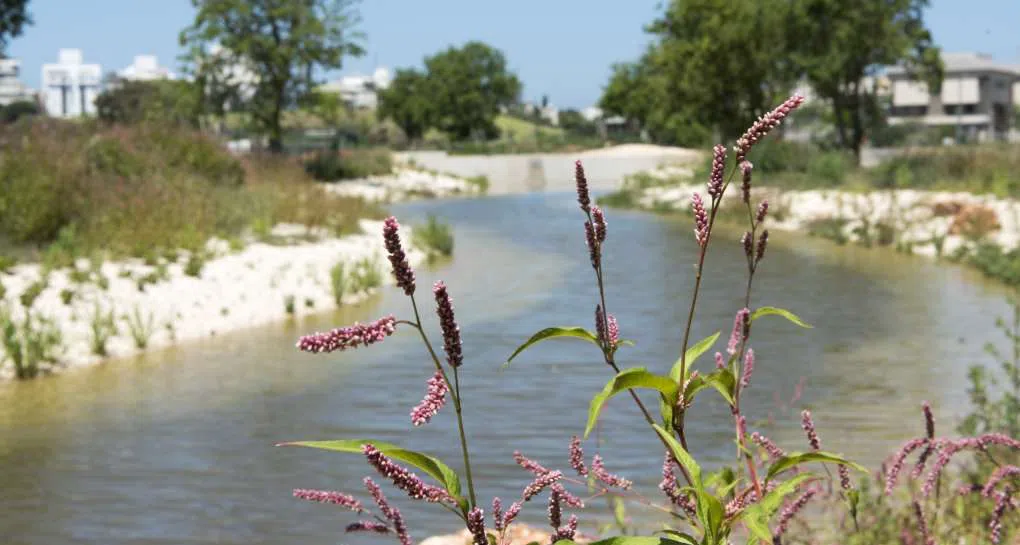
Entry and parking are free, daylight hours, daily. Guided tours and school programmes are booked through the park company. The same compound holds HaChava farm and the 19th-century Pardes Goldberg orchard, both walkable from the Rokach 74 gate.
Eretz Israel Museum in Ramat Aviv
Eretz Israel Museum (MUZA) sits immediately off the park's northern edge in Ramat Aviv, a few minutes' walk up from the riverside path. Low pavilions are scattered over a landscaped hill around the open excavation trench at Tel Qasile, where 12 layers of settlement are stacked one on another. Mud-brick wall stumps, an ancient olive press and mosaic floors lie under shade canopies, and a planetarium dome stands at the edge of the campus. Separate pavilions hold glass, coins and Judaica.
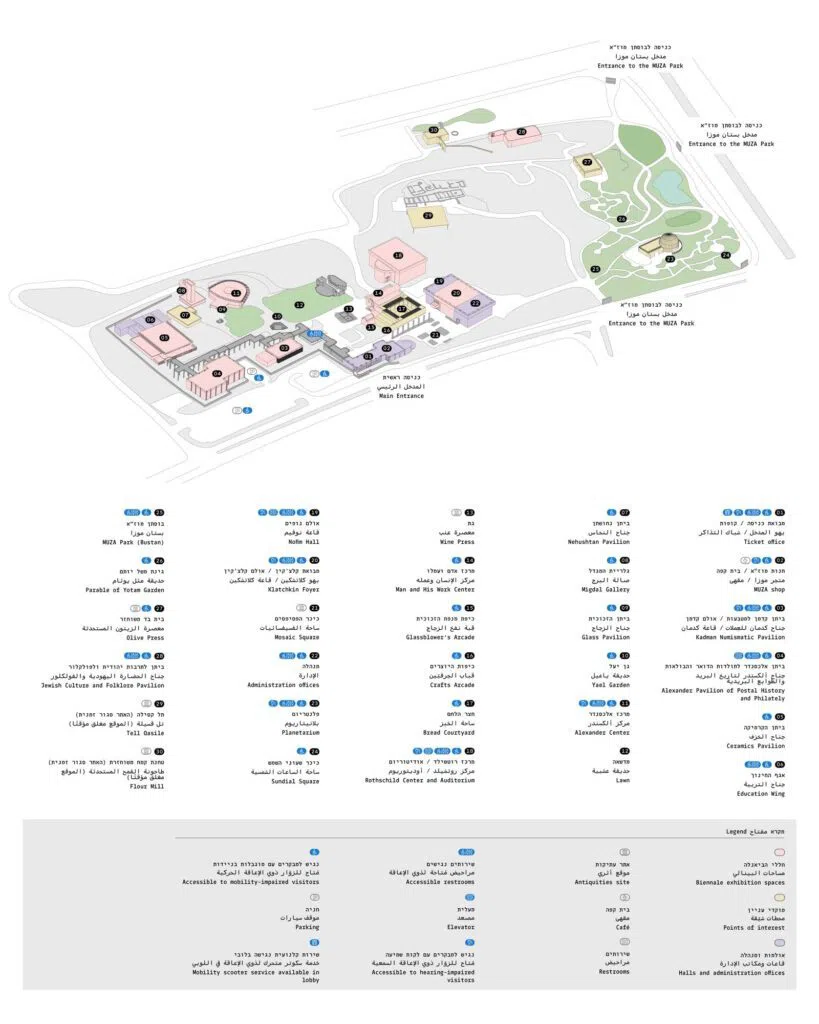
Adult entry is ₪58. Students pay ₪39 and seniors ₪29, and under-18s go free. The grounds and MUZA Park are free to walk. The museum closes on Sundays, and guided group visits and workshops are booked in advance.
Boats on the Yarkon
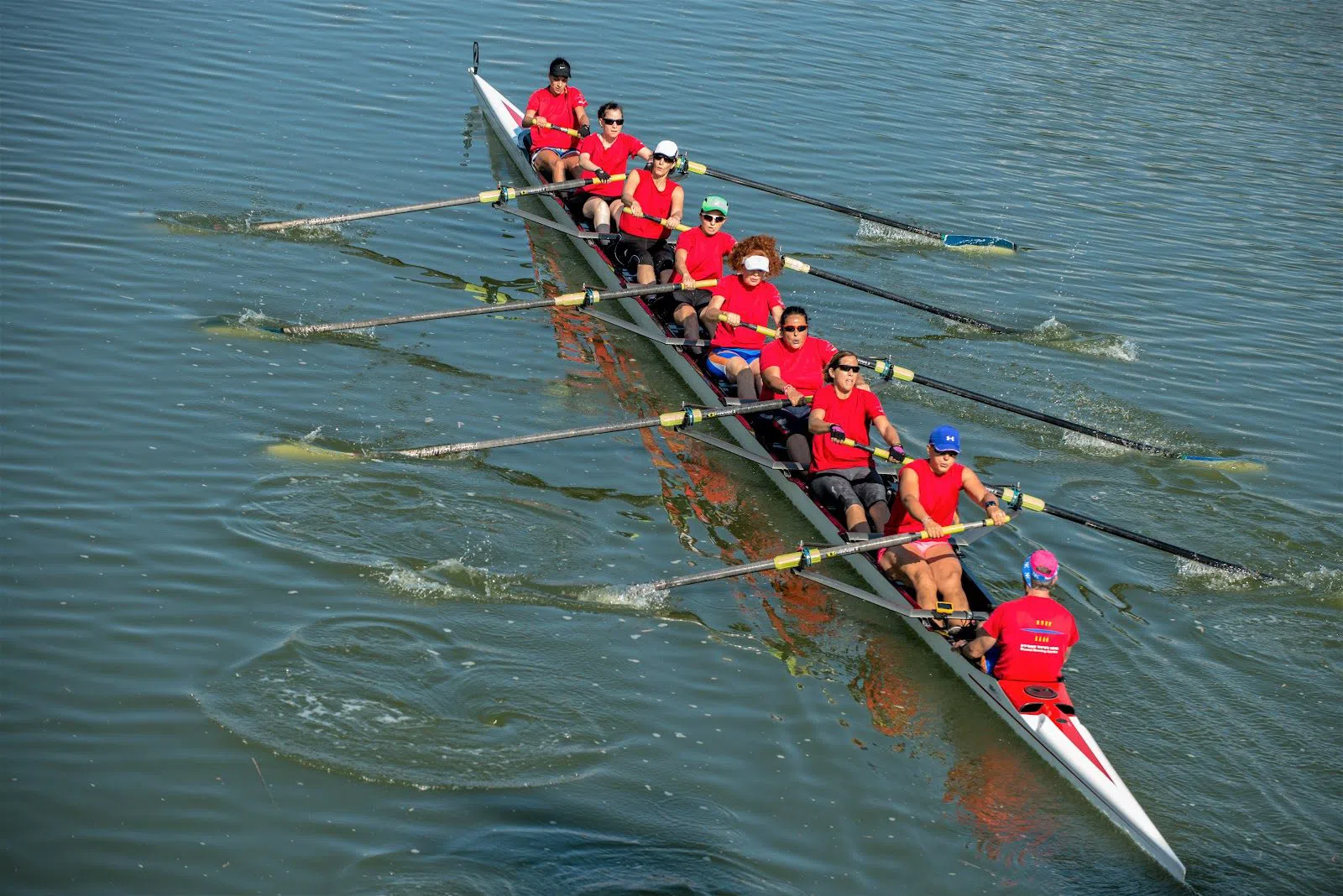
Daniel Rowing Centre (Rokach 2) is Israel's main rowing base, a low modern boathouse with floating pontoons on a narrow green channel inside the park. Long thin racing sculls are racked on the bank, and dragon boats with carved painted heads nose into the dock. Dragon-boat sessions and races are run for companies, families and the general public, alongside kayaks, canoes and crew boats, at ₪₪, and you book ahead. An hour in a 20-person dragon boat gets you off the lawns and onto the water. The centre hosts the HaYarkon Dragon Boat Festival each May.
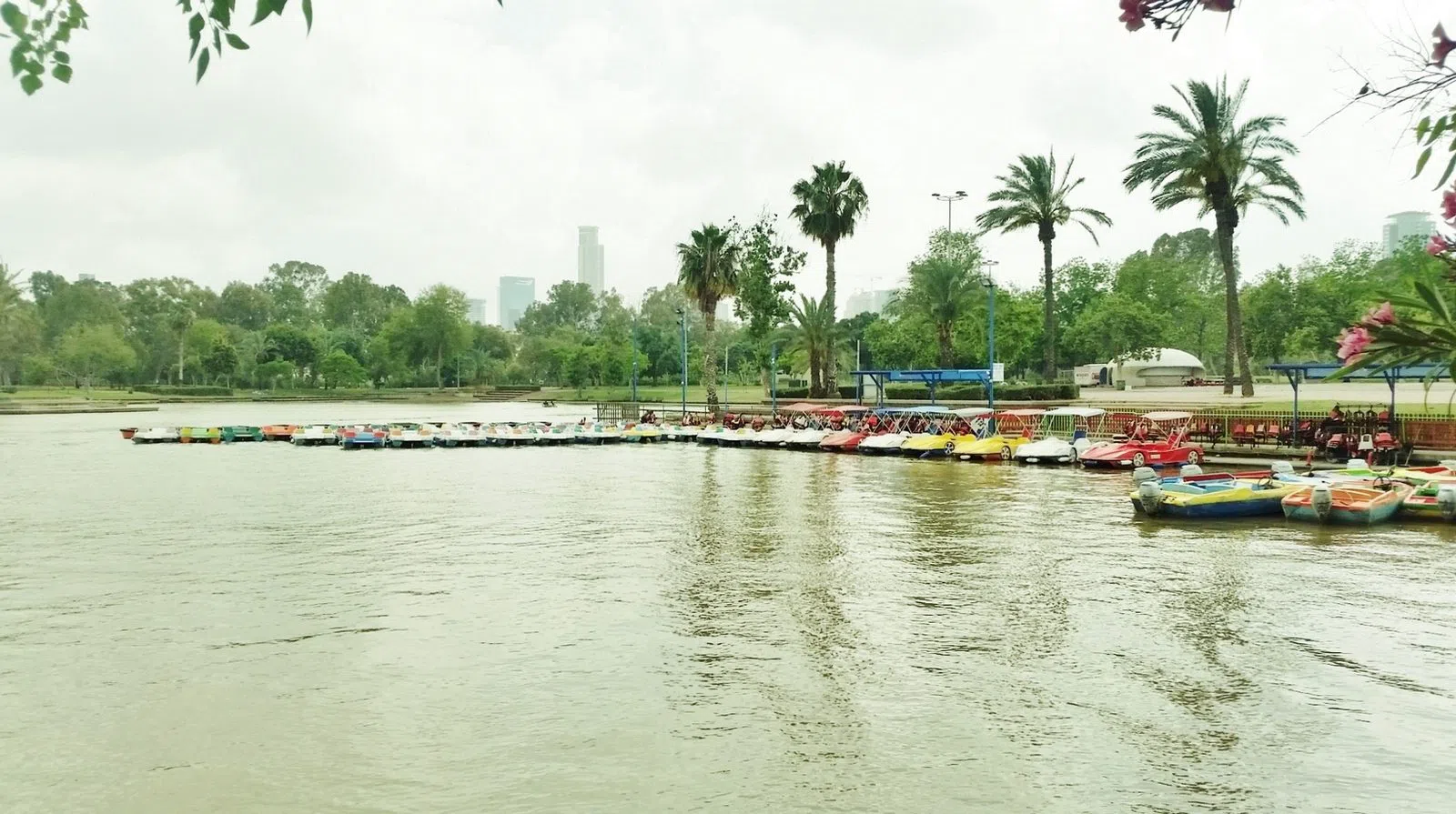
Agam HaPark boat hire works from two stations, the river station at the Ibn Gvirol bridge, open year-round, and the lake station in the park. White-and-blue pedal boats and small open motorboats are tied at a concrete slipway under a road bridge, with weeping trees trailing into the water. A rowing or pedal boat is ₪110 to ₪170 per boat per hour. A motorboat is ₪180 to ₪200 per boat per half-hour. Each boat takes five or six people, and every pedal boat needs one person aged 14 or over. Last hire is 16:00, so a sunset paddle is not possible here.
Sportek, the balloon and Luna Park
Sportek Tel Aviv is where the city exercises, with pickup basketball, Australian rules and rugby on the same patch of grass, concrete skate bowls and ramps, trampolines sunk flush into the ground and floodlit basketball and tennis courts. You will see the 13.7 m freestanding climbing wall first, its coloured holds rising straight off the grass above the riverbank. Courts and the skate area are free and open access. The wall is instructor-run with session fees (₪₪) and takes booked groups, running afternoons and evenings on weekdays and longer hours on Saturdays and school holidays. A café and restaurant are due in the adjoining building at Sportek North by the end of 2026.
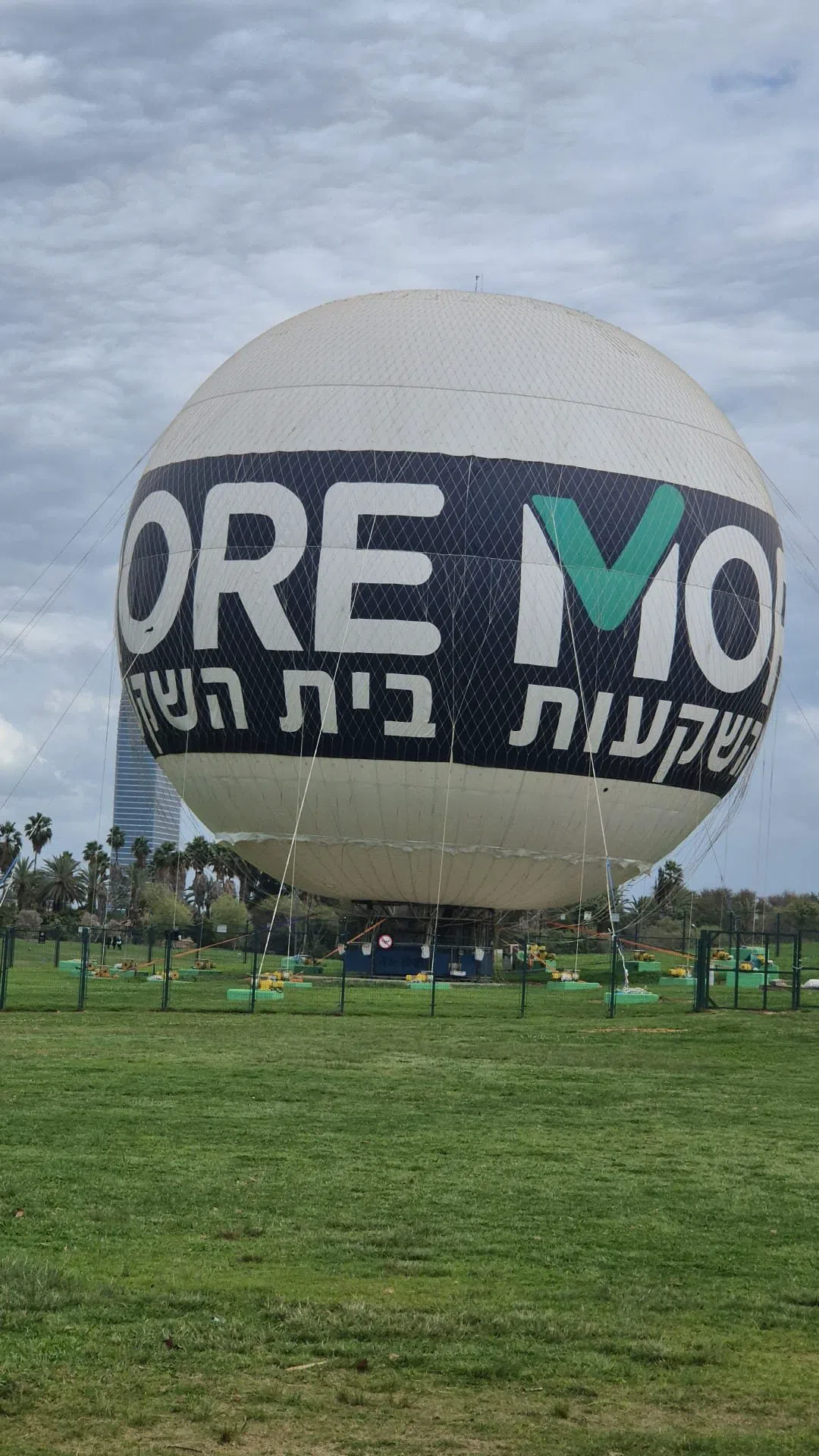
TLV Balloon is a fat white helium balloon on a single steel cable, a circular railed gondola slung beneath it, lifting straight off a grass clearing in the park. The ride is tethered, lasts 15 minutes and reaches 120 m, with the city's towers and the Mediterranean laid out flat below. It is the only high viewpoint in the park. Adults pay ₪95. Students, seniors, soldiers and visitors with disabilities pay ₪75, and under-2s ride free. It is walk-up, 09:00 to 20:00, and takes up to 30 passengers per lift. It stays grounded in strong wind, so have something else in mind for a gusty day.
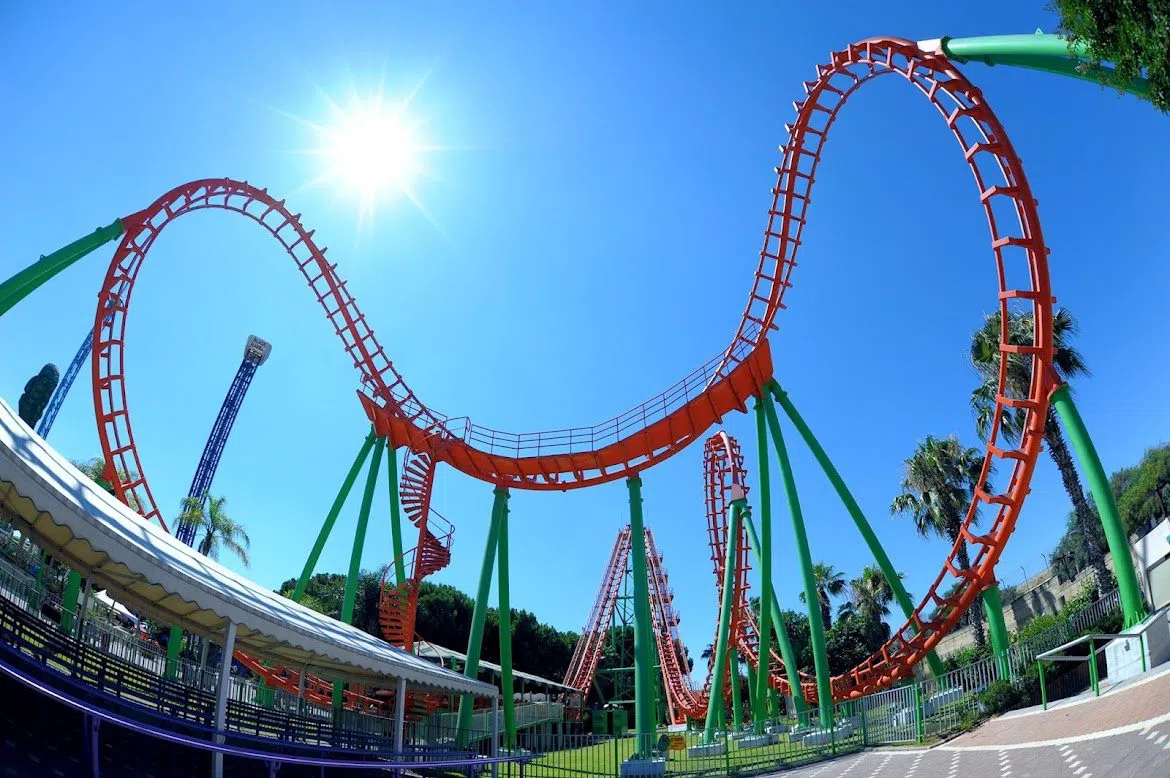
Luna Park Tel Aviv (Rokach Boulevard) has operated on the park's southern edge since 1970, a compact fairground wedged against the Expo grounds, its Ferris wheel, looping steel coaster and spinning rides packed tight under painted signage and lit after dark. Admission is ₪149 for visitors 100 cm and over, and free below that height. Cinema Luna is charged separately. It opens on Saturdays and most weekdays into the evening and closes on Fridays. Check the day's hours, because ride entry stops 15 to 30 minutes before closing. Group and school rates are available by phone, and the iSkate indoor ice rink sits in the same complex. The admission makes sense if you have children with you.
Eating inside the park
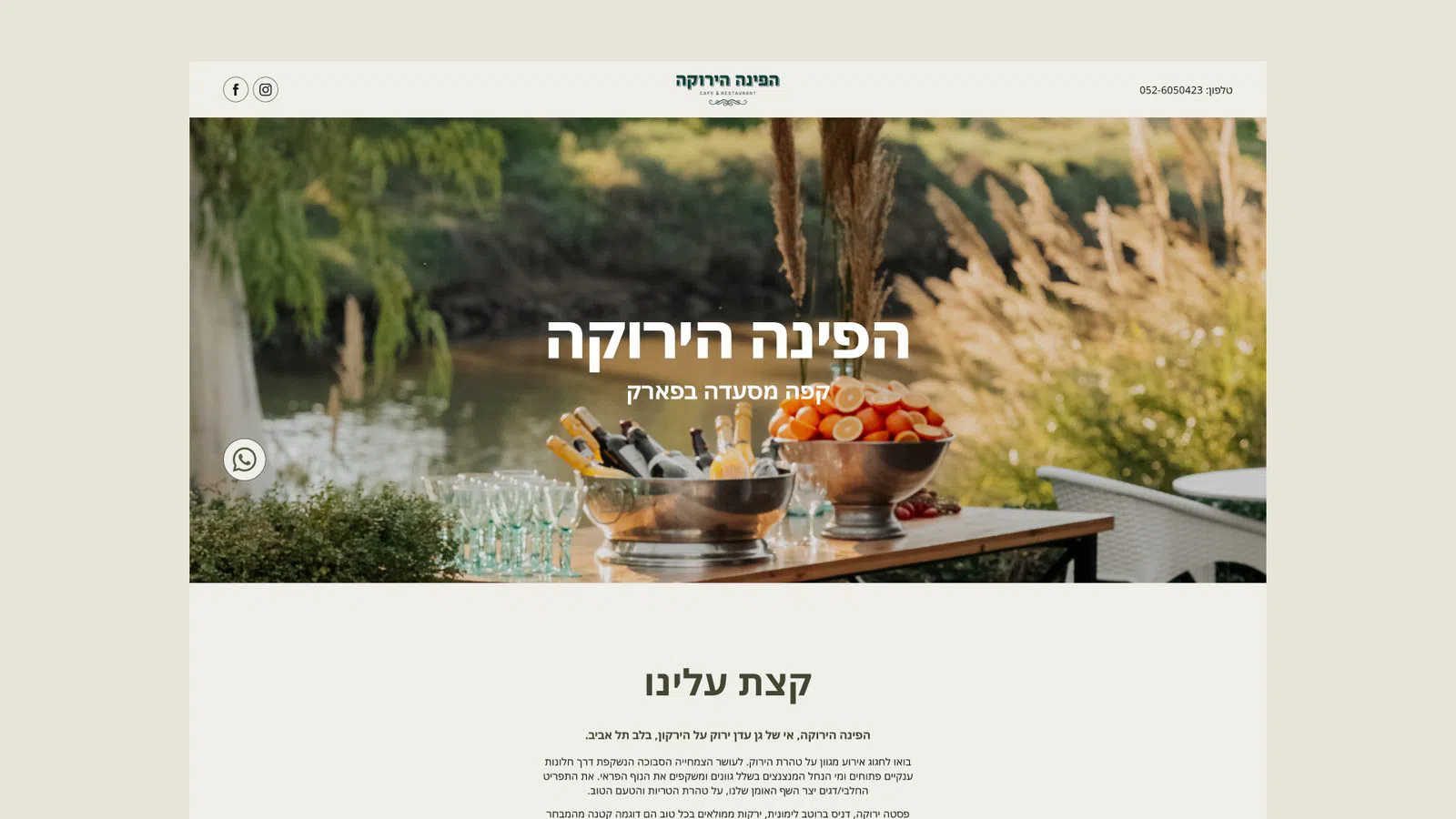
HaPina HaYeruka (Rokach 80) is the one proper chef restaurant inside Yarkon Park, a glass-walled dining room and open timber terrace built on the bank, floor-to-ceiling windows looking down onto the water and the reeds, greenery pressing in on all sides. The cooking is dairy and fish, at ₪₪₪, and you reserve ahead even for an ordinary meal. The sheltered indoor space takes boutique events of up to 250 people. The rest of the eating in the park is kiosk-grade, with ices, coffee and pastries at the central playground, the big lake and the Bavli promenade.
The port at the river mouth
Treysar (Hangar 12) does the serious cooking at the Yarkon's mouth, on the site of the old Mul Yam, with 'micro-seasonality' menus of vegetables, fish and meat. The room is on the first floor, reached by a narrow stair out of the port market hall, muted in tone, hung with plants, an open kitchen on one side and big windows over the water. Dinner only, closed Sundays, at ₪₪₪₪. The cheap way in is the aperitif hour from 18:00 to 19:00, five small plates for ₪66. Tables are small and the room is tight. Book ahead, and call for any party over six. The restaurant is confirmed to keep trading through the market hall's ₪15m refit, which is shutting the covered Shuk HaNamal stalls around it.
Yulia TLV (Hangar 2) has been open since the mid-2000s at the southern end of Tel Aviv Port, a ten-minute walk from the park's western end. The covered veranda and glass frontage sit low against the shore, with waves breaking on black rocks directly below the tables and open horizon to the west. Order the fishermen's breakfast spread. The breakfast service runs to 12:00, and you reserve for it and for weekends. Prices are ₪₪₪.
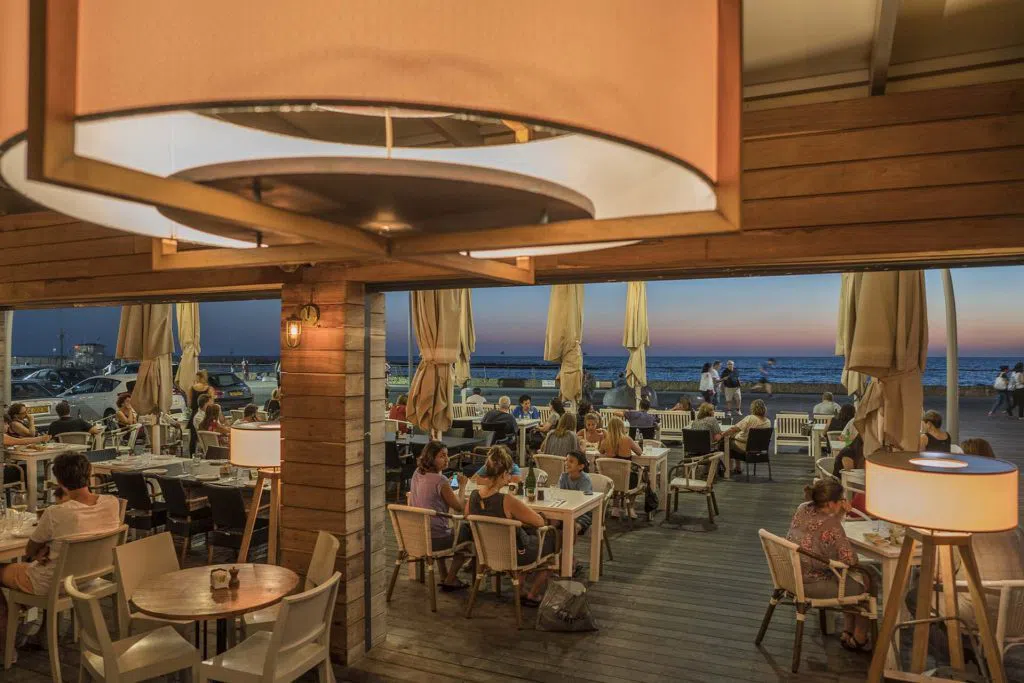
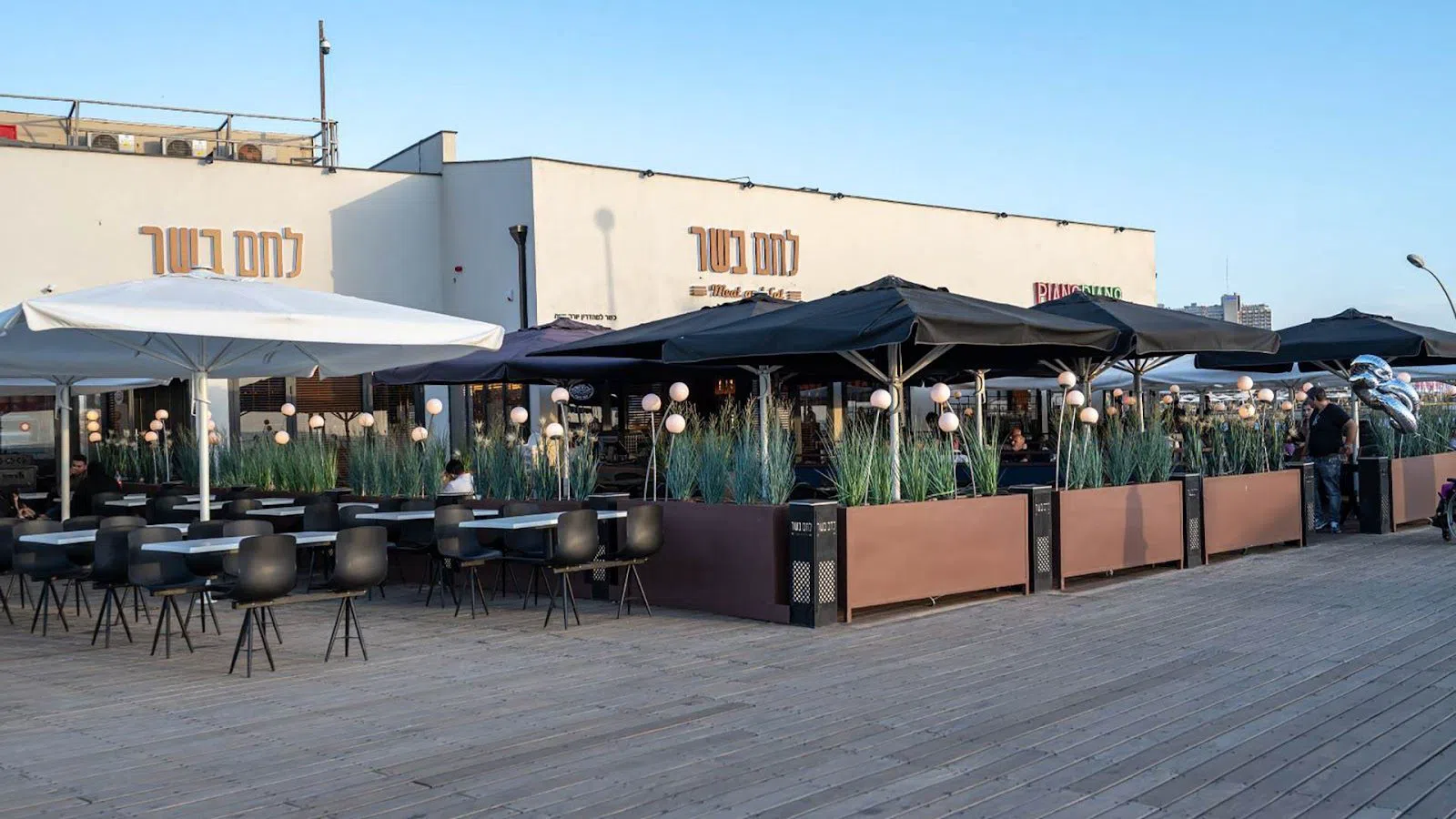
Lechem Basar (Hangar 14) is the kosher table to use near the park, a short grill menu with fresh-baked breads at ₪₪₪. All the seating is outdoors on the undulating wooden deck under awnings, grill smoke in the air and the Mediterranean a few metres away. It is Mehadrin glatt kosher, closed from Friday evening through Shabbat and reopening late on Saturday night.
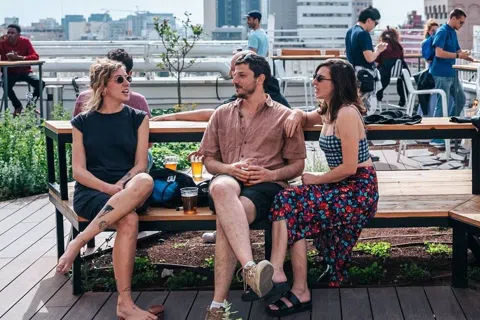
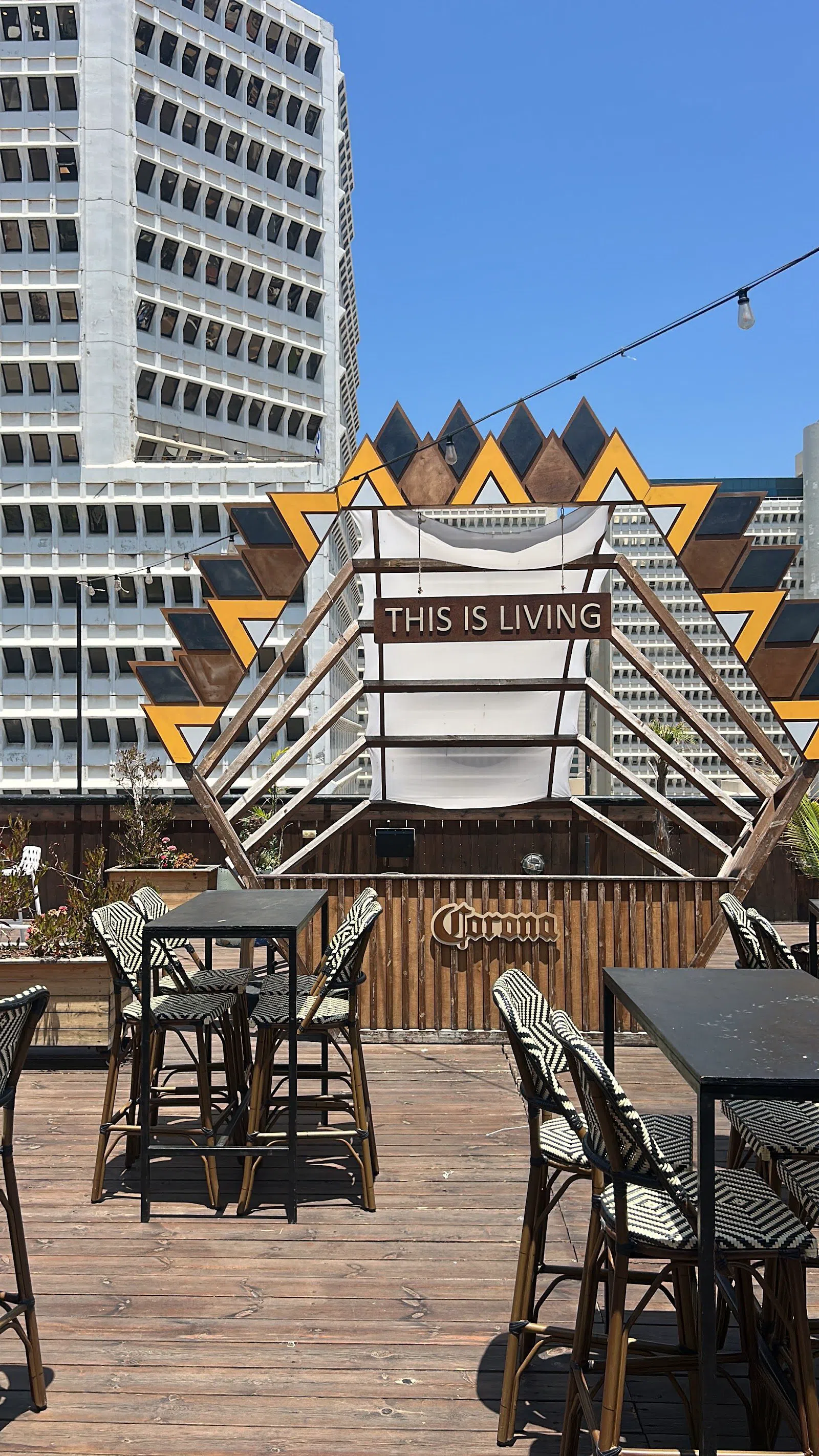
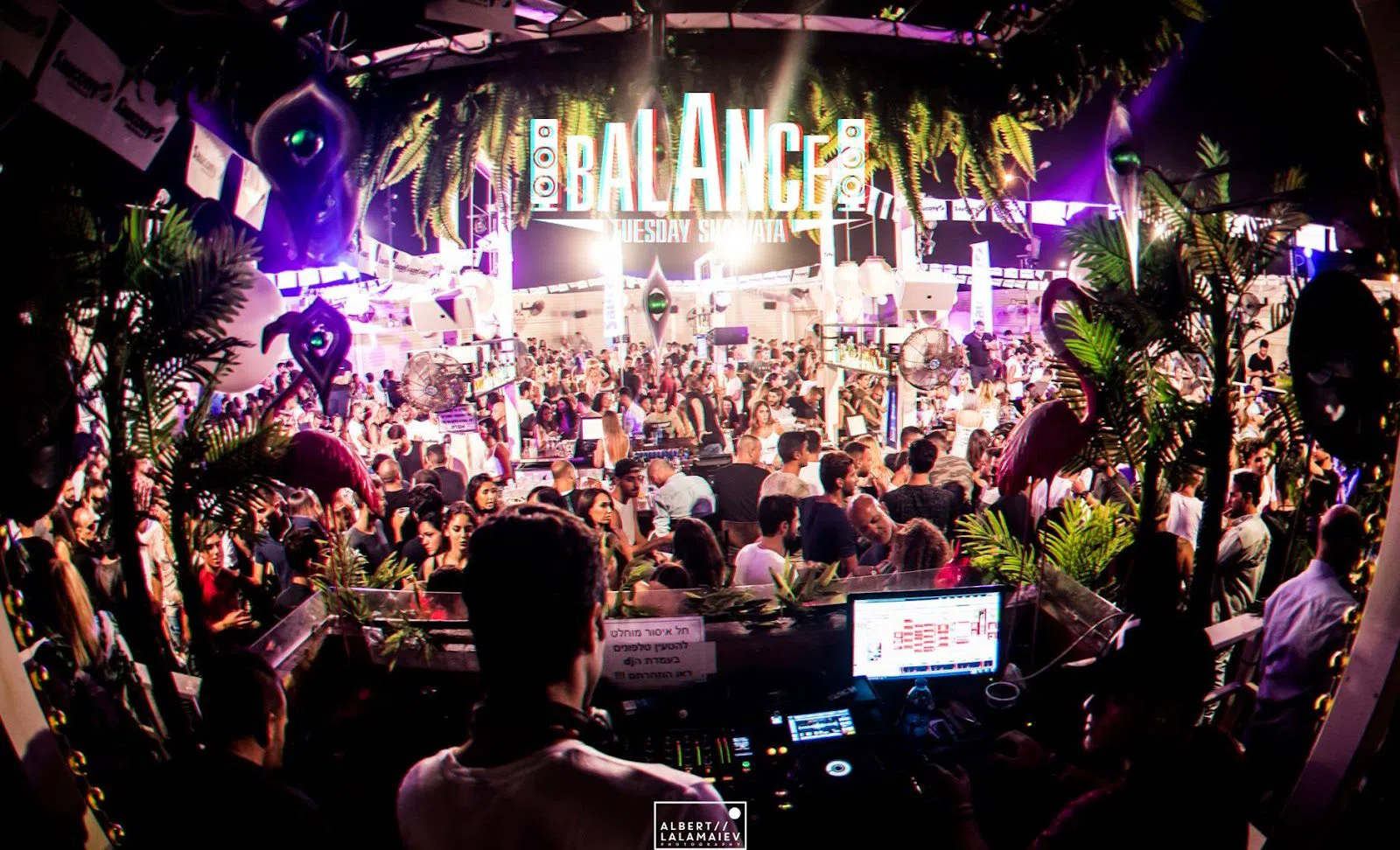
Shalvata TLV (HaTa'arucha 3) is the sundowner at the end of the riverside walk, where the park meets the sea. Sand is underfoot, low wooden benches and scattered cushions sit under strung lights, and a small dance floor waits at the back. By day it is a Mediterranean grill at ₪₪. After dark the DJs start and people dance. Private events run from 20 to 500 people, any party over 15 should book direct, and a summer weekend needs advance booking.
Planning the day
Eretz Israel Museum and Treysar both close on Sundays, Luna Park closes on Fridays, and Lechem Basar is shut from Friday evening until late on Saturday night. Book Daniel Rowing Centre, HaPina HaYeruka, Treysar and any summer weekend at Shalvata before you arrive, and keep a second plan for a windy day when the balloon will not lift.
See the Tel Aviv guide and the Tel Aviv hotel search.
Prima di partire
Do you have to pay to get into Yarkon Park?
No. The park is free and unticketed, open 24 hours a day, and the Rock Garden, Seven Mills and Rosh Tzipor Birdwatching Centre cost nothing either. The Tropical Garden is free too, during posted daylight hours. You pay only at Eretz Israel Museum, the TLV Balloon and Luna Park.
When is the best time of day to walk or cycle the park?
Early morning or dusk. The riverside path runs 10 km from the Ayalon confluence to the sea across wide flat lawns with little cover, and a summer afternoon on them is brutal. If you are walking it at midday, the Tropical Garden's closed canopy is where the shade is.
How do you hire a boat on the Yarkon, and what does it cost?
Agam HaPark runs a river station at the Ibn Gvirol bridge year-round and a lake station in the park. A rowing or pedal boat is ₪110 to ₪170 per boat per hour, a motorboat ₪180 to ₪200 per boat per half-hour. Boats take five or six people, every pedal boat needs someone aged 14 or over aboard, and the last hire is 16:00.
Is the TLV Balloon worth it, and does it always fly?
It is the only high viewpoint in the park, a tethered 15-minute lift to 120 m. Adults pay ₪95, students, seniors, soldiers and visitors with disabilities pay ₪75, and under-2s go free. It is walk-up, 09:00 to 20:00, and strong wind keeps it grounded, so have a second plan.
Which places around Yarkon Park are closed on which days?
Eretz Israel Museum and Treysar close on Sundays. Luna Park closes on Fridays and opens on Saturdays. Lechem Basar is Mehadrin glatt kosher and shuts from Friday evening through Shabbat, reopening late on Saturday night. The Sportek climbing wall runs longer hours on Saturdays and school holidays.